
The All Progressives Congress (APC) has released its 2027–2031 election manifesto, a 109-page document titled From Reforms to Prosperity. It outlines what the party plans to do if President Bola Tinubu secures another four years in office.
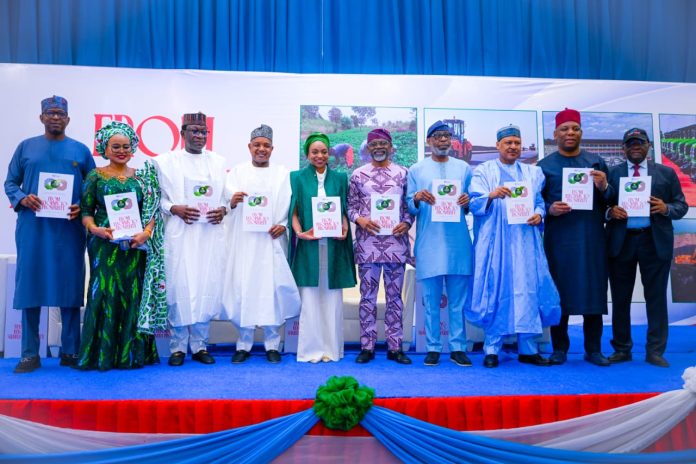
The manifesto was presented on Tuesday, November 10, at the Shehu Musa Yar’Adua Centre in Abuja. The event was attended by government officials, APC members, journalists and other guests.
Those present included the Minister of Solid Minerals Development, Dele Alake; the Minister of Information and National Orientation, Mohammed Idris; the Minister of Budget and Economic Planning, Atiku Bagudu; the Minister of Industry, Trade and Investment, Jumoke Oduwole; the President’s Chief of Staff, Femi Gbajabiamila; and the Director-General of the Nigerian Television Authority (NTA), Abdulhamid Salihu Dembos.
The event gave officials and party members the opportunity to explain the plans in the manifesto and answer questions about the government’s policies.
Presenting the document, Oduwole said it focused on four main areas: improving security, making life more affordable, developing energy and infrastructure to grow the economy, and ensuring good and accountable government.
The party set a target of growing the economy by six per cent each year, increasing non-oil exports to at least 15 billion dollars and creating one million export-related jobs for young Nigerians by 2030.
It also plans to increase the manufacturing sector’s contribution to the economy to 12 per cent and raise electricity generation to more than 10,000 megawatts.
On education and healthcare, the manifesto sets a target of reducing the number of out-of-school children by half by 2031, recruiting and training 20,000 more teachers and increasing health insurance coverage to 40 per cent of Nigerians.
The party also plans to improve food production, processing and storage to make more food available and reduce waste. Other plans include lowering the cost of living, supporting local businesses and creating more opportunities for young people.
Speaking at the event, Information Minister Mohammed Idris said the government’s reforms were aimed at improving the lives of Nigerians. He said the next four years would focus on ensuring that more people benefit from the changes.
He pointed to improvements in security, the student loan programme, which has supported 1.6 million students through NELFUND, and Nigeria’s removal from the Financial Action Task Force (FATF) grey list as examples of progress.
Idris also said international credit rating agencies had improved their assessment of Nigeria, while inflation was falling and the economy was growing. He urged journalists to report both the government’s achievements and the areas where it needed to do better.
The Minister of Budget and Economic Planning, Atiku Bagudu, said Tinubu had a long-term plan for the economy and believed Nigeria could become a two-trillion-dollar economy. However, he said more needed to be done to ensure that ordinary Nigerians also benefit from economic growth.
The Minister of Solid Minerals Development, Dele Alake, defended the removal of the petrol subsidy and changes to the foreign exchange system, saying they were necessary to address long-standing problems in the economy.
The President’s Chief of Staff, Femi Gbajabiamila, described the manifesto as a promise between the APC and Nigerians. He urged citizens to study the plans and hold the party responsible for delivering on them.
He also mentioned plans to reduce the number of out-of-school children by half by 2031 and install seven million additional electricity meters.
The manifesto outlines what the APC hopes to achieve between 2027 and 2031. Its targets could serve as a way for Nigerians to measure the party’s performance if it wins another presidential term.