
The Court of Arbitration for Sport has overturned CAF’s decision to award Morocco a 3-0 victory, reinstating Senegal as the 2025 AFCON champions following their original 1-0 final victory. The ruling comes after months of legal disputes, although Morocco has indicated plans to pursue further legal action.
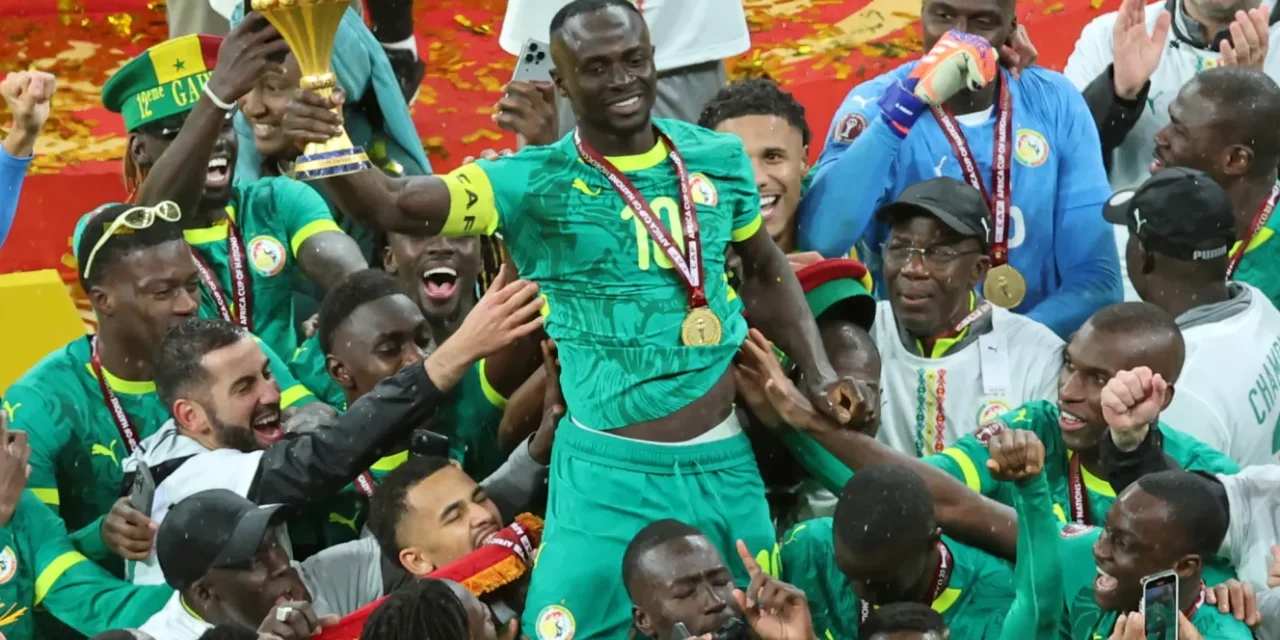
The Court of Arbitration for Sport (CAS) has officially reinstated Senegal as the winners of the 2025 Africa Cup of Nations (AFCON), overturning a controversial decision by the Confederation of African Football (CAF) that had awarded the title to Morocco.
The ruling, delivered on Tuesday, November 24, 2026, in Lausanne, Switzerland, brings a major development to one of the most controversial legal disputes in African football history. It restores Senegal’s 1-0 victory over Morocco in the final played on January 18, 2026, officially recognising the Teranga Lions as two-time African champions.
The AFCON final, held at the Prince Moulay Abdellah Stadium in Rabat, Morocco, was overshadowed by controversy after the referee awarded Morocco a penalty in the closing stages of normal time.
Senegalese players temporarily walked off the pitch in protest against the decision, causing a disruption that lasted approximately 15 minutes.
Following interventions, the players returned to the pitch and the match resumed. Morocco’s Brahim Díaz failed to convert the penalty, while Senegal’s Pape Gueye scored the decisive goal in extra time, securing a 1-0 victory for his country.
However, the celebrations were followed by a legal dispute as the Royal Moroccan Football Federation challenged the outcome of the match.
On March 17, 2026, the CAF Appeal Board ruled that Senegal’s decision to temporarily leave the pitch constituted a forfeiture under the competition’s regulations.
Consequently, CAF overturned the original result and awarded Morocco a 3-0 victory, effectively stripping Senegal of the continental title.
The Senegalese Football Federation rejected the decision and filed an appeal with CAS on March 25, seeking the restoration of the original match result and its championship status.
Following months of legal proceedings, a three-member CAS panel unanimously ruled in favour of Senegal, citing the legal principle known as the “field of play” doctrine, which protects the authority of match officials in sporting competitions.
The court determined that Congolese referee Jean-Jacques Ndala acted within his authority when he allowed the match to resume after the Senegalese players returned to the pitch.
CAS further explained that Articles 82 and 84 of the AFCON regulations, which formed the basis of Morocco’s argument, apply when a match is permanently abandoned by the referee.
Since the final resumed and reached its conclusion, the court found that these provisions were not applicable.
However, the ruling does not invalidate the separate disciplinary sanctions previously imposed on Senegal’s football federation, coach and certain players.
CAF has acknowledged the CAS ruling and pledged to take the necessary measures to implement it.
However, the Royal Moroccan Football Federation has expressed dissatisfaction with the verdict and announced its intention to pursue further legal action.
The federation also raised allegations of improper contact between a CAS arbitrator and the president of the Senegalese Football Federation before the verdict was delivered. Both Senegal’s federation and the arbitrator have denied the allegations.
Meanwhile, Senegalese football authorities welcomed the decision, describing it as a victory for sporting fairness, while reaffirming their commitment to maintaining friendly relations with Morocco.
The ruling represents a significant moment in African football governance, reinforcing the authority of match officials and highlighting the importance of distinguishing between disciplinary misconduct and the outcome of a sporting contest.
It also raises questions about CAF’s interpretation of its competition regulations, the effectiveness of its disciplinary procedures and the need for greater regulatory clarity to prevent similar disputes in future tournaments.
For Senegal, the decision restores the country’s second AFCON title following its maiden triumph in the 2021 edition.
More than ten months after the controversial final in Rabat, Senegal has once again been officially recognised as the champion of Africa. However, Morocco’s intention to pursue further legal action suggests that the dispute may not be entirely over.