
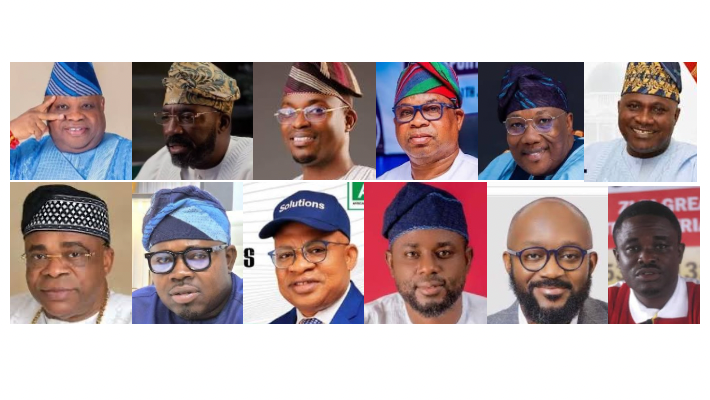
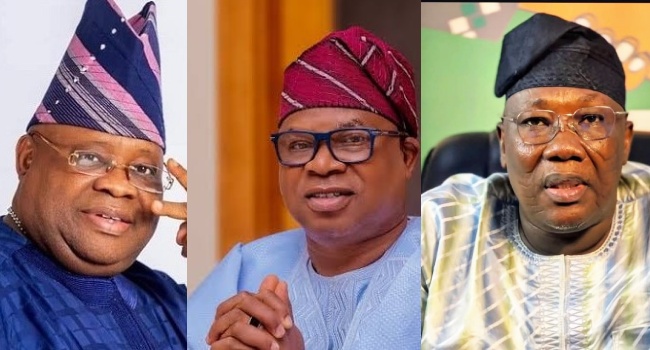
The Osun State governorship election scheduled for Saturday, August 15, 2026, has placed the spotlight on a crucial political contest as voters prepare to decide who will occupy the Government House for the next term. At the centre of the race is incumbent Governor Ademola Adeleke, who is seeking a second term, alongside major challengers Bola Oyebamiji of the All Progressives Congress (APC) and Najeem Salaam of the African Democratic Congress (ADC), each presenting a different vision for the direction of the state.
The election has become a contest not only between political parties but also between competing ideas of continuity, change and leadership. For Adeleke, the poll represents an opportunity to seek a renewed mandate, while Oyebamiji and Salaam aim to convince voters that a new chapter awaits Osun.
For Ademola Adeleke, the 2026 governorship election represents an opportunity to defend the mandate he secured in 2022 and seek another four-year term in office. The Ede-born politician and businessman entered public service after years of experience in corporate administration in Nigeria and the United States, before transitioning fully into politics.
Adeleke’s first attempt at becoming governor came in 2018 under the platform of the Peoples Democratic Party (PDP), when he faced then-incumbent Adegboyega Oyetola of the All Progressives Congress (APC). The election ended in controversy, with Oyetola eventually declared winner after a rerun. Four years later, Adeleke returned to the contest and defeated Oyetola in the 2022 governorship election, ending his long pursuit of the state’s highest office. He was sworn in as governor on November 27, 2022.
Now popularly known as “Imole” among his supporters, Adeleke is seeking another mandate on the strength of what his administration describes as achievements in infrastructure, healthcare, agriculture and other sectors. His campaign centres on the argument that his government has laid the foundation for continued development, while asking voters to give him another opportunity to consolidate his policies.
For Bola Oyebamiji, the 2026 Osun governorship election presents an opportunity to translate decades of experience in banking, finance and public administration into a bid for the state’s highest office. The All Progressives Congress (APC) candidate enters the contest with a career that has cut across the private sector, state government and federal service.
His journey in Osun’s political space began under the administration of former Governor Rauf Aregbesola, where he served as Managing Director of the Osun State Investment Company Limited before becoming Commissioner for Finance. He later retained the finance portfolio during the administration of former Governor Adegboyega Oyetola, serving in the role from 2017 to 2022.
Oyebamiji’s public service experience later extended to the federal level, where he served as Managing Director of the National Inland Waterways Authority (NIWA). He resigned from the position in November 2025 to pursue his governorship ambition, bringing his experience in managing institutions and public resources into a statewide political contest.
The African Democratic Congress (ADC) candidate, Najeem Folasayo Salaam, enters the Osun governorship race as a familiar figure with deep roots in the state’s political landscape. A native of Ejigbo in Ejigbo Local Government Area, Salaam, popularly known as “Iwaloye,” brings legislative experience and years of public service into his bid to lead the state.
His legislative career reached a significant milestone when he was elected Speaker of the Osun State House of Assembly in June 2011, a position he held until 2015. He was later re-elected to the Assembly in 2017 and remained in the legislature until 2019, building a reputation as one of the state’s prominent political figures.
Now carrying the ADC flag, Salaam is seeking to move from the legislature to the executive arm of government, presenting himself as a candidate with experience in governance and a vision for a new direction for Osun. His campaign has focused on issues including economic development, education, healthcare, security and infrastructure as he seeks to convince voters ahead of the election.
The Osun State Resident Electoral Commissioner, Oluwatoyin Babalola, emphasised that maintaining the integrity of the electoral process was a shared responsibility among all stakeholders. She urged political actors and citizens to place peace, patriotism and the overall interest of the state above individual political ambitions.
Inspector-General of Police Olatunji Disu has barred the Western Nigeria Security Network, popularly known as Amotekun, alongside other quasi-security groups and private security organisations, from participating in election-security duties. He also reaffirmed restrictions on armed escorts, security aides and unauthorised persons accompanying political figures or VIPs to polling units and collation centres.
To coordinate security operations, the IGP deployed Deputy Inspector-General of Police Ishyaku Mohammed to oversee the election security arrangements. He will work alongside other security agencies under the Inter-Agency Consultative Committee on Election Security, with support from Assistant Inspectors-General of Police and Commissioners of Police assigned across Osun’s three senatorial districts.
The police have assured residents that adequate measures have been put in place to safeguard voters, INEC officials, election materials, polling units, collation centres, accredited observers and media personnel throughout the electoral process.
As voters prepare to make their choice, security remains a key factor in ensuring that the exercise reflects the will of the people in a peaceful and credible environment.
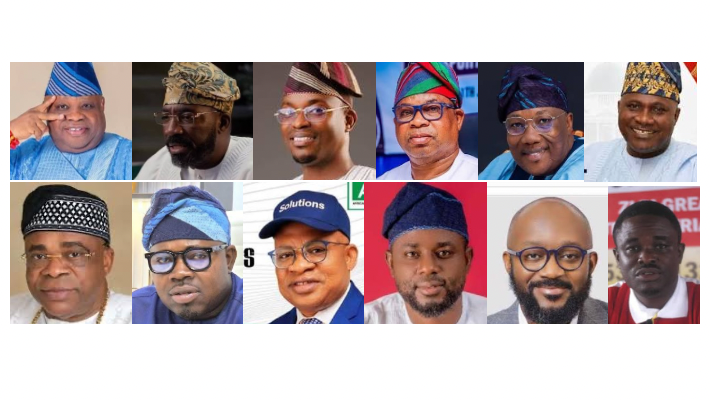
Although the contest has largely centred around Adeleke, Oyebamiji and Salaam, the Osun governorship race extends beyond the three leading names. A total of 14 candidates are on the ballot, representing different political parties and offering voters a wider range of choices as they decide who should guide the state into its next chapter.