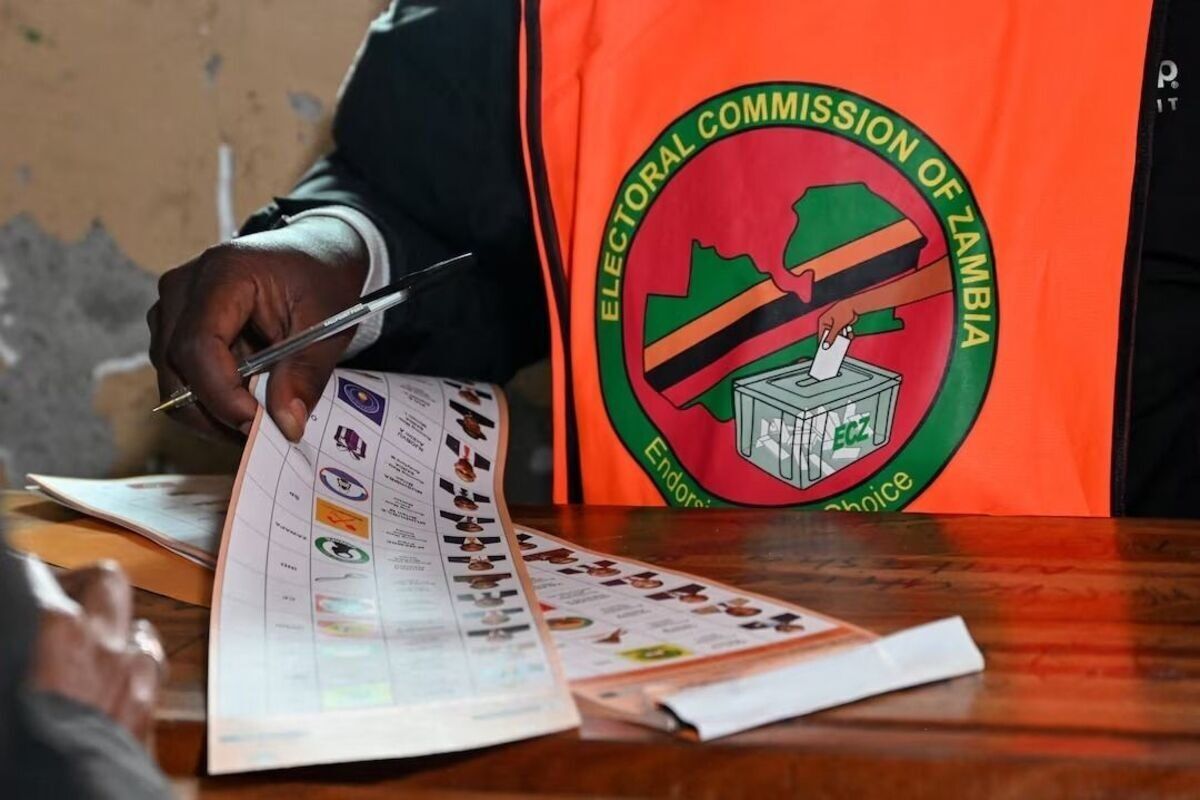

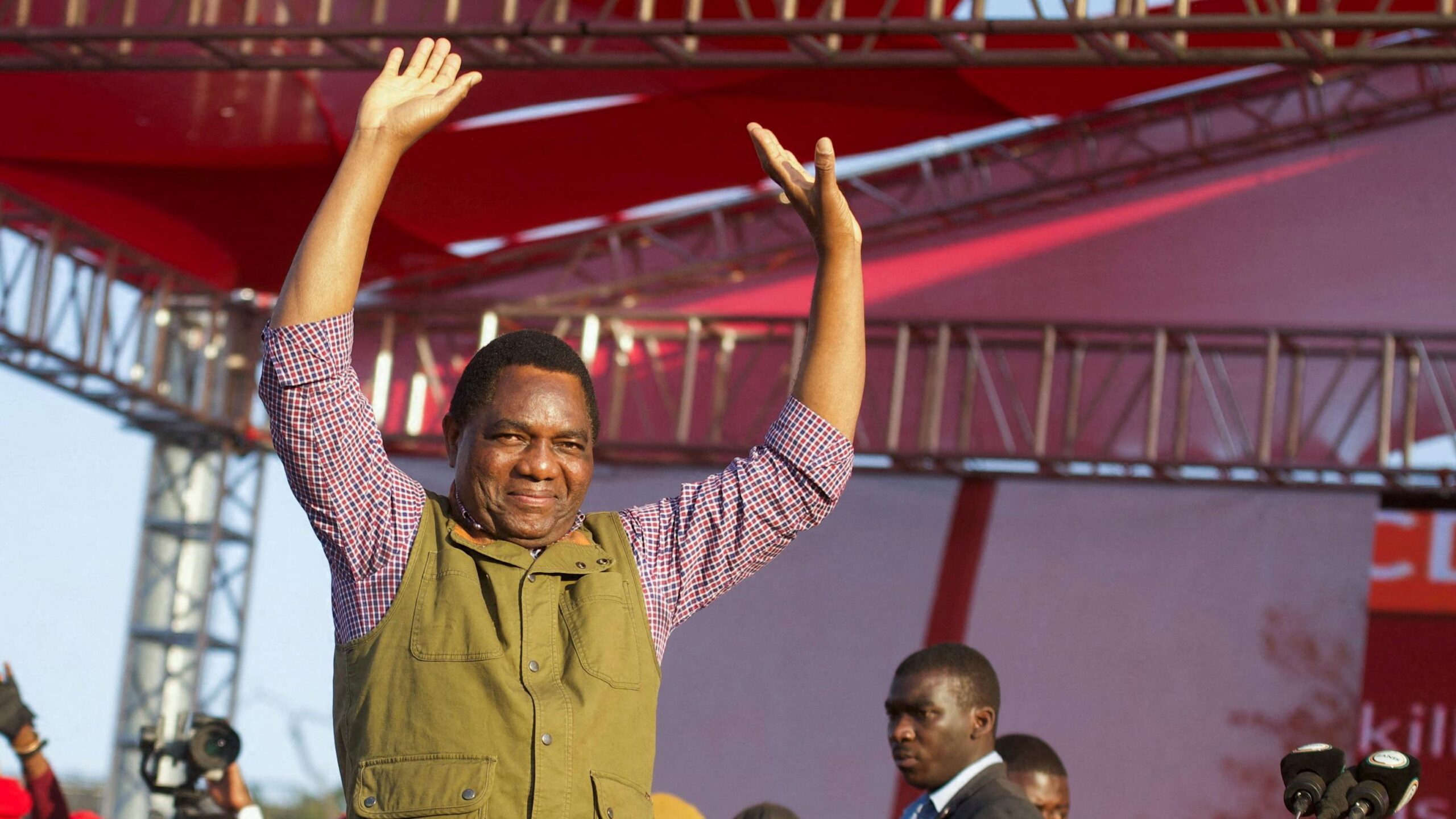
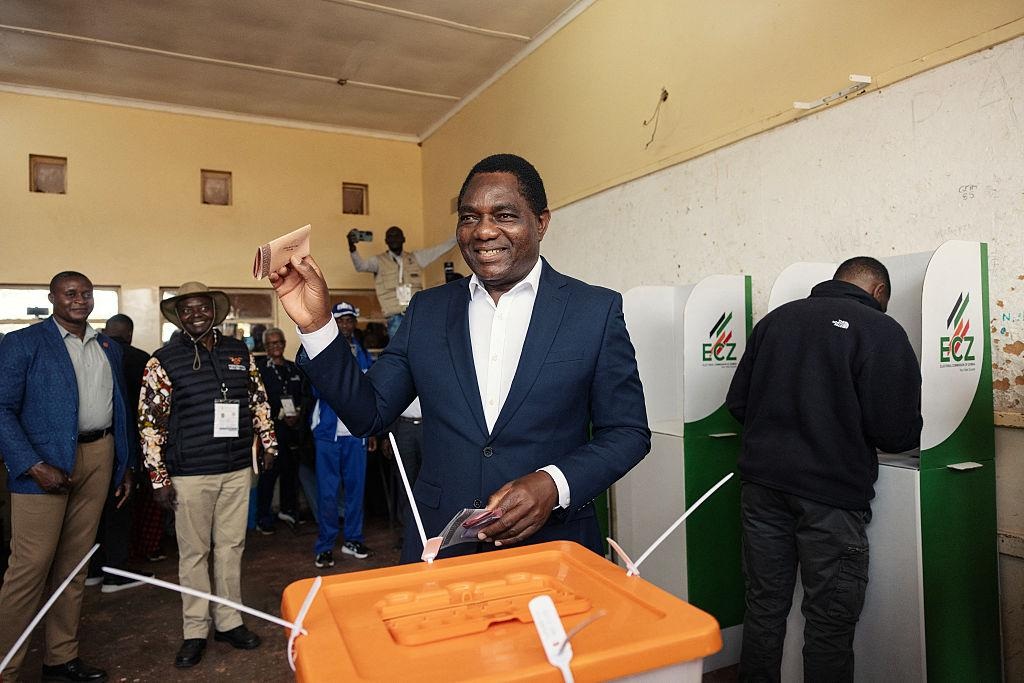
President Hakainde Hichilema has secured a second five-year term in office after winning Zambia’s presidential election, following a tense counting process that was briefly suspended by the Electoral Commission of Zambia (ECZ) over security concerns at some polling stations.
The ECZ halted the vote-counting process after reports of violence, attacks on election officials and the alleged theft of marked ballot papers in some areas. The commission said the suspension was necessary to protect election workers and preserve the credibility of the results process.
President Hakainde Hichilema’s re-election was built on a message of economic recovery, stability and continuity, as voters weighed his government’s record against the challenges facing Zambia.
When Hichilema first came to power, Zambia was navigating one of its toughest economic periods, having become Africa’s first pandemic-era sovereign debt defaulter in 2020. His administration made economic recovery the centrepiece of its leadership story, pointing to debt restructuring efforts, renewed engagement with international lenders and attempts to restore investor confidence as key achievements.
For many of his supporters, the election was not only a judgment on the challenges of the past five years but also a decision on whether his government deserved more time to complete its economic reform agenda.
Economic recovery as a campaign cornerstone
A major part of Hichilema’s re-election campaign focused on the argument that his administration had stabilised an economy that was facing severe pressure when he assumed office. His government highlighted progress in restructuring Zambia’s debt, attracting investment and improving economic confidence as signs that the country was moving toward recovery.
Supporters viewed these measures as evidence of responsible economic management, arguing that maintaining continuity was necessary to protect the gains made during his first term.
The appeal of stability and continuity
Beyond economic figures, Hichilema’s campaign benefited from voters who valued political stability. After years of economic uncertainty, many Zambians saw his leadership as a steadying force and believed another term would allow his administration to deliver on long-term reforms.
His supporters argued that a change in leadership could disrupt ongoing economic programmes, while another five years would provide the opportunity to consolidate progress.
The opposition’s challenge
Although opposition candidate Brian Mundubile mounted a significant challenge, his campaign struggled to overcome Hichilema’s advantage as an incumbent. While critics questioned aspects of the government’s record and raised concerns about the pace of economic improvements, the opposition faced the challenge of convincing voters that it offered a stronger alternative path.
Hichilema’s economic message, combined with the strength of incumbency and his promise of continued reforms, ultimately helped him secure a second term.
A victory marked by both optimism and controversy
Following the announcement of his victory, Hichilema thanked Zambians for their support and pledged to govern for all citizens, including those who voted against him. He called for unity and promised to continue working toward national development.
However, the election was not without controversy. Opposition groups raised concerns over alleged intimidation, violence and the fairness of the campaign environment, highlighting the political tensions that surrounded the vote.
As Hichilema begins his second term, the expectations will be higher. His victory gives him a renewed mandate, but the next phase of his presidency will be judged by whether economic recovery translates into improved living conditions for ordinary Zambians.