

Recent data from Europe offers a stark reality check. France’s greenhouse gas emissions have fallen to their lowest levels since 1990, but the speed of this reduction is slowing down sharply. For developing nations watching the global green economy take shape, this slowdown highlights the complex realities of decarbonising hard-to-abate sectors like transport and energy production.
The Core Numbers: Lowest Levels Since 1990
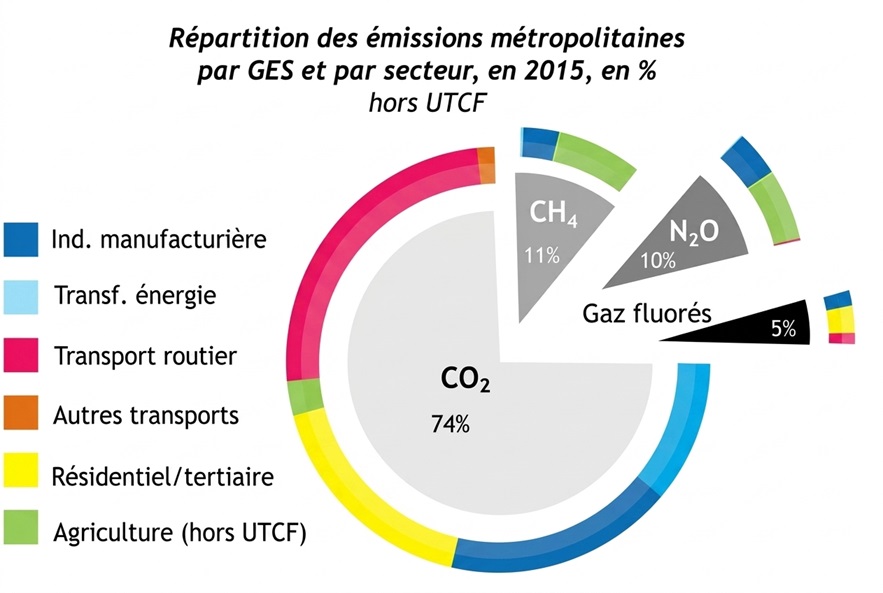
France’s greenhouse gas emissions fell by 1.8% in 2024, bringing the national total down to 366 MtCO₂eq. By 2025, emissions dropped slightly further by 1.5%, reaching roughly 363 to 364 MtCO₂eq. These figures mark the lowest emission levels the European nation has recorded since 1990.
Recent French press reports indicate that France’s greenhouse gas emissions cuts in 2024 and 2025 may be marginally better than early provisional figures suggested. According to Le Figaro (15 June 2026), Citepa—the independent body responsible for France’s official emissions inventory—announced that emissions fell more than initially estimated: −3.0% in 2024 and −2.1% in 2025, even though the reduction pace remains slower than in previous years. lefigaro

However, this revised assessment still requires official confirmation from Citepa itself. The latest official Citepa barometer (April 2026) reports −1.8% for 2024 and −1.5% for 2025, and Citepa explicitly notes that the next full estimate for 2025 will be published in the Secten report in June 2026. As of now, the official June 2026 Citepa publication has not been accessed or confirmed directly from Citepa’s site, so the −3.0% / −2.1% figures remain second‑hand, reported by media as Citepa’s announcement rather than verified from the primary source. enerdata
A Dangerous Loss of Momentum
Despite reaching historic lows, the pace of decarbonisation has decelerated significantly compared to previous years. In 2023, France witnessed a massive 6.0% to 6.8% reduction in emissions. The recent 2024 and 2025 figures demonstrate a severe loss in momentum when compared to that sharp decline.
This slowdown puts the country far below the roughly 4% annual reduction rate required to hit its strict carbon budget by 2030. Consequently, multiple analyses confirm that France is currently off track for its 2050 carbon neutrality targets.
Context Box: Fast Facts on Sector Performance
What is driving this climate slowdown? The data reveals a mixed performance across key industries:
- Transport Bottlenecks: The transport sector remains the largest single emitter, accounting for 34% of total national emissions. The sector continues to lag behind required trajectories.
- Power Generation Success (2024): Power generation emissions dropped sharply by 26% in 2024. This victory was driven by a 13% increase in nuclear output, a 27% rise in hydropower, and a 40% reduction in gas-fired power.
- Energy Production Setback (2025): The positive trend stalled in 2025, with emissions from energy production rising by 0.5%. This reversal was caused by the resumption of refining activities and a generally weaker decarbonisation push in the electricity mix.
The Call for a “Collective Awakening”
In November 2024, France raised its climate ambitions, updating its policy to target a 50% reduction in gross greenhouse gas emissions by 2030 compared to 1990 levels. However, the current sluggish pace makes this updated mandate highly difficult to achieve.
“The ongoing slowdown is a structural risk to achieving carbon neutrality, prompting the High Council on Climate to urgently call for a ‘collective awakening’ among policymakers and industries.” – Research Synthesis
As advanced economies struggle to maintain their climate momentum, developing powerhouses like Nigeria must take note. Strategic investments in infrastructure and transport will be crucial to avoiding these same structural bottlenecks.
Have Your Say
What crucial lessons can Nigeria learn from France’s current struggles with the transport and energy sectors as we build our own green economy? Share your perspective with us on X (formerly Twitter) and Facebook using #NTANetwork and #DigitalNigeria.