
Compiled By: Malami Haruna Dogon daji
In a world increasingly defined by conflict, the resilience of the human spirit resonates deeply with Nigerians, who intimately understand the triumph of grassroots innovation over severe adversity. In the war-scarred streets of Khan Yunis, this global narrative of resilience wears the face of a 24-year-old tailor who is single-handedly weaving joy from the ashes of destruction.
Sewing Beauty from the Ruins
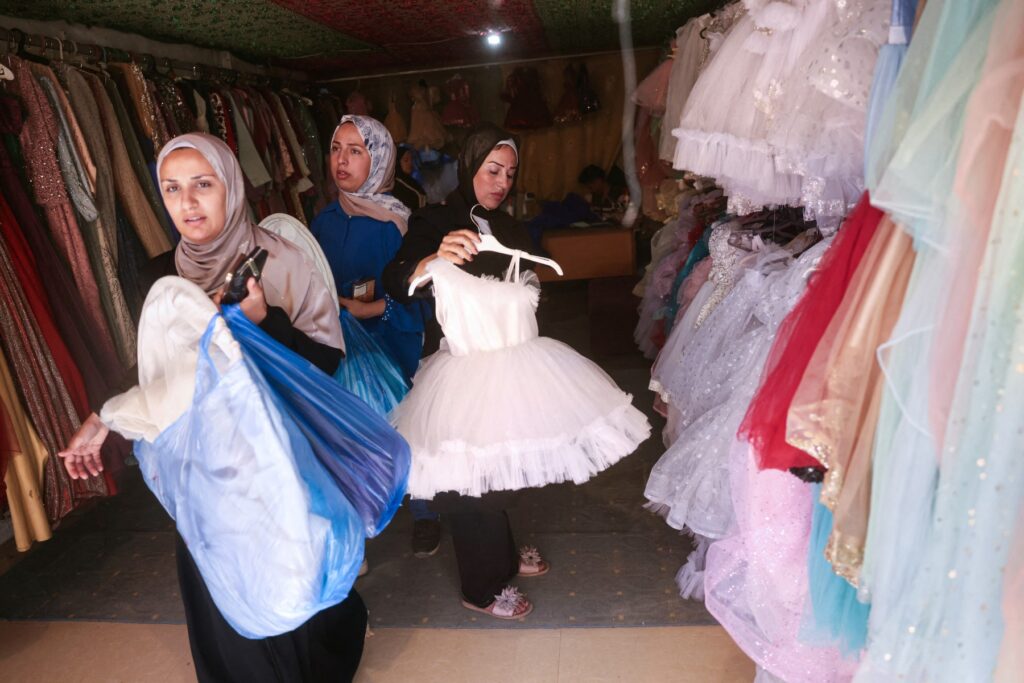
A young Gazan girl twirls across the floor of a dressmaker’s shop, her white dress billowing around her as a shy smile spreads across her face. Trimmed with delicate tulle and topped with a soft veil, the garment looks perfectly fit for a grand celebration.
Few observers would guess that parts of this elegant gown are fashioned from discarded fabric, salvaged directly from the ruins of the Israel-Hamas war. This masterpiece is the work of Amir al-Rantisi, a 24-year-old tailor on a mission to provide beautiful dresses for special occasions to young girls and women in southern Gaza.
“When I go to Gaza (City) to get the fabric, I take it from a place that’s been destroyed, from old fabric that’s available, which was probably damaged by shrapnel or burnt,” Amir stated. “I select pieces from it, and I make dresses from those pieces. I also take old dresses and recycle them.” – Amir Qudaih
Outside his shop, vibrant creations in satin, organza, and tulle hang from makeshift mannequins fashioned from iron poles. These garments provide vivid splashes of colour against a bleak backdrop of grey concrete and blackened buildings, allowing passing customers to inspect the gowns with ease.
Innovation Amidst the Darkness
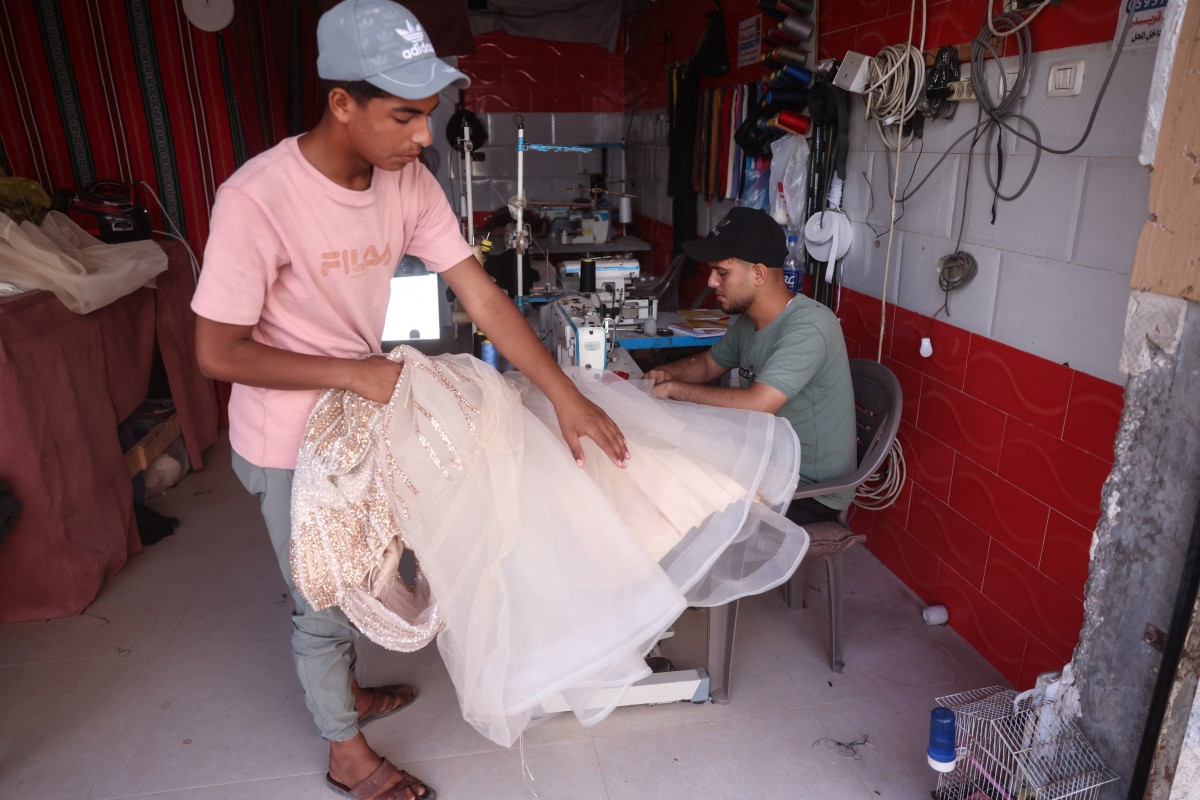
Keeping this tailoring business running requires constant, ingenious improvisation. The workshop hums with activity as Amir’s mother, Nisreen al-Rantisi, sorts through colourful fabrics while an assistant skilfully guides scissors through cloth.
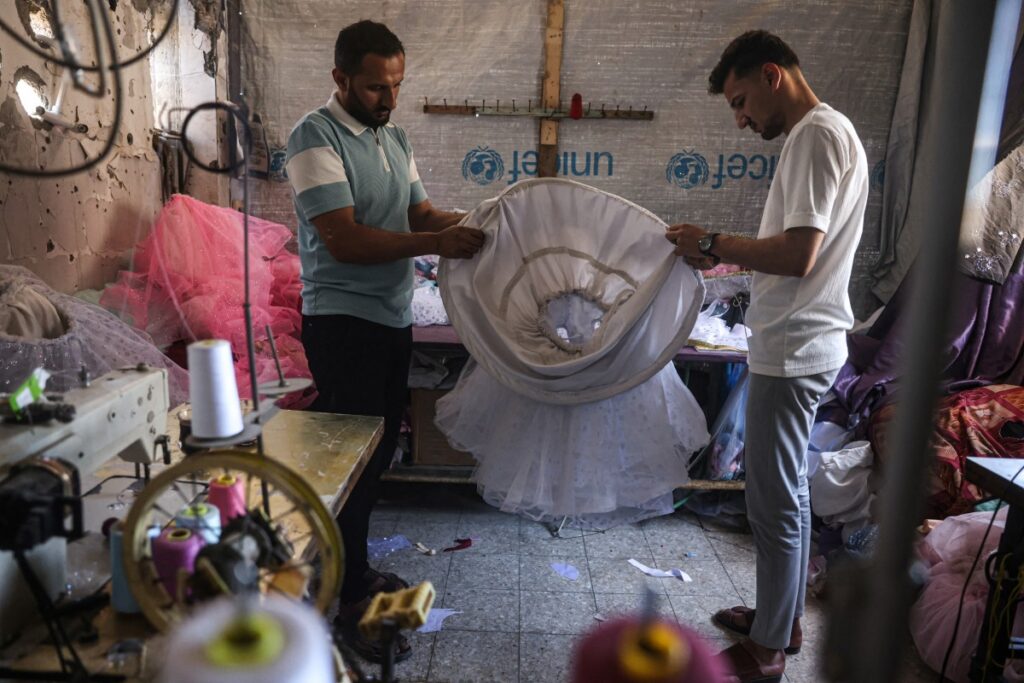
“We suffer greatly from power outages,” explained Nisreen. “Sometimes, we have orders or work that we can’t complete. Sewing is done manually; one person has to sew while the other has to do the rest.”
To combat the frequent power cuts that plague the devastated Gaza Strip, Amir engineered a brilliant, mechanical workaround. He has rigged an old bicycle pedal directly to his sewing machine, a makeshift solution ensuring production continues even when the electricity fails.
Fast Facts: The Economics of Survival
- Location: Khan Yunis, Palestinian Territories.
- The Innovator: Amir al-Rantisi (24), supported by his mother, Nisreen.
- The Method: Upcycling shrapnel-damaged and burnt fabrics into formal wear.
- Market Reality: A basic spool of black thread has surged from 7 shekels to 50 shekels (approximately ₦23,000) due to severe border restrictions and widespread shortages.
Joy Despite Hardship
The cost of supplies has soared astronomically, and basic materials are increasingly difficult to obtain. With entry points controlled and the number of aid trucks remaining exceptionally low, war-inflated prices show no immediate signs of easing.
“This spool of black thread is no longer available, and even if it’s available, it used to cost seven shekels, but now it’s 50 (around ₦23,000),” said Amir.
Yet, the workshop refuses to halt its rhythmic production. As the little girl spins once more in her white dress, her eyes wide with joy, Amir’s craftsmanship offers a profound reminder. It is a striking testament to how residents are finding ways to create, celebrate, and survive despite the overwhelming hardships of war.
The Social Call-to-Action (CTA) How does this story of innovation and human resilience inspire you? Share your thoughts with us on NTA’s digital platforms using #NTADigital and #GlobalResilience.