


By: Nigerian Television Authority / Malami Haruna Dogondaji
Feature | Technology, Governance & Development

Introduction: ‘The Systems’ Question Nigeria Must Answer
Nigeria’s challenges are often described in terms of leadership, corruption, or policy inconsistency. But beneath all of these lies a more fundamental issue—systems.
For Dr. Bright Enabulele, a technology entrepreneur and digital infrastructure innovator, the problem is neither abstract nor exaggerated. It is observable, measurable, and fixable.
“What we are missing is not talent, it’s simple systems.” — Dr. Bright Enabulele
Having built and observed structured digital ecosystems abroad, his conclusion is direct: societies that function efficiently do so because their systems—navigation, communication, commerce—are deliberately designed.
This realization has shaped not only his innovations but also his emerging interest in governance.
From Technology to Infrastructure Thinking
Unlike many entrepreneurs operating at the application layer, Dr. Enabulele’s work is rooted in infrastructure logic, the invisible frameworks that make societies function – systems.
His mission is clearly defined:
“My mission is to develop systems that enable Africa to operate more efficiently and independently in the digital age.”
This distinction is critical. It moves his work beyond startups into the realm of nation-building tools.

WakaMap: Rebuilding How Africa Navigates Itself
The Problem
Global navigation platforms have long struggled in African environments. Their limitations are not technical. They are contextual.
“Global maps are not built for African realities… they don’t understand our addressing systems, informal roads, or local dynamics.” — Dr. Bright Enabulele
The Solution
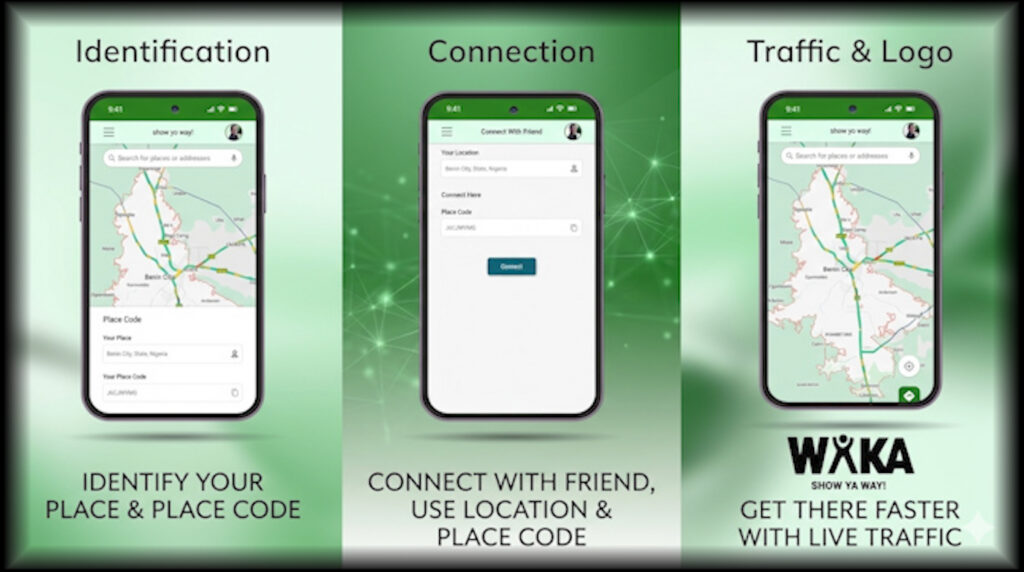
WakaMap is designed from the ground up for African conditions, not adapted, but built on purpose.
It enables:
- Accurate navigation in unstructured environments
- Business discoverability
- Logistics efficiency
- Emergency response improvement
Civic Impact
Beyond daily use, WakaMap introduces a governance dimension:
“WakaMap allows Nigerians to locate their polling units, navigate there easily, and receive real-time updates.” — Dr. Bright Enabulele
This transforms mapping into a tool for democratic participation, reducing confusion and improving voter engagement.
Oduwacoin: Rethinking Financial Systems
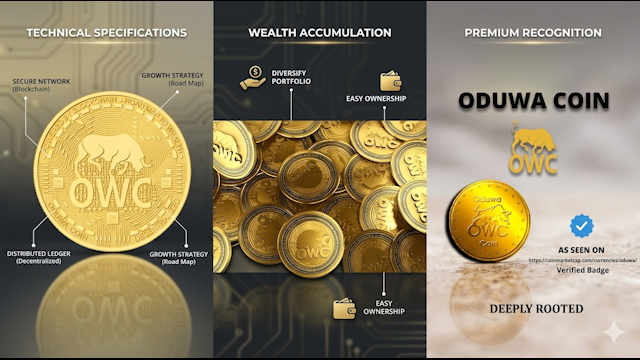
In parallel with navigation, Dr. Enabulele explores financial infrastructure through Oduwacoin.
The objective is not speculative finance, but economic positioning.
- Reduced reliance on external systems
- Faster intra-African transactions
- Alternative financial access for underserved populations
This aligns with a broader continental conversation: who controls Africa’s financial future?
The Turning Point: Why Governance Became Necessary
For Dr. Enabulele, the shift toward politics was not ideological; it was practical.
“No matter how powerful your technology is, without leadership alignment, impact is limited.” — Dr. Bright Enabulele
This insight reframes the relationship between innovation and governance.
Technology can build tools, but policy determines scale.
A Different Kind of Political Entry Point
Rather than approaching politics as a career, Dr. Enabulele frames it as a responsibility.
“If people who understand systems stay away, then nothing improves.” — Dr. Bright Enabulele
This perspective reflects a broader shift in leadership thinking—one that prioritizes:
- Competence
- Systems understanding
- Measurable outcome
What This Means for Nigeria’s Youth
Nigeria’s youth population stands to benefit significantly from leadership grounded in technical expertise.
Potential outcomes include:
- Stronger digital economy frameworks
- Increased innovation funding and support
- Job creation through infrastructure development
- Reduced bureaucratic inefficiencies
More importantly, it redefines aspiration, from survival to system creation.

Vision: A System-Driven Nigeria
When asked what Nigeria could become under innovative leadership, his response is structured and deliberate:
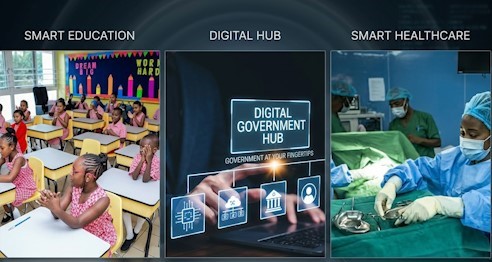
“Nigeria becomes efficient, data-driven, and globally competitive; a country where systems work, not by chance, but by design.” — Dr. Bright Enabulele
This is not rhetorical optimism. It is a systems blueprint.
Conclusion: A Profile That Signals a Shift
Not every technologist succeeds in governance. Not every innovation scales nationally.
But profiles like Dr. Bright Enabulele’s signal a critical shift in Nigeria’s development trajectory, one where leadership is increasingly defined by the ability to understand, build, and manage systems.
In that sense, his journey is not just personal. It reflects a broader possibility:
That Nigeria’s future may depend less on discovering talent and more on empowering those who know how to make systems work.