
Compiled By: Malami Haruna Dogondaji
24 OCTOBER, 2026
Nigeria has one laboratory-confirmed imported case of Ebola Bundibugyo virus disease in Abuja—not a confirmed nationwide outbreak. The patient, a Ugandan-born Swiss national married to a Swiss Embassy staff member, arrived from Uganda on 3 October, developed symptoms on 7 October, and tested positive on 20 October.
The most responsible public-health question is not simply “Is there Ebola in Nigeria?” It is: How was this one traveller infected, who may have been exposed, and is Nigeria containing the risk quickly enough? At present, WHO and Nigerian authorities describe an imported case under investigation; they have not announced evidence of sustained community transmission.
What is confirmed
The case was confirmed by Nigeria’s health authorities and reported by the World Health Organization’s Regional Office for Africa. WHO says the patient is isolated and receiving care, while the Nigeria Centre for Disease Control and Prevention (NCDC) has activated its incident-management system.
| Fact | What is known |
|---|---|
| Disease | Ebola Bundibugyo virus disease (BVD). |
| Location | Federal Capital Territory, Abuja, Nigeria. |
| Patient | A 42-year-old Ugandan-born Swiss national, wife of a Swiss Embassy staff member. |
| Arrival in Nigeria | 3 October 2026, after travel from Uganda. |
| Symptom onset | 7 October 2026, four days after arrival. |
| First healthcare visit | 11 October 2026, at a private health facility in Abuja. |
| Laboratory confirmation | 20 October 2026. |
| Current status | Isolated and receiving medical care. |
| Contacts | 44 contacts identified and under monitoring as of 20 October. |
| Embassy staff | Switzerland says all 25 embassy employees were in good health; the patient’s husband was isolated but asymptomatic. |
| Community transmission | Not established by WHO or Nigerian authorities in the available reporting. |
What remains unclear
The unresolved issue is where the patient acquired the infection. Uganda’s health authorities reportedly indicated a travel history involving the Democratic Republic of Congo, while Switzerland said the patient and her husband travelled to Uganda but did not visit the DRC.
WHO has not confirmed a DRC visit. Its guidance says investigations are ongoing to determine the likely source of infection and reconstruct the patient’s travel and exposure history.
That distinction is important. A confirmed Ebola diagnosis is not the same as proof of where infection occurred. Until investigators reconcile travel records, border data, interviews, and contact-tracing findings, competing claims should be treated as unresolved, not as settled fact.
Why this is not “fake news”
Claims already beginning to circulate that there is “no Ebola case” conflict with the official record. WHO’s Disease Outbreak News and its Africa regional office both report a confirmed imported case in Abuja, with laboratory confirmation, isolation, and contact tracing underway.
At the same time, it would be equally irresponsible to present this as evidence that Ebola is spreading widely across Nigeria. The available official information supports a narrower conclusion: one imported case, under active investigation, with no publicly established community transmission.
Why the delay matters
There is a 13-day gap between symptom onset on 7 October and laboratory confirmation on 20 October. The patient first sought care on 11 October.
This does not prove a failure, because early Ebola symptoms can resemble malaria, typhoid, influenza, or other febrile illnesses. But in a period of a major regional Ebola outbreak, a returning traveller with compatible symptoms should trigger rapid assessment, isolation where clinically appropriate, and testing.
The priority now is to determine whether any exposure occurred at the private facility, during travel, or through another contact. WHO says infection-prevention-and-control measures are being strengthened, particularly at the facility where the patient first sought care.
How Ebola spreads—and does not
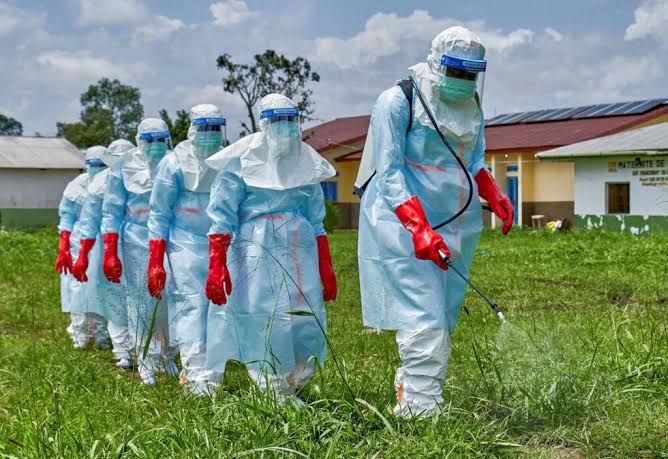
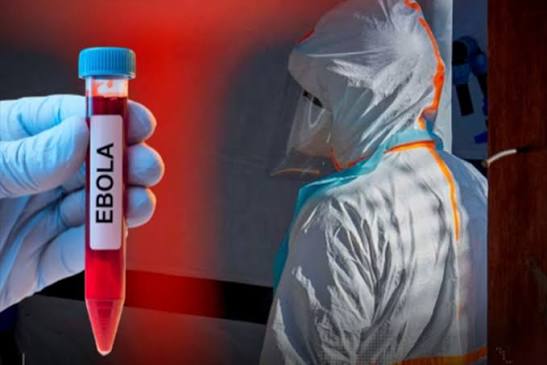
Ebola is not an airborne disease. It spreads through direct contact with the blood or body fluids of a person who is sick with or has died from Ebola, contaminated objects, or infected animals.
This means ordinary brief contact—such as being in the same airport, office building, or neighbourhood—does not by itself establish infection risk. The public-health focus is on identifying people with high-risk exposures, such as unprotected contact with a symptomatic patient’s body fluids, and monitoring them for 21 days.
That is why contact tracing matters more than panic. WHO reports that Nigeria had identified 44 contacts by 20 October and that monitoring was ongoing.
The regional context
Nigeria’s case occurred during a serious multi-country outbreak that WHO says began in the Democratic Republic of Congo on 15 May 2026. Nigeria became the fifth country to detect the virus during the outbreak.
| Country | Situation in WHO reporting |
|---|---|
| DR Congo | Epicentere of the outbreak; thousands of cases and deaths reported. |
| Uganda | Reported cases earlier in the outbreak; WHO notes its outbreak was declared over in August. |
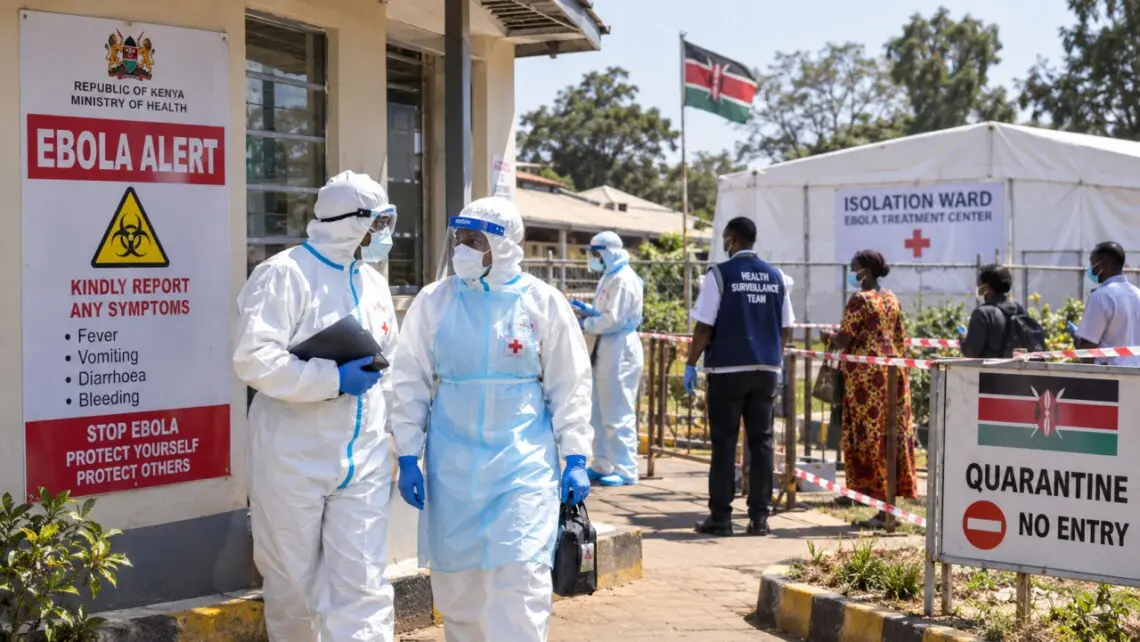
| Kenya | Reported an imported case and associated death; later cases were linked to that index case. |
| Nigeria | One laboratory-confirmed imported case in Abuja. |
WHO’s latest risk assessment cited a very high risk in the DRC, high risk in countries sharing a land border with the DRC, and low risk for the rest of Africa and globally. It says that assessment is being revised because the outbreak has evolved and cases have appeared in Kenya and Nigeria.
WHO’s response
WHO’s response centres on rapid containment and support for national authorities rather than blanket travel restrictions. It advises against restrictions on travel and trade with affected countries.
Its support includes:
- Coordination with Nigeria’s NCDC and health authorities.
- Case investigation and contact tracing.
- Isolation and clinical-care support.
- Infection-prevention-and-control strengthening at the private facility.
- Provision of personal protective equipment and essential supplies.
- Support for surveillance, laboratory testing, and rapid outbreak investigation.
- Regional preparedness and cross-border collaboration.
WHO also notes that there are currently no approved vaccines or specific treatments for Bundibugyo virus disease. It is supporting the TUMAINI Phase 2/3 vaccine trial in the DRC to build evidence for future prevention tools.
What responsible reporting should say
The story should not be framed as “Nigeria is hiding Ebola,” nor as “Ebola has reached every Nigerian city.” The evidence supports a more precise account:
- Confirmed: One imported Ebola Bundibugyo case in Abuja.
- Confirmed: The patient is isolated and receiving care.
- Confirmed: Contact tracing is active, with 44 contacts identified by 20 October.
- Unresolved: The exact place and circumstances of infection.
- Unresolved: Whether Uganda’s or Switzerland’s account of the patient’s DRC travel history is complete.
- Not established: Widespread or sustained Ebola transmission within Nigeria.
What Nigerians should do
Residents do not need to panic, but they should take credible health guidance seriously.
- Follow updates from the NCDC, Federal Ministry of Health, WHO, and recognised state health authorities.
- Avoid sharing unverified claims about the patient’s identity, travel route, or infection source.
- Seek medical care early for fever, weakness, muscle pain, vomiting, diarrhoea, or unexplained bleeding—especially after recent travel from an affected area.
- Do not self-medicate or conceal travel history from health workers.
- Support contact tracers and health workers; cooperation protects families, clinics, and communities.
- Reject stigmatising language toward Ugandans, Congolese people, Swiss nationals, health workers, or residents of Abuja.
Call to action
Stay informed, not alarmed. Verify Ebola updates through the NCDC, Nigeria’s Federal Ministry of Health and Social Welfare, WHO Nigeria, and WHO’s Africa Regional Office before sharing. If you have relevant travel or exposure information connected to this case, contact health authorities through official channels rather than social media. Accurate information, early reporting, and cooperation with contact tracing are the most effective ways to keep one imported case from becoming an outbreak.