
Compiled By: Malami Haruna Dogondaji
24 OCTOBER, 2026
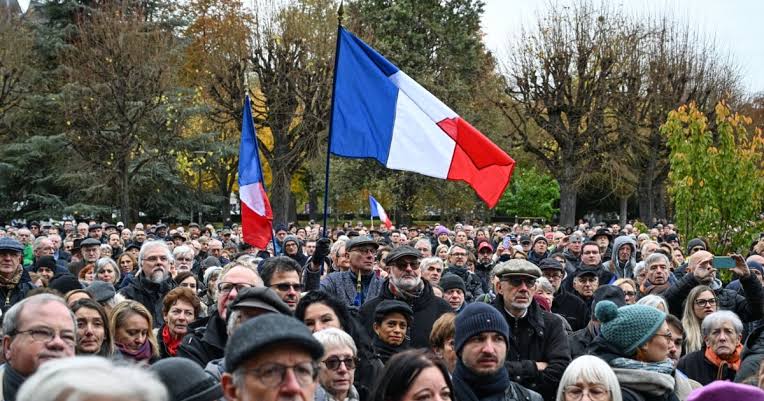
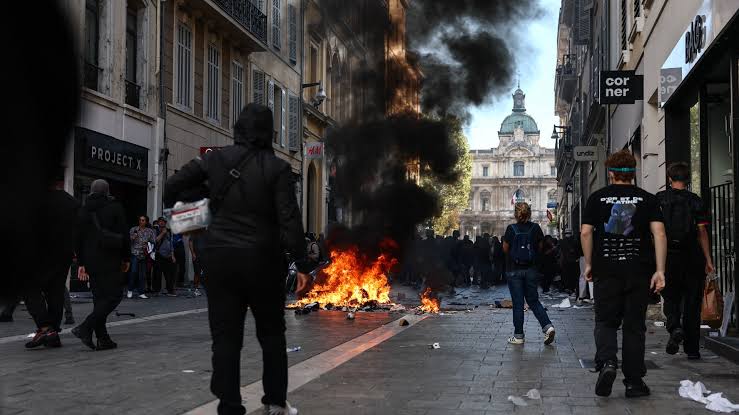
Hundreds of protests were held across France on Saturday as anger over the cost of living, strained public services, and inequality brought students, workers, unions, pensioners, farmers, and activists onto the streets. Authorities deployed about 70,000 security personnel nationwide to prevent a repeat of last weekend’s looting, arson, and vandalism.
The movement began with weeks of high-school protests over learning conditions but has broadened into a nationwide expression of economic discontent. The challenge for the government is to distinguish peaceful protest from criminal violence—without turning a legitimate demonstration into a wider confrontation.
Key developments
| Fact | Detail |
|---|---|
| Date | Saturday, 24 October 2026. |
| Scale | Hundreds of protests planned nationwide; more than 600 were reported planned. |
| Core grievances | Rising cost of living, declining social services, inequality, and school funding and learning conditions. |
| Security deployment | About 70,000 officers and security personnel nationwide. |
| Equipment | Helicopters, armoured vehicles, water cannons, and riot police. |
| Previous turnout | More than half a million people demonstrated last weekend. |
| Paris measures | Shops and restaurants boarded up; Louvre and Musée d’Orsay closed; curfew in parts of the capital. |
| Arrests | Interior Minister Laurent Nuñez said police had arrested 135 people and seized weapons. |
| Early clashes | Police fired tear gas in Lyon to disperse about 150 protesters in an area where demonstrations were banned. |
| Court action | Courts had already sent 217 people to prison over events during the previous Saturday’s unrest. |
| Political backdrop | Presidential replacement elections are about six months away; polls cited by AFP show Marine Le Pen as frontrunner. |
Why people are protesting
The immediate trigger was student anger over school conditions and funding, but the protests have grown into a broader cost-of-living movement. Demonstrators are also voicing concern over weakening public services and inequality.
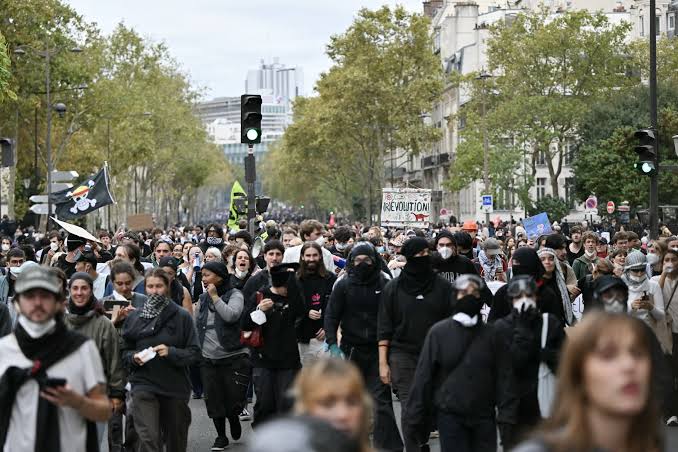
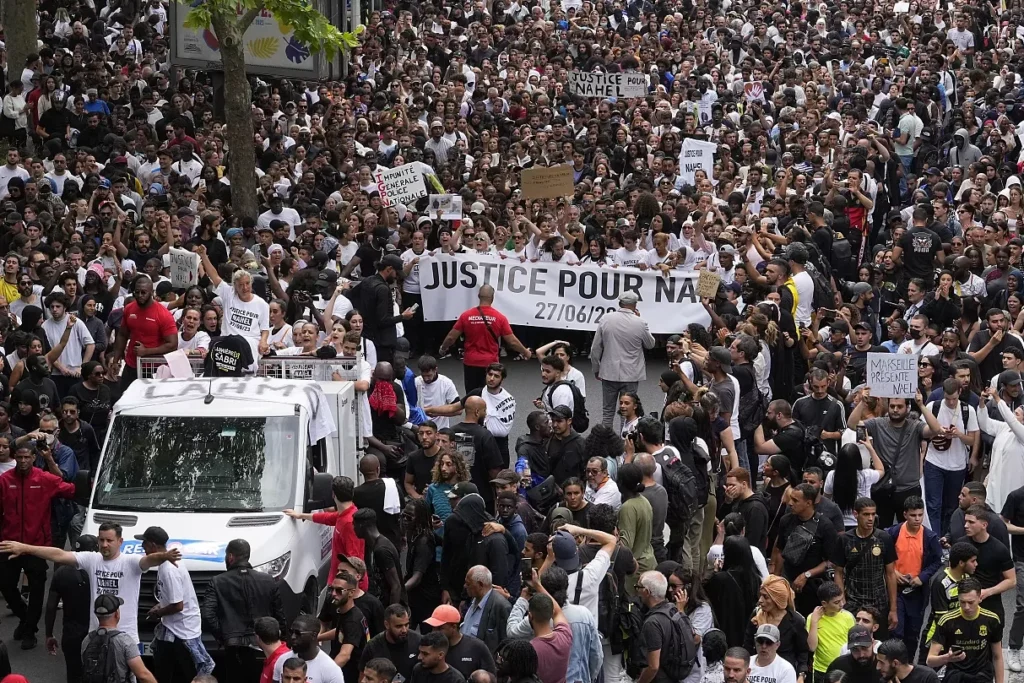
AFP reported that the protests have drawn together high-school students, workers, unions, pensioners, climate activists, and farmers. That breadth matters: it suggests the movement is no longer confined to one policy issue or one social group.
The security response
The government has mounted one of its largest recent security operations. Interior Minister Laurent Nuñez said as many as 70,000 officers would be deployed, supported by helicopters, armoured vehicles, and water cannons.
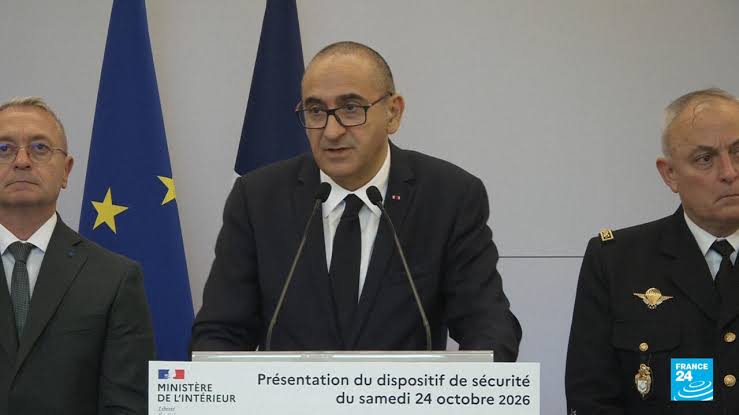
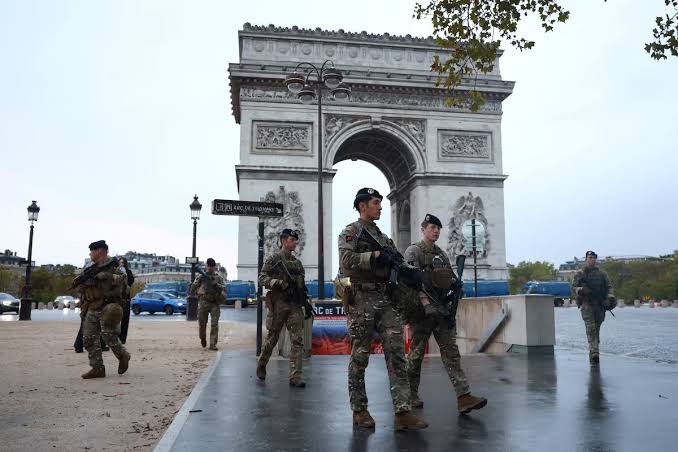
In Paris, central shops and restaurants were boarded up, major museums were closed, and a curfew was imposed in parts of the capital. Soldiers from an anti-terrorism unit patrolled the Champs-Élysées, while police vans circled the Arc de Triomphe.l
Nuñez urged police to be “hyper-reactive” against troublemakers and looters. Prime Minister Sébastien Lecornu warned on Friday that “the threat” of violence “remains high.”
Protest restrictions and rights concerns
Authorities have imposed restrictions in several cities. In Orléans, a counter-demonstration against Marine Le Pen’s National Rally was barred from the city centre; in Lyon, central areas were off-limits to demonstrators; and in Paris, police withdrew permission for a union march between Bastille and Nation squares, offering an alternative route instead.
Unions said they would proceed on the original Paris route, citing safety concerns about the alternative. In Marseille, authorities initially banned protests but later allowed a union-organised demonstration on an “exceptional basis.”
Human-rights groups have criticised the measures. Amnesty International described the restrictions as a “slide toward authoritarian practice” and said they were “jeopardising the right to demonstrate peacefully.”
Human Rights Watch’s Eva Cosse said police have a responsibility both to enable peaceful protest and to protect the public from violent disorder. She also raised concern about reports of children being seriously injured by crowd-control weapons.
Violence versus legitimate protest
The government’s central argument is that peaceful demonstrators and violent groups should not be treated as the same. Officials blame “ultra-left” groups for exploiting last weekend’s protests to loot, burn, and ransack property.
AFP reported that an extreme-left group in western France had urged supporters to be “uncatchable” and “unpredictable” to evade police deployment. That statement will strengthen the government’s case for tougher policing, but it does not by itself justify blanket restrictions on all protesters.
The key test is proportionality: authorities must protect people and property while preserving the right of peaceful citizens to demonstrate.
What happened on the ground
Early reports indicated that the day began with heavy security but no immediate repeat of last weekend’s major violence. AFP reported that police arrested more than 130 people and used tear gas in isolated clashes, while the government said there were no early signs of the widespread disorder seen a week earlier.
In Lyon, police fired tear gas to disperse about 150 people protesting in a banned area. An AFP journalist also saw a police helicopter overhead, with armoured vehicles and riot police vans nearby.
The political stakes
The protests arrive at a politically sensitive moment. France is about six months from elections to replace President Emmanuel Macron, and AFP reported that polling cited in its coverage puts far-right leader Marine Le Pen in the lead.
Le Pen’s National Rally is holding its party congress in Orléans this weekend, adding another flashpoint. Local authorities expected between 20,000 and 30,000 counter-protesters, while shops in the city were also boarded up.afp+1
The unrest could deepen public frustration with the government, but it could also strengthen demands for order. Either way, the protests are now inseparable from France’s wider political and economic crisis.
What to watch next
The immediate questions are whether Saturday’s demonstrations remain largely peaceful, whether arrests rise sharply, and whether the government offers concrete measures on living costs and school funding.
The Yellow Vest movement, a key force behind recent cost-of-living protests, has already called for further demonstrations on 31 October. That suggests the dispute is unlikely to disappear after one weekend.
Call to action
Follow verified updates, not viral clips. Check reporting and French authorities before sharing protest videos or claims about arrests, injuries, or violence. If you are in France, avoid confrontation zones, follow local police guidance, and know your rights before attending a demonstration. Peaceful protest and public safety are not opposing goals—both depend on accurate information and restraint.