
Compiled By: Malami Haruna Dogondaji
OCTOBER, 2026 – ABUJA, NIGERIA
The first shock of fuel-subsidy removal landed in household budgets. A second phase could bring better jobs, transport and public services—but only if government converts higher revenues into results people can see.
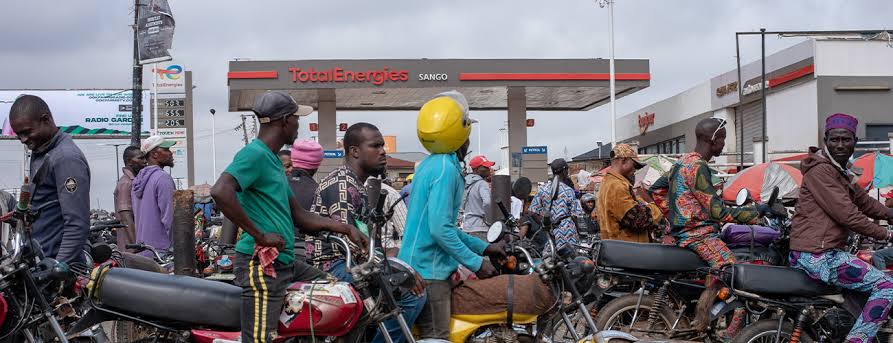
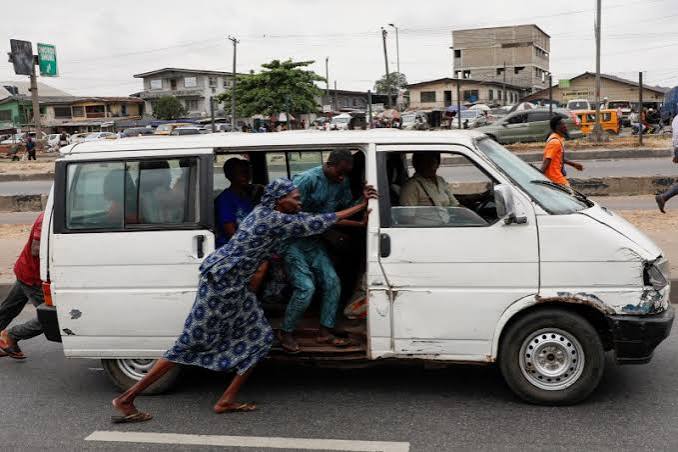
For many Nigerian families, the first test of subsidy removal is painfully simple: how much it costs to get to work, buy food and keep a small business running. Removing the subsidy changed the price of petrol; the shock then travelled through fares, food distribution, generator costs and the prices of everyday goods.
But there is a second question. Can the reforms that followed, greater public revenues, a more stable economy and new investment -eventually lift living standards? The answer is possibly, but not automatically. Nigeria’s economy is growing, but growth will not feel like prosperity unless it produces secure jobs, stronger purchasing power and reliable public services.
The first-round shock
Subsidy removal changed the cost structure of daily life. A commuter may not buy petrol directly, but still pays for it through a bus fare. A household may not own a generator, but pays for the diesel or petrol used by the shop, miller, cold-room operator or food transporter supplying it.
Those costs compound. Higher transport expenses raise the price of getting crops to market. Higher energy costs raise the cost of processing and storing food. Businesses that cannot absorb the increases pass them on, cut operations or employ fewer people. The poorest households are least able to adjust: they spend a greater share of their income on necessities and have little savings to fall back on.
That is why falling inflation is not the same as falling prices. Nigeria’s headline inflation eased to 15.39 per cent in August 2026, but food inflation was still 19.57 per cent year on year. Prices were still rising; they were simply rising more slowly than before.
The World Bank’s October 2026 assessment makes the divide between the national economy and the household economy clear. Nigeria’s real GDP grew by 4.2 per cent in the first half of 2026, while higher fuel costs and seasonal food pressures slowed progress on inflation. The Bank said growth had helped stabilise poverty for the first time since 2019, but warned that inflation continued to weigh on people’s purchasing power.
What could the second round deliver?
The case for subsidy removal rests on what government can do with the fiscal space created by ending a costly system of keeping petrol prices artificially low. Instead of spending public resources to suppress the pump price for everyone, governments can direct more support towards transport, infrastructure, health, education, social protection and investment that raises productivity.
There are early signs of a broader fiscal change. The World Bank reported that gross federation revenues increased by 69 per cent in real terms between 2023 and 2025, driven largely by exchange-rate reforms, subsidy removal and stronger revenue administration. States received the biggest increase in federation revenue flows. That potentially gives them greater capacity to improve services and infrastructure—but the increase in revenue is an opportunity, not proof that citizens have benefited.
The Ministry of Finance’s own account also cautions against a simplistic “subsidy savings paid for everything” story. It estimates ₦15.8 trillion in subsidy savings shared across the three tiers of government between June 2023 and December 2025. It says the Federal Government’s share was ₦5.43 trillion, while states received ₦6.52 trillion and local governments ₦3.88 trillion. The ministry also reports that additional federal spending pressures exceeded incremental federal resources, meaning subsidy removal reduced the need for borrowing rather than creating a large, uncommitted pool of cash.
That distinction matters. If a state receives more money, the public should be able to trace it into functioning classrooms, clinics, roads, water systems, public transport or social assistance. If the money goes mainly towards recurrent spending, debt costs or projects that remain incomplete, the second-round dividend will not reach households in a meaningful way.
A recovery is not yet prosperity
A growing economy can still leave most people behind. The World Bank projects Nigeria’s growth to average 4.4 per cent in 2026–28, with inflation potentially declining towards 12 per cent by 2028. But its current assessment says growth remains insufficient to create enough productive jobs or materially reduce poverty. It estimates that 50.8 per cent of Nigerians—about 123 million people—lived in extreme poverty in 2025.
This is the central risk in the “second-round” argument: policymakers may point to stronger GDP, revenue, reserves or investor confidence while families continue to experience high food prices and weak real incomes. Those national indicators matter, but they do not substitute for household outcomes.
The transition from reform to prosperity has to pass through several links:
- Lower and more predictable inflation so wages and savings retain value.
- Productive investment in power, transport, agriculture and logistics, so businesses can grow without relying so heavily on costly self-generated energy.
- More and better jobs, not only higher output concentrated in sectors that employ relatively few people.
- Stronger public services, especially at state and local levels where people encounter government most directly.
- Targeted protection for households facing hardship during the adjustment.
If one or more links fail, growth may remain visible in national accounts without being felt at the market stall, bus stop or dinner table.
Turning fiscal space into household gains
Government should treat the second round as a delivery challenge with measurable targets—not as an argument that the public must wait patiently for benefits to arrive.
First, publish a “follow the money” record. Federal, state and local governments should explain how additional revenues were allocated and what was completed with them. Each major project should have a published budget, location, contractor, timetable, progress record and completion status. The Ministry of Finance has already published a reform scorecard that separates estimated subsidy savings, the shares received by different tiers and federal spending pressures. The next step is comparable, independently verifiable reporting by state and local governments.
Second, make transport relief visible to passengers. CNG programmes and fuel discounts should be judged by what happens to fares, not just by how many vehicles are converted or how many litres are sold. Government should publish participating routes, baseline fares, new fares, service levels and passenger coverage. If fuel becomes cheaper for an operator but fares do not fall, authorities should explain why.
Third, strengthen food logistics as well as farm production. More food at the farm gate does not guarantee affordable food in the city. Better feeder roads, storage, cold chains, market access and reliable freight movement can reduce losses and the cost of moving produce. Authorities should also address other pressures on supply—such as insecurity, seasonal disruption and market bottlenecks—rather than treating fuel prices as the only driver of food inflation.
Fourth, make social support predictable and easy to verify. Cash transfers can provide a direct bridge for poor households, but eligibility rules, payment schedules and complaint channels must be clear. A programme announced in a budget is not the same as money received by a household. Government should report how many eligible families were paid, when they were paid and how complaints were resolved.
Fifth, prioritize reliable infrastructure over announcements. Better roads can reduce vehicle wear and delivery times; dependable electricity can cut businesses’ reliance on generators; efficient ports and rail can lower logistics costs. But citizens should be able to judge progress by projects completed and services delivered—not by the size of an appropriation or a ceremonial launch.
Finally, make the public test about jobs and purchasing power. Government should regularly report on employment, real wages, food prices, transport costs, social-transfer coverage and capital-budget delivery alongside GDP and inflation. The reform is working for ordinary Nigerians only when households can afford more, access better services and find productive work—not merely when the macroeconomic figures improve.
The answer is conditional
Nigeria may be entering a second phase in which higher revenues, economic stabilization and private investment create the conditions for wider prosperity. The growth and revenue figures offer a basis for cautious hope. But the household squeeze remains real, and growth alone cannot repair it.
The first round of subsidy removal imposed costs quickly and broadly. The second round will be judged more slowly, but more concretely: Did transport become more affordable? Did food become easier to buy? Did reliable power and better roads reduce business costs? Did more people find decent work? Did public services improve?
If those questions are answered with evidence, the reform can become more than a fiscal correction. If it cannot, “prosperity” will remain a promise citizens are asked to believe while paying the cost upfront.
Follow us on NTANetwork and share you thoughts for more insight into the context of your own experiences