

As Nigeria and emerging African digital economies navigate their own paths toward technological independence, a fierce geopolitical storm is brewing across the Atlantic over the future control of global Artificial Intelligence (AI).
Washington Issues Stark Warning to Brussels
United States Ambassador Andrew Puzder has delivered a stern warning to European policymakers, cautioning Brussels against drifting away from Washington in the critical race for AI dominance. Speaking at the Brussels Economic Security Forum held on 4–5 June 2026, the American envoy framed the technological contest in uncompromising geopolitical terms.
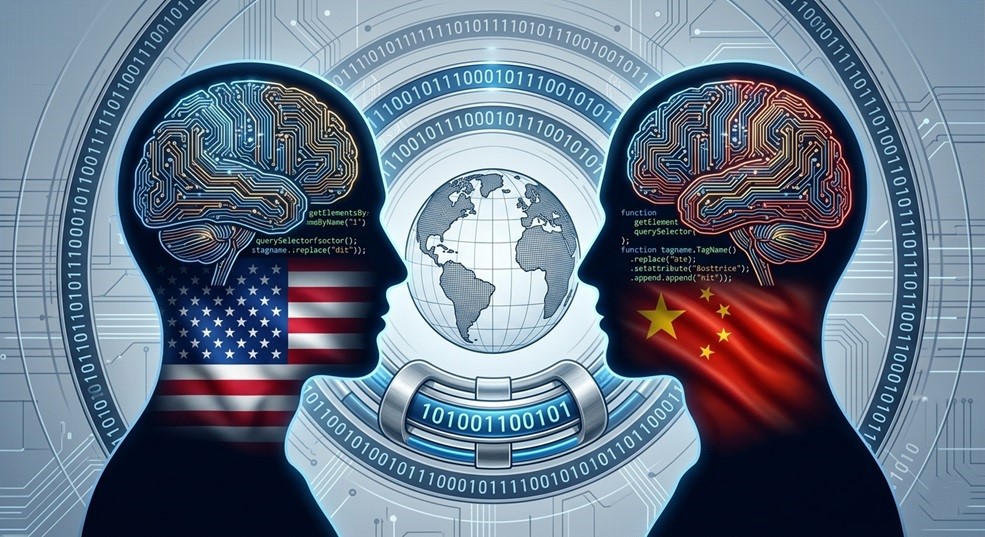
Ambassador Puzder explicitly stated that the West is locked in an “AI war” with China. He argued that European security relies on deep partnership with the US rather than pursuing a policy of technological decoupling.

“It is important for Western civilisation that the US win the AI contest. A Chinese technological lead could be used in economically coercive ways harmful to Europe.”
— Andrew Puzder, US Ambassador
The ‘Made in Europe’ Push
The diplomatic friction stems from recent European Union strategies designed to aggressively reduce dependence on foreign technology platforms. On 2 June 2026, the European Commission adopted the Cloud and AI Development Act as a formal proposal to strengthen its domestic digital capacity.
The draft act aims to create an EU-wide framework for cloud and AI sovereignty while supporting public-sector adoption, rather than immediately banning American firms. However, this protectionist shift forms the cornerstone of Europe’s broader “Made in Europe” industrial drive to curb its reliance on American Big Tech.
Fast Facts: The Transatlantic AI Dispute
| Strategic Issue | United States Position | European Union Position |
| Core Objective | Allied alignment to counter China’s tech rise. | Strategic autonomy and local industry protection. |
| Policy Mechanism | Shared data infrastructure and Western hardware ties. | Legislative frameworks via the Cloud and AI Development Act. |
| Systemic Risk | Fragmentation of global Western standards. | Overdependence on foreign digital platforms. |
Why Washington Is Concerned
Washington’s anxieties extend far beyond simple market competition. US officials fear that the EU’s tech-sovereignty agenda will systematically sideline American enterprises under the guise of achieving strategic autonomy.
Ambassador Puzder countered that Europe cannot close the capability gap by “bringing other people down”. He insisted that the continent should instead secure critical access to advanced data centres and hardware through a unified transatlantic alliance.
Europe’s Sovereignty Dilemma
This clash highlights a profound strategic dilemma for European leaders. Brussels is forced to balance its vital security reliance on Washington against the urgent need to protect its domestic industrial base from foreign monopolies. Critics warn that Europe remains significantly behind in AI infrastructure and compute capacity, making complete self-reliance unrealistic.

If Brussels pushes too far with these restrictive digital rules, the dispute could trigger aggressive trade and regulatory retaliation from Washington. However, backing down leaves European leaders vulnerable to domestic criticism that they are surrendering tech sovereignty to foreign platforms.
Implication for Nigeria: The Battle for Digital Standards
For Nigeria and other African digital economies, this transatlantic rift serves as a critical reminder that AI infrastructure is now a geopolitical battleground, not just a tech policy debate. The decisions made in Brussels and Washington will directly dictate the tools, pricing, and partnerships available to emerging markets.


Nigeria has already established firm baselines for technological independence. For instance, the National Information Technology Development Agency (NITDA) mandates strict data localization and domestic hosting for some critical government services.
As the West fragments over data control and cloud infrastructure, African nations must carefully decide where to source hardware, how to regulate sovereign data, and whether to align with American or European digital standards.
The Social Call-to-Action (CTA)
As Western powers clash over tech sovereignty, how should Nigeria position itself to protect its digital borders? Share your views on NTA’s digital platforms using the hashtag #NTADigitalInnovation.