
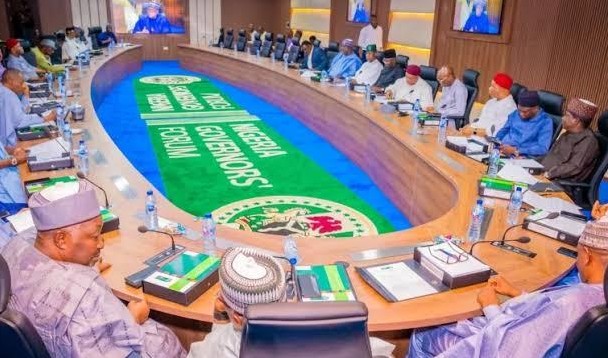
Twelve state governors approaching the end of their tenures are set to leave behind a combined debt burden of about ₦5.3tn, raising questions about the financial obligations their successors will inherit.
The figure, analysed by The PUNCH from Debt Management Office data, comprises about ₦2.16tn in domestic debt and approximately $2.33bn in external obligations.
The governors are Umaru Fintiri of Adamawa, Mai Mala Buni of Yobe, Abdullahi Sule of Nasarawa, AbdulRahman AbdulRazaq of Kwara, Dapo Abiodun of Ogun, Inuwa Yahaya of Gombe, Bala Mohammed of Bauchi, Babajide Sanwo-Olu of Lagos, Babagana Zulum of Borno, Seyi Makinde of Oyo, Hope Uzodimma of Imo and Douye Diri of Bayelsa.
Most are expected to leave office in 2027, while Uzodimma and Diri are due to complete their tenures in January and February 2028 respectively.
Lagos has the largest domestic debt among the 12 states, with ₦1.205tn recorded as of the first quarter of 2026, while Nasarawa has the lowest at ₦27.15bn. Lagos also has the highest external debt at $1.174bn, while Yobe’s external obligation stands at $46.67m.
The debt positions have changed differently across the states during the governors’ tenures. In Adamawa, domestic debt fell from ₦95.22bn when Governor Umaru Fintiri assumed office to ₦64.7bn, while external debt rose from about $100.6m to $124m. In Nasarawa, domestic debt declined from ₦89.95bn to ₦27.15bn under Governor Abdullahi Sule, while Imo’s domestic debt fell from about ₦164.4bn to ₦81.65bn under Governor Hope Uzodimma.
The states’ outstanding obligations include loans contracted for various government programmes and projects. The debt figures also reflect repayments and new borrowing during the period, while the states may have other financial commitments, including unpaid contractor bills, pension obligations, salary arrears and costs associated with ongoing projects.
With the affected governors approaching the end of their tenures, the outstanding debts and other financial commitments will be transferred to their successors, who will have to manage the obligations alongside new spending and development plans.