
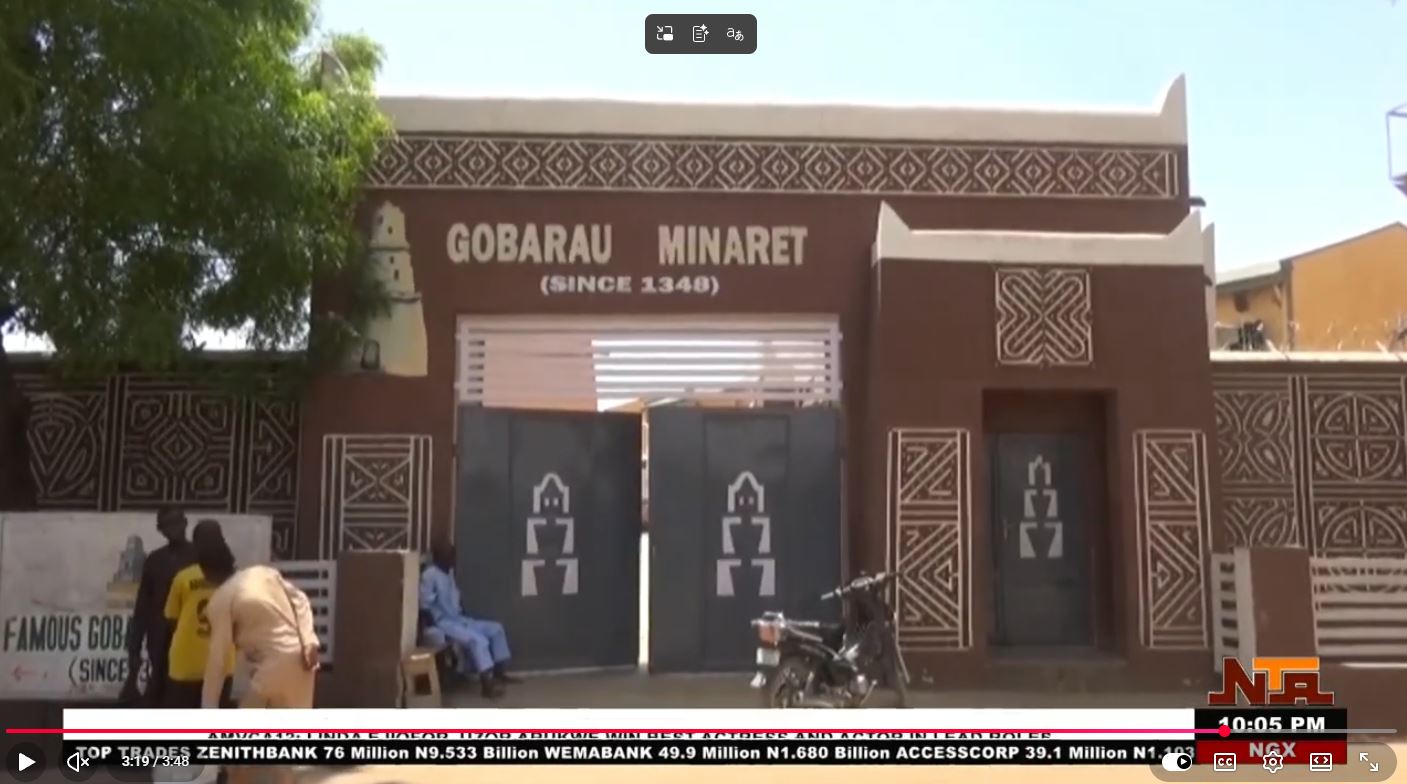
Beyond being a historic landmark, the Gobarau Minaret stands as a powerful symbol of an era when knowledge, faith, and scholarship placed the ancient city of Katsina at the heart of intellectual life in West Africa.
Towering above the historic city for more than five centuries, the fifteen-metre Gobarau Minaret remains the oldest surviving landmark in Katsina State and one of the most important symbols of Hausa and Islamic heritage in Nigeria.

Built with traditional mud and timber architecture, the structure served not only as a place of worship but also as a renowned centre of Islamic learning during a period when Katsina gained recognition across West Africa for theology, scholarship, and education. Historians say the city attracted scholars, clerics, and students from different parts of the region, making it one of the leading centres of learning in the pre-colonial era.

Today, the Gobarau Minaret continues to stand as a living monument — preserving centuries of history, spirituality, and intellectual tradition while reminding future generations of the importance of knowledge and cultural heritage.
In this special report, our guide, Auwal Halliru, takes viewers through the story, significance, and enduring legacy of the iconic monument in Katsina. What makes the Gobarau Minaret historically significant? How did Katsina become a centre of learning in West Africa? Why is preserving cultural and historical heritage important today?