
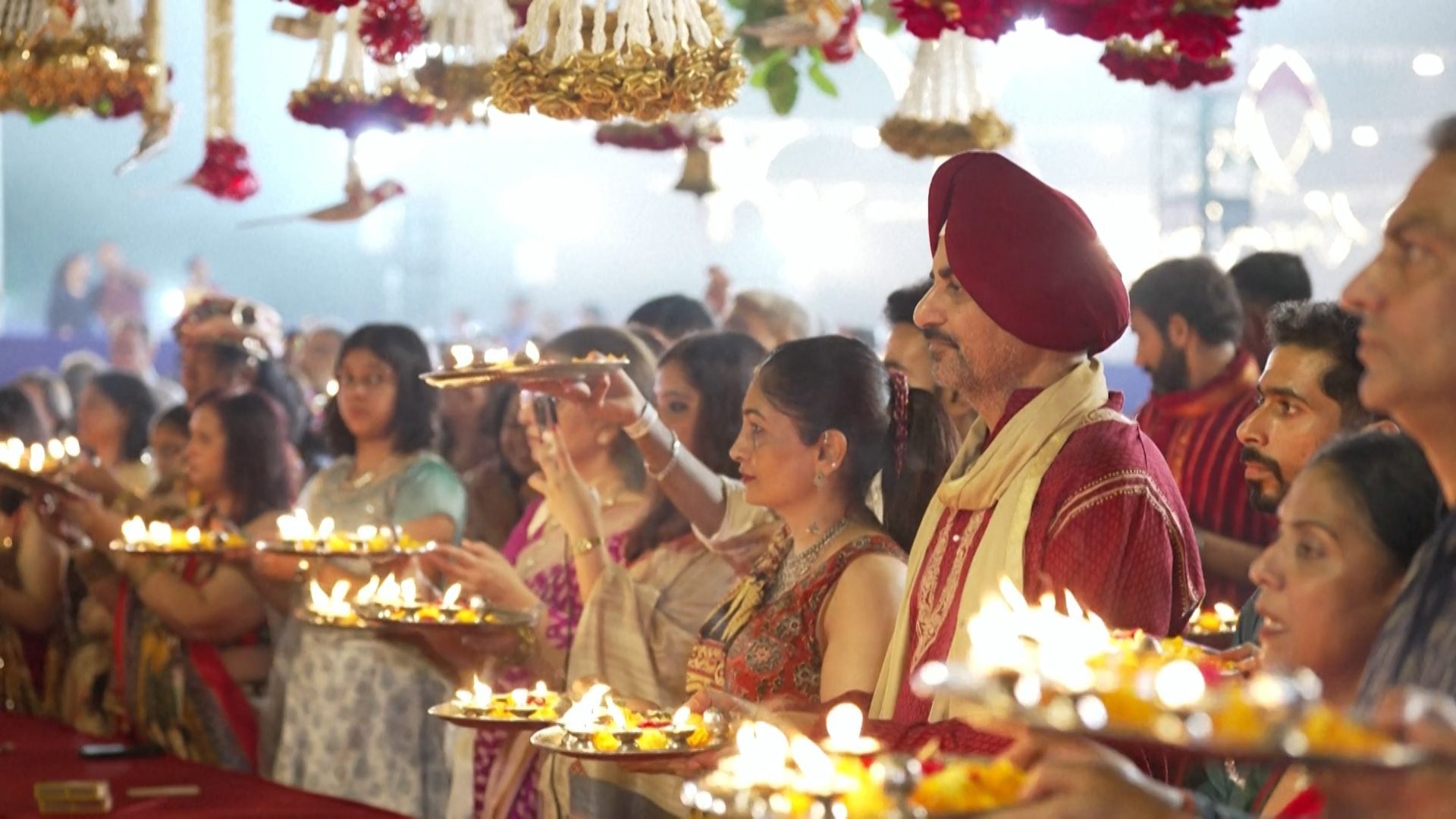
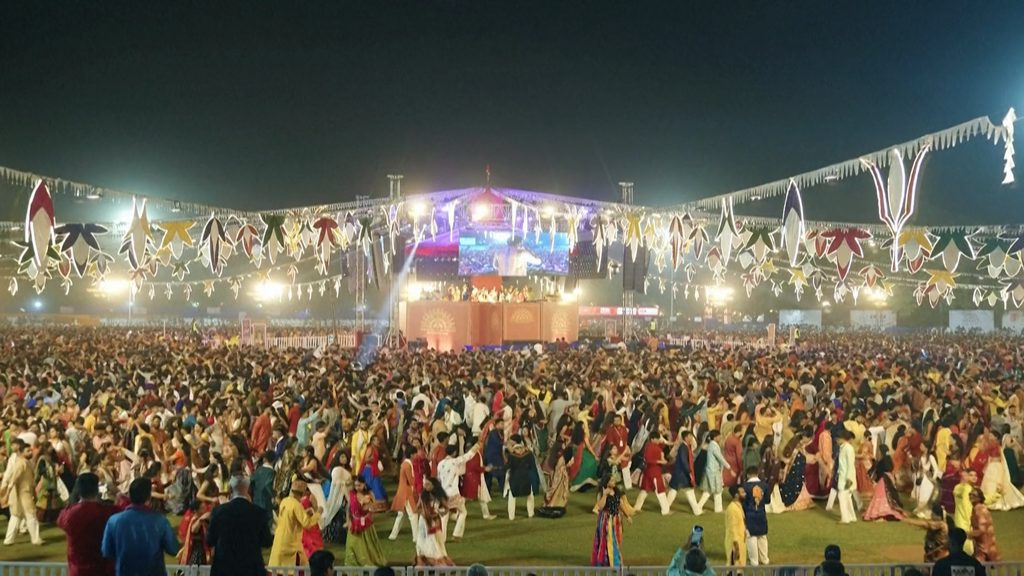
People in Vadodara, in India’s western state of Gujarat, have celebrated the Hindu festival of Navratri with traditional Garba dancing and devotional rituals at the Lakshmi Vilas Palace, as millions across the country observe the nine-night festival honouring the divine feminine.
The celebrations on Sunday brought together participants who performed Garba, a traditional Gujarati folk dance that has become one of the most recognisable features of Navratri. Dancers moved in coordinated circles to rhythmic music, dressed in colourful traditional outfits.
Navratri, which means “nine nights,” is dedicated to the worship of the Hindu goddess Durga and the divine feminine energy known as Shakti. The festival reflects the triumph of good over evil, drawing on the Hindu mythological account of Durga’s battle against the buffalo demon Mahishasura.
Garba is traditionally performed around a central earthen pot or illuminated lamp, symbolising life and the divine presence. The circular movements of the dance are associated with the cycle of life and the enduring nature of the divine.
In many celebrations, Garba is accompanied by Dandiya Raas, an energetic dance in which participants strike decorated wooden sticks in rhythm with the music. Traditional drums and Gujarati folk songs provide the beats, while modern performances often incorporate contemporary musical influences.
The festival is also marked by elaborate traditional clothing. Women commonly wear chaniya choli, consisting of a flared skirt, blouse and scarf, often decorated with embroidery and mirror work. Men frequently wear the kediyu, a traditional embroidered tunic paired with trousers or a dhoti.
Although Gujarat is particularly known for its Garba celebrations, Navratri is observed in different ways across India. In West Bengal, the festival is marked by elaborate Durga Puja celebrations, while parts of northern India stage performances of the Ramlila, depicting episodes from the Hindu epic Ramayana.
Garba’s cultural significance received international recognition in December 2023, when UNESCO inscribed Gujarat’s Garba dance on its Representative List of the Intangible Cultural Heritage of Humanity.
For devotees and participants, Navratri combines religious observance, cultural expression and community celebration, with traditional dances providing an opportunity to honour the goddess while preserving customs passed down through generations.