

Compiled By: Malami Haruna Dogon daji
23 OCTOBER, 2026
President says ‘Nigeria First’ must deliver contracts, local equipment and skilled jobs as indigenous firm builds key compressor stations for expanded gas pipeline
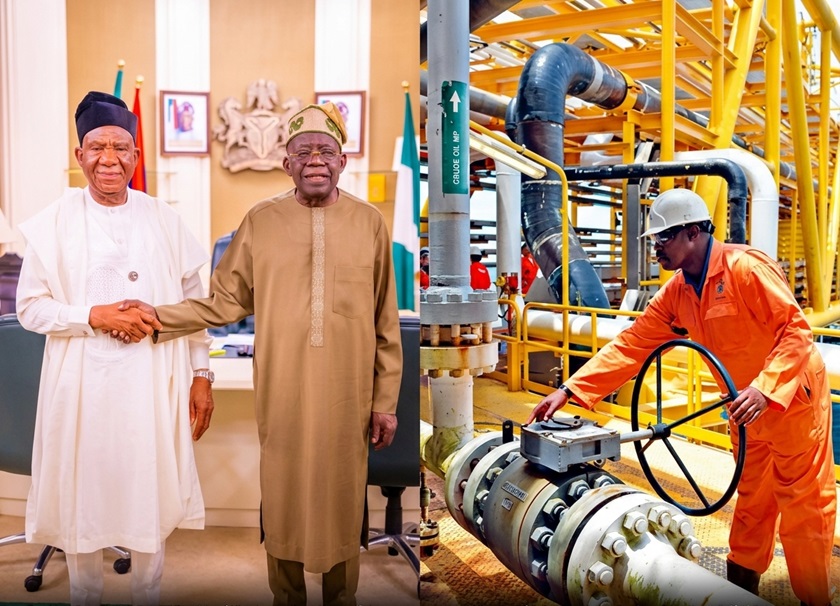
ABUJA, Nigeria – President Bola Tinubu has called on international oil companies operating in Nigeria to give competent indigenous engineering and manufacturing firms greater opportunities in major energy projects, as a Nigerian company builds two compressor stations needed to unlock the full capacity of a strategic gas pipeline.
Tinubu made the call while receiving the founder and chairman of Lee Engineering Group, Chief Leemon Ikpea, at the State House in Abuja, according to a statement by the President’s Special Adviser on Information and Strategy, Bayo Onanuga.
The President said his administration’s “Nigeria First” policy must translate into more contracts for capable Nigerian firms, greater use of locally manufactured equipment and more skilled jobs for Nigerians.
“Nigeria First must translate into more contracts for capable Nigerian firms, greater use of locally manufactured equipment and more skilled jobs for Nigerians.” analyst’s synthesis
President Tinubu also reaffirmed his determination to use Nigeria’s gas resources to power industries, improve electricity supply, create jobs and boost export earnings.
Local firm at centre of gas expansion
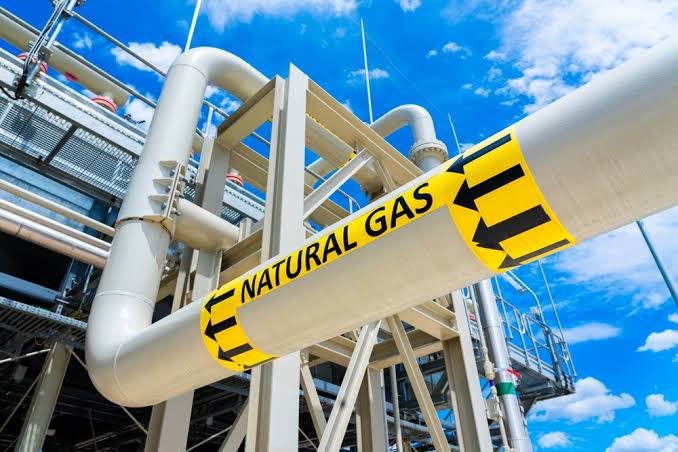
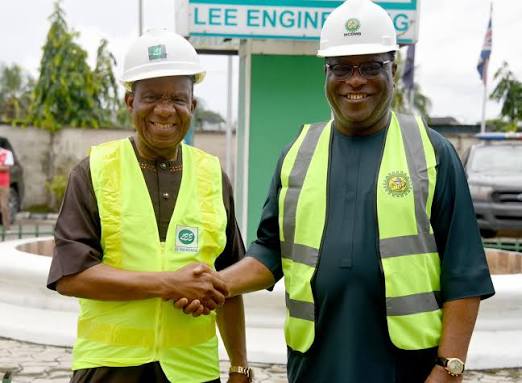
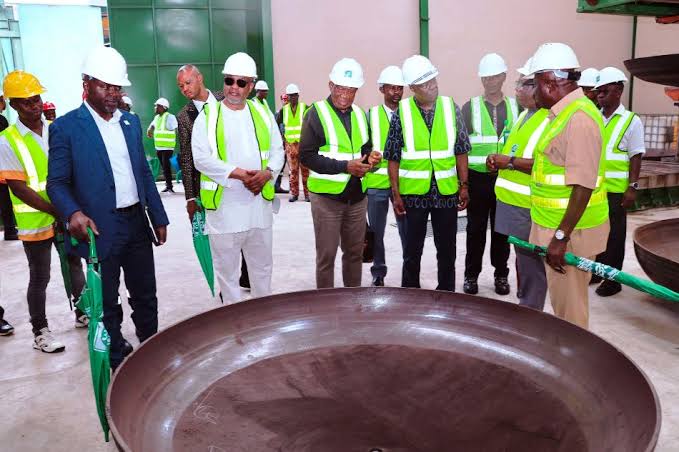
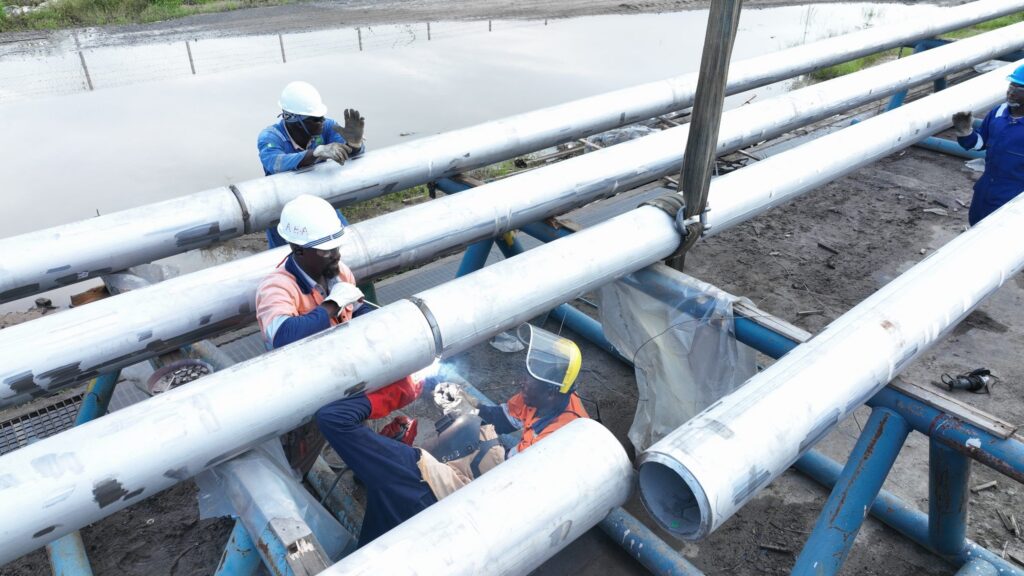
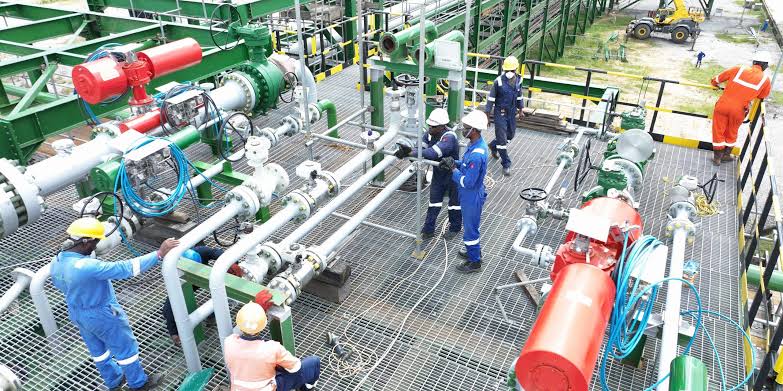
Lee Engineering, an indigenous Nigerian engineering company, is handling the engineering, procurement and construction of two midline compressor stations in southern Edo State. The stations are intended to enable the Escravos Lagos Pipeline System (ELPS) to operate at its full design capacity of 2.3 billion standard cubic feet of gas per day.
The ELPS II expansion raised the pipeline’s designed capacity from about 1.1 billion standard cubic feet of gas per day to 2.3 billion standard cubic feet. Compressor stations raise pressure along the pipeline, allowing larger volumes of gas to be transported efficiently over long distances.
The project is expected to strengthen gas supply to power plants and industries along the corridor. It could also support increased gas deliveries to neighbouring West African countries through the West African Gas Pipeline, creating additional export revenue for Nigeria.
Facts at a glance
| Item | Details |
|---|---|
| President | Bola Tinubu |
| Company | Lee Engineering Group |
| Company chairman | Chief Leemon Ikpea |
| Project | Two midline compressor stations in Edo State |
| Pipeline | Escravos–Lagos Pipeline System (ELPS) |
| Former capacity | About 1.1 billion standard cubic feet of gas per day |
| Target capacity | 2.3 billion standard cubic feet of gas per day |
| Purpose of compressors | Increase pressure to enable full-capacity gas transportation |
| Expected benefits | More gas for power and industry; jobs; possible West African exports |
| Policy | Nigeria First and local-content development |
Why it matters for the economy
Nigeria’s proven gas reserves stood at 210.54 trillion cubic feet as of January 2025, according to the Nigerian Upstream Petroleum Regulatory Commission. The government sees gas as a major tool for industrialization, power generation and export earnings.
A fully functioning ELPS could improve the reliability of gas supplied to power plants, helping reduce one of the constraints on electricity generation. It could also give manufacturers a more dependable energy source, potentially lowering production costs and supporting factory output.
The West African Gas Pipeline transports Nigerian gas to Benin, Togo and Ghana. It has an initial capacity of 200 million cubic feet per day and was designed to be expandable to 600 million cubic feet per day, giving Nigeria a route to regional energy exports.
Guardrails for local content
Analysts and industry officials say local-preference policies work best when they reward genuine capability rather than simply favouring local ownership. Nigeria’s Nigerian Content Development and Monitoring Board promotes a “First Consideration” policy for indigenous companies with demonstrable capacity.
Key safeguards should include transparent contract awards, independent monitoring of cost and delivery, strict safety and environmental standards, technology transfer, timely payment to local suppliers, and clear benefits for host communities.
Local-content rules should also leave room for foreign companies where Nigeria lacks the required technology or specialist capacity. The aim, supporters say, is to build Nigerian industrial strength without reducing project quality or discouraging investment.
Small innovations, big gains
While compressor stations and pipelines are large-scale projects, Nigeria’s broader technology and economic development also depends on small-scale innovators.


Local start-ups and small manufacturers can produce components, provide maintenance services, develop monitoring software, build renewable-energy devices and supply specialized parts to major energy projects. These businesses create jobs, build technical skills and reduce dependence on imports.
Supporting them through access to finance, training, public contracts, testing facilities and fair regulation could help Nigeria move beyond exporting raw resources towards producing and maintaining technology at home.
Call to action
Nigerians, businesses, policymakers and investors should follow the delivery of the ELPS compressor project and demand clear public reporting on local jobs, local contracts, equipment made in Nigeria, environmental safeguards and benefits for host communities. Supporting capable small manufacturers and innovators, alongside major contractors, will be essential if “Nigeria First” is to become a lasting engine of industrial growth.
Share your thoughts @NTANetwork digital platforms (Facebook, Twitter -X, Instagram and TikTok)