
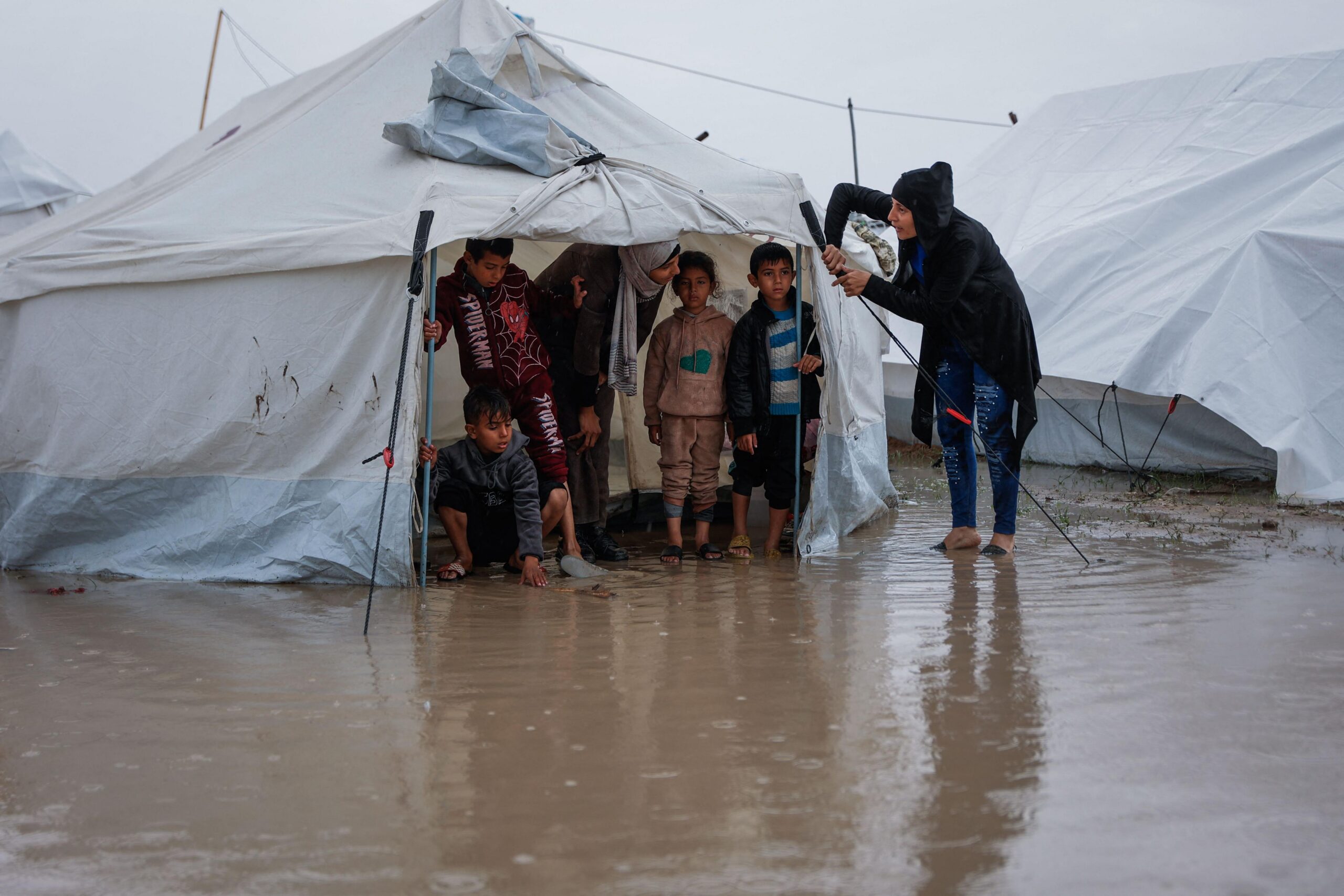
Thousands of Palestinians who have been forced from their homes by the war in Gaza are facing another humanitarian crisis as heavy rainfall floods temporary shelters, damages belongings and exposes families to dangerous weather conditions.
The United Nations Children’s Fund (UNICEF) estimates that about 950,000 displaced people are living in areas exposed to flooding across Gaza. Of this number, approximately 400,000 face extremely high flood risks, with almost half of them being children.
The danger became more serious after heavy rainfall began on November 6, flooding displacement camps and damaging tents and other temporary shelters. Many families are living in makeshift structures that offer little protection against heavy rain, strong winds and freezing temperatures.
For some families, the impact has been deadly. UNICEF reported that three children, aged four, five and eight, and their mother died after a sand dune collapsed onto their tent in Deir al-Balah following heavy rainfall.
The United Nations Office for the Coordination of Humanitarian Affairs (OCHA) also reported that more than 46,000 households, representing an estimated 226,000 people, may have been affected by the rainfall as of November 9.
More than 40,000 family shelters were reported damaged, including over 9,000 that were said to have been destroyed beyond repair. These figures were based on preliminary reports from affected areas.
The flooding has also affected sanitation facilities, health centres and places used by children for learning and other activities. OCHA reported that rain damaged 15 child-friendly and psychosocial support spaces, while flooding disrupted learning in more than 100 temporary education facilities.
Beyond the loss of shelter, concerns are extremely high about the health risks facing displaced families. Floodwater mixing with sewage from damaged sanitation systems could expose residents to contaminated water and increase the spread of waterborne diseases.
Children, particularly those living in overcrowded shelters, are also vulnerable to cold exposure, respiratory infections and other illnesses as the rainy season continues.
The situation is made worse by the destruction of essential infrastructure during the conflict. Damaged drainage systems, roads, water networks and pumping facilities have made it difficult to manage floodwater across several parts of the territory.
Humanitarian organizations have been distributing tents, blankets, tarpaulins and other emergency supplies, while working to remove floodwater and reinforce temporary shelters. However, OCHA says the response is being affected by shortages of supplies and equipment, funding gaps and restrictions on the provisions of humanitarian materials.
In a separate warning, UNICEF said that equipment needed to repair Gaza City’s damaged Sheikh Radwan stormwater basin had not been allowed into Gaza. The agency warned that the basin, which is contaminated with sewage, could overflow during heavy rainfall and threaten nearby communities and displacement camps.