
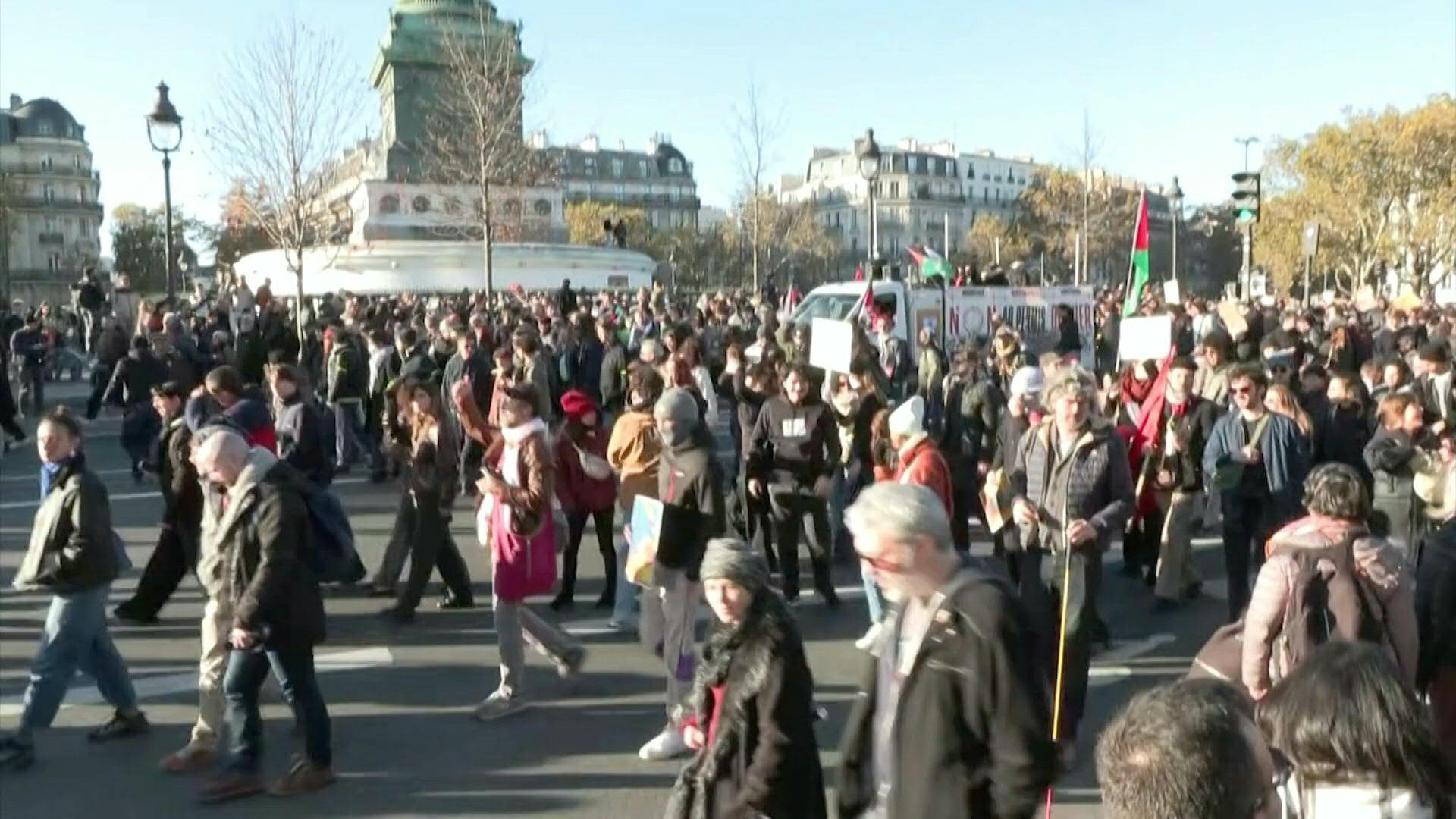
Tens of thousands of demonstrators have taken to the streets of Paris to protest rising living costs and a proposed law that would expand legal protections for police officers using firearms, as France faces weeks of growing social unrest.
The Saturday demonstration, November 14, brought together students, trade union members, Yellow Vest activists, climate campaigners and human rights groups. Protesters marched from Place de la République through Place de la Bastille to Place de la Nation, waving French flags and chanting slogans against inflation and police violence. Some climbed statues during the demonstration.
The protests reflected a range of grievances, including the rising cost of living, wages, education conditions, children’s rights and concerns over police accountability. It was the fifth consecutive Saturday of demonstrations against the high cost of living, with different campaign groups joining forces to present their demands in a coordinated march.
According to figures released by France’s Interior Ministry, about 106,000 people participated in demonstrations nationwide, including 24,000 in Paris. However, student unions put the national turnout at 200,000, with nearly 100,000 demonstrators in the capital, highlighting differences in estimates between authorities and organisers.
A major point of contention was a proposed bill that would introduce a presumption that police officers acted in self-defence when using their firearms. Supporters, including the far-right National Rally party led by Marine Le Pen, argue that the measure would protect officers from automatically facing allegations of excessive force. Critics, however, fear it could weaken investigations into police shootings and make it more difficult to hold officers accountable.
Concerns over police conduct have intensified following reports of injuries during recent demonstrations, including allegations of police brutality against young protesters. Some demonstrators described the proposed legislation as a threat to civil liberties, while others called for greater accountability within the security forces.
Although Saturday’s rallies were largely peaceful, police deployed tear gas in Paris, Bordeaux and Nantes after tensions and incidents involving fireworks. Authorities also intervened in Lyon after protesters attacked a television reporting crew.
The demonstrations are part of a wider wave of unrest that has affected France for more than a month. What began with high-school protests over conditions in state schools and staffing shortages has expanded into broader opposition over living costs, public services, wages and inequality.
The government has faced growing pressure to respond to the demands, with Prime Minister Sébastien Lecornu struggling to contain the unrest. Trade unions have rejected a proposed 0.6 per cent increase in the minimum wage as inadequate, while public-sector unions have called for another nationwide strike and demonstrations on November 17 over wages and working conditions.
The latest mobilisation comes as France approaches its 2027 presidential election, with President Emmanuel Macron facing declining popularity and political pressure over the government’s handling of the economic and social crisis. Protesters have continued to demand better living conditions, improved public services and greater accountability from the authorities, suggesting that the demonstrations are likely to remain a significant challenge for the government.