
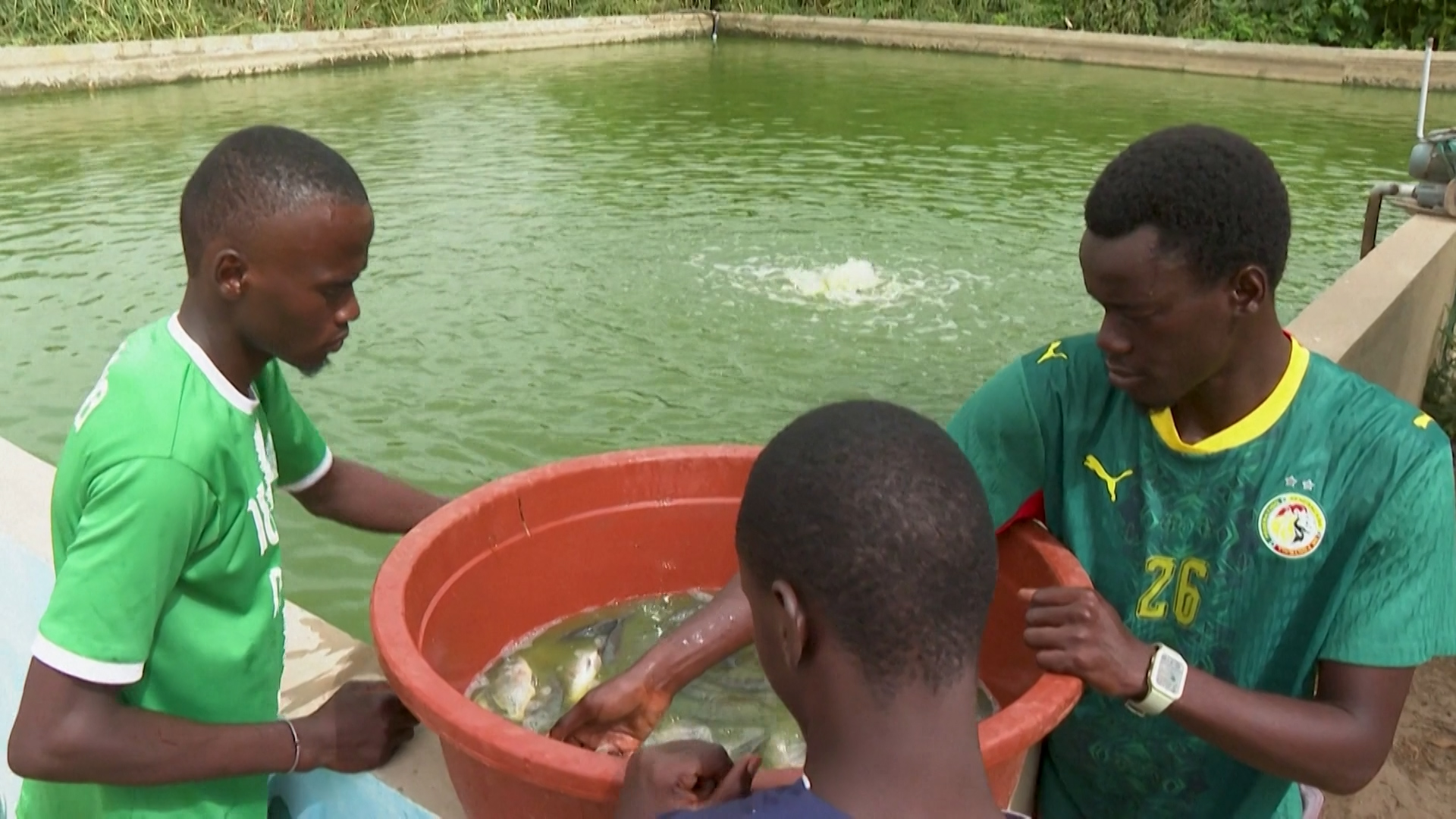
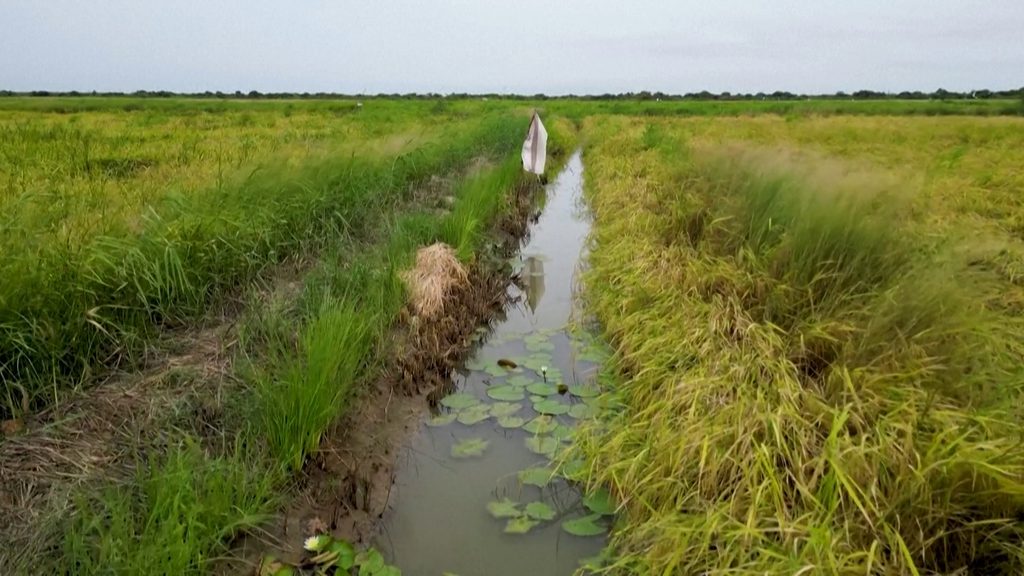
In Senegal, where rice and fish are staples, an unusual farming experiment is showing how one field can produce food, income and health benefits at the same time. Researchers are introducing native fish into rice paddies, where the fish feed on disease-carrying snails, add nutrients to the soil through their waste and can later be harvested and sold by farmers. The approach is offering a glimpse of how agricultural innovation can tackle several challenges at once — from food production and rural incomes to the risk of schistosomiasis.
For farmers such as Abdoulaye Diop, the difference is already visible. “The fields where there are fish are always greener than those without them,” he says, capturing the appeal of a system that turns the rice paddy into both a food-producing field and a small-scale aquaculture operation.
The idea is being tested against a problem that goes beyond agricultural productivity. Rice farmers often spend long periods in freshwater fields, increasing their exposure to schistosomiasis, a parasitic disease transmitted by freshwater snails. Researchers working with 405 households in rural northern Senegal found that integrating native Nile tilapia and African bonytongue into rice fields reduced snail and insect populations while improving soil nutrients. The trials also increased rice yields by more than 25 percent and created an additional source of fish production and income.
The model is attractive because it does not require farmers to choose between producing rice and raising fish. Instead, the two activities complement each other. Fish can help control pests and fertilise the fields, while the rice paddies provide a habitat in which the fish can grow. Once harvested, the fish can be consumed or sold, creating another potential stream of income for rural households.
The research describes the approach as a low-input system capable of improving agricultural outcomes while reducing disease-transmission risks. Its potential therefore extends beyond a single crop or community: it brings together food security, public health, rural livelihoods and environmental sustainability in one farming system.
Connecting Innovation to Senegal’s Economy
The experiment also fits into a broader conversation about how Senegal can strengthen its economy by making greater use of local production, science and innovation. President Bassirou Diomaye Faye has called for a national pact on food sovereignty built around science, technology and innovation, with government working alongside researchers, farmers and the private sector.
That vision places agriculture at the centre of Senegal’s economic ambitions. In March, Faye called for stronger local production, better agricultural markets and distribution networks, greater processing of local products and measures to encourage the consumption of Senegalese goods. His government has also pushed for better storage and conservation infrastructure and stronger links between producers and markets.
The rice-fish model offers a practical example of what that approach could look like on the ground. Rather than relying solely on increasing the amount of land under cultivation, farmers can potentially get more value from existing fields by combining different forms of production. More rice, additional fish, healthier soils and lower disease risk could translate into stronger household incomes while contributing to food security.
Faye has also highlighted the importance of developing Senegal’s blue economy in a way that protects ecosystems while creating jobs and income. His government has identified aquaculture, modernised fishing, agricultural cooperatives and improved post-harvest systems as part of efforts to balance environmental protection with economic opportunity.
The fish swimming through Senegal’s rice paddies may therefore represent more than an agricultural experiment. They point to a development model in which innovation is used to solve several problems at once — producing more food, creating rural income, protecting the environment and addressing a disease that affects farming communities.