

Compiled By: Malami Haruna Dogon daji
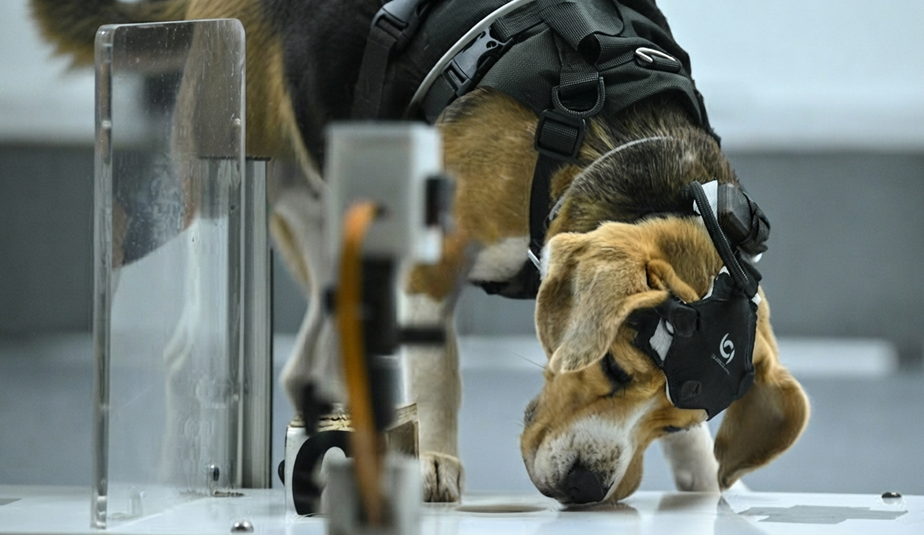
Scientists in india are exploring an unusual frontier in cancer detection, combining artificial intelligence with the extraordinary sense of smell of dogs to identify cancer from something as simple as a patient’s breath.
Bridging Biology and Algorithms
Innovative health startups abroad are redefining early diagnostics through pioneering systems that bypass invasive procedures. In India, a notable initiative termed ‘Dognosis’ requires patients to breathe into a cotton mask for roughly ten minutes. Once sealed, the mask is transported to a laboratory where artificial intelligence analyses the canine subjects’ brain activity, respiration, and body language upon sniffing the sample, effectively converting biological reactions into actionable diagnostic data.
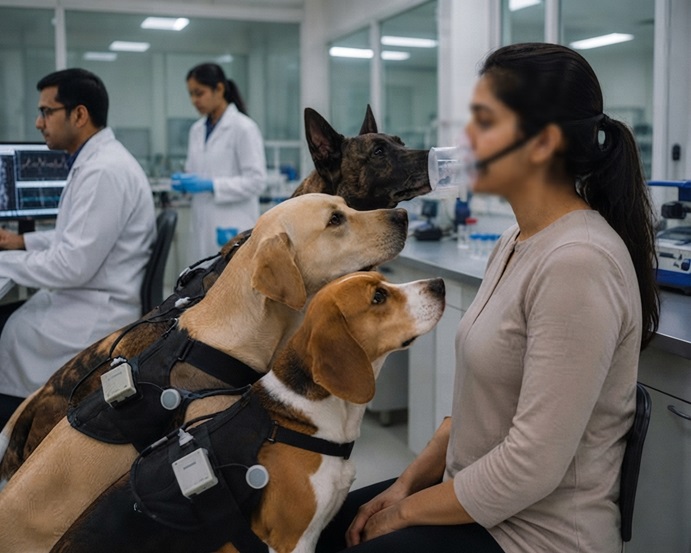
“A growing body of global research suggests dogs can be trained to detect cancer and other human illnesses, from Parkinson’s to Covid-19.” Writer’s Context Synthesis
This intersection of machine learning and bio-detection taps into an extraordinary biological capability. While global studies validate canine efficacy in identifying biomarkers for various maladies, the integration of AI provides the computational power required to standardize and scale the process into reliable medical data.
Context Box: Fast Facts on Bio-AI Diagnostics
- The Testing Method: Patients exhale into a cotton mask for 10 minutes.
- The AI Application: Algorithms analyse canine neural responses, breathing patterns, and behavioral telemetry.
- The Scope: Global research indicates potential detection ranges spanning multiple complex conditions, including Parkinson’s disease and viral infections.
- The Nigerian Implication: Highlights the critical need for local research and development (R&D) frameworks to support unorthodox, tech-driven medical trials.
Charting the Path for Nigerian R&D
For Nigeria’s Department of Digital Innovation and Technology, such global milestones present a compelling blueprint. Embracing artificial intelligence research requires robust institutional backing, interdisciplinary collaboration between medical universities and tech hubs, and adherence to rigorous national digital standards. As federal guidelines emphasize structured information and secure digital transformation, channeling local ingenuity into biomedical AI could position Nigerian science at the vanguard of African healthcare innovation.

The Social Call-TV-Action (CTA)
How can Nigerian research institutions better fund and support unconventional artificial intelligence projects in healthcare? Share your perspective on NTA’s digital and social media channels @NTANetwork