

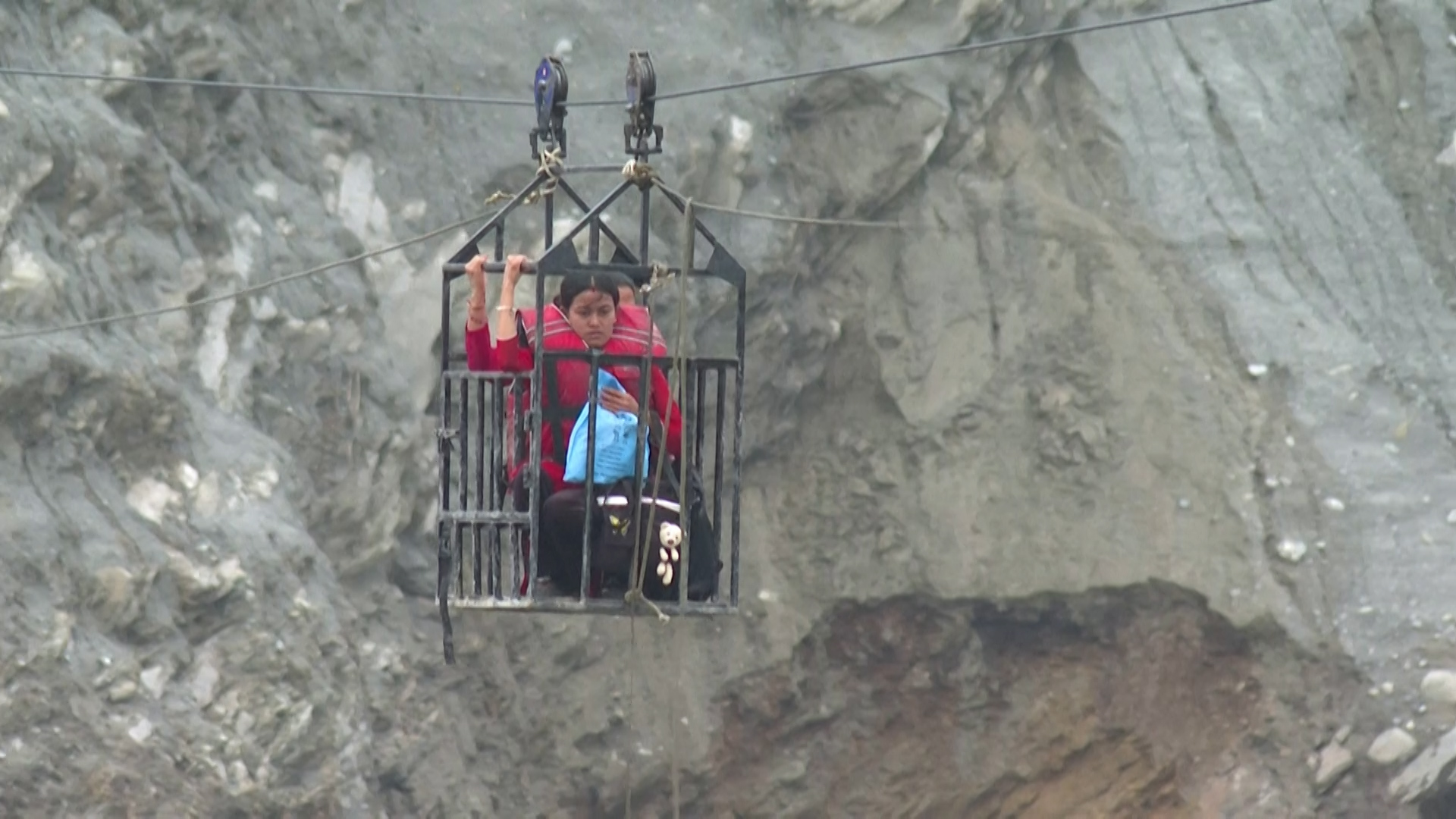
High above the swollen Trishuli River, flood survivors in Nepal are clinging to a temporary cable as soldiers and local residents pull them across to safety, a week after one of the country’s worst disasters. In Bidur, the Nepal Army has installed a roughly 250-metre temporary cable crossing, providing a precarious lifeline for communities cut off after devastating floods swept away roads and bridges.
The floods and landslides struck parts of Nepal after days of heavy rainfall, causing widespread destruction across several districts. Roads and bridges were washed away, homes were damaged and communities were left isolated, making it difficult for rescue teams and residents to move between affected areas. The disaster has also disrupted vital infrastructure, leaving survivors dependent on temporary crossings and other improvised routes as recovery efforts continue.
Rescue teams and soldiers continue working across the affected areas, searching for missing people and helping survivors reach safer locations. With the disaster having claimed more than 1,200 lives and leaving thousands of others missing, temporary crossings such as the cable line in Bidur have become crucial for reaching isolated communities and delivering food, water and other essential supplies. Authorities and aid workers are also assessing the needs of displaced families as rescue operations continue and attention turns increasingly towards their welfare and recovery.