
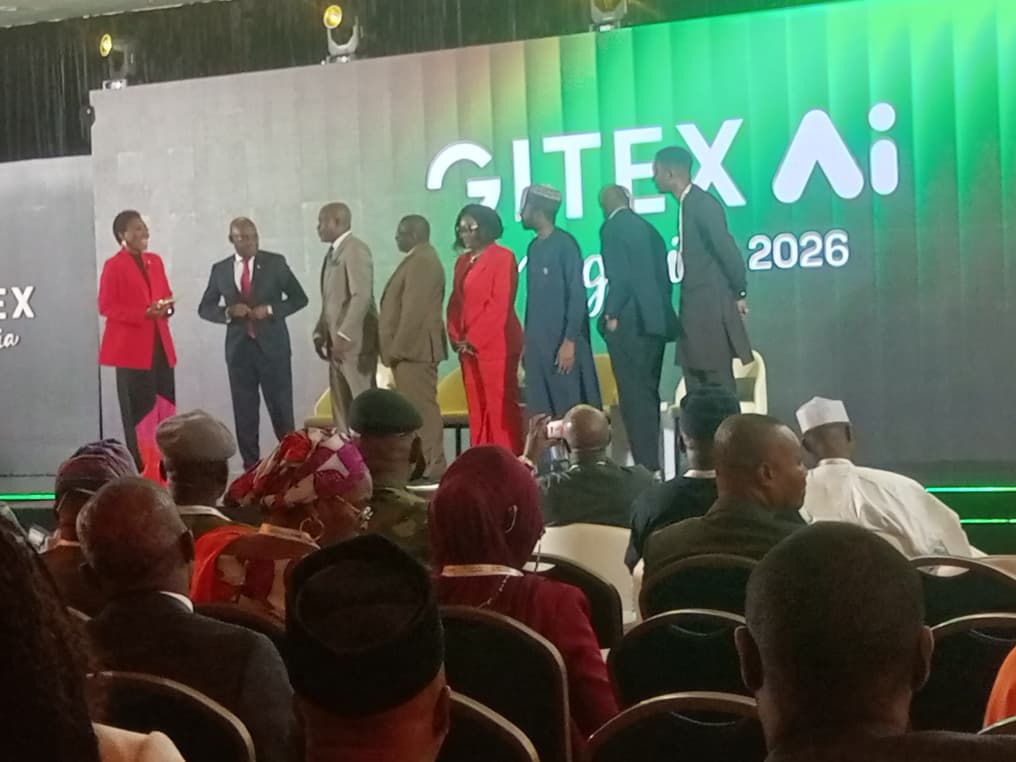
The second edition of the Gulf Information Technology Exhibition, GITEX Nigeria 2026, has opened in Abuja, bringing together technology innovators, investors, policymakers and other key players in the digital economy.
The four-day event is building on conversations from last year, with a strong focus on the role of government and the growing influence of Artificial Intelligence.
But this year, the conversation is going a step further, asking how Nigeria and other African countries can develop the skills, systems and technologies needed to have greater control over their digital future.
This is at the heart of the theme for this year’s Government Leadership and AI Summit: “Beyond Connectivity: The Bridge to Sovereign AI and Innovation.”
As AI becomes part of government services, businesses and everyday life, countries are paying closer attention to who develops the technology, where data is stored and how these systems are managed.
For Nigeria, the focus is on building the foundations needed to participate more actively in the digital economy, rather than relying mainly on technologies developed elsewhere.
The Director-General of the National Information Technology Development Agency, NITDA, Kashifu Inuwa Abdullahi, is among the government officials taking part in the discussions, with Nigeria highlighting its efforts to strengthen its position in AI development and digital technology.
One of the major initiatives is Project BRIDGE, which is designed to expand broadband access through the deployment of 90,000 kilometres of open-access fibre infrastructure across the country.
Nigeria is also expanding its digital identity system. According to NIMC, more than 127 million National Identification Numbers had been issued by December 2025.
Alongside connectivity and digital identity, the government is working to strengthen cloud infrastructure and improve the way critical data and digital services are managed within the country.
Another key area is people. Training programmes and other initiatives are being developed to give young Nigerians the skills needed to create digital products, build businesses and develop solutions using emerging technologies.
The discussions at GITEX also come as AI systems become more capable of carrying out tasks with less human intervention. This is raising new questions around safety, accountability, transparency and who should ultimately be responsible when AI systems make decisions.
For Africa to make real progress, experts say countries will need to work together, invest in local talent and create an environment where African companies can develop technologies for African needs and compete globally.
That will require continued investment in broadband networks, data centres, cloud services and skills, as well as policies that encourage innovation.
GITEX Nigeria 2026 therefore provides a platform for government, industry and the technology community to examine what it will take for Nigeria and Africa to move from being largely users of digital technology to becoming stronger contributors to its development.
The conversation is no longer only about getting connected, it is increasingly about what Nigeria can build, own and control in the digital age.