
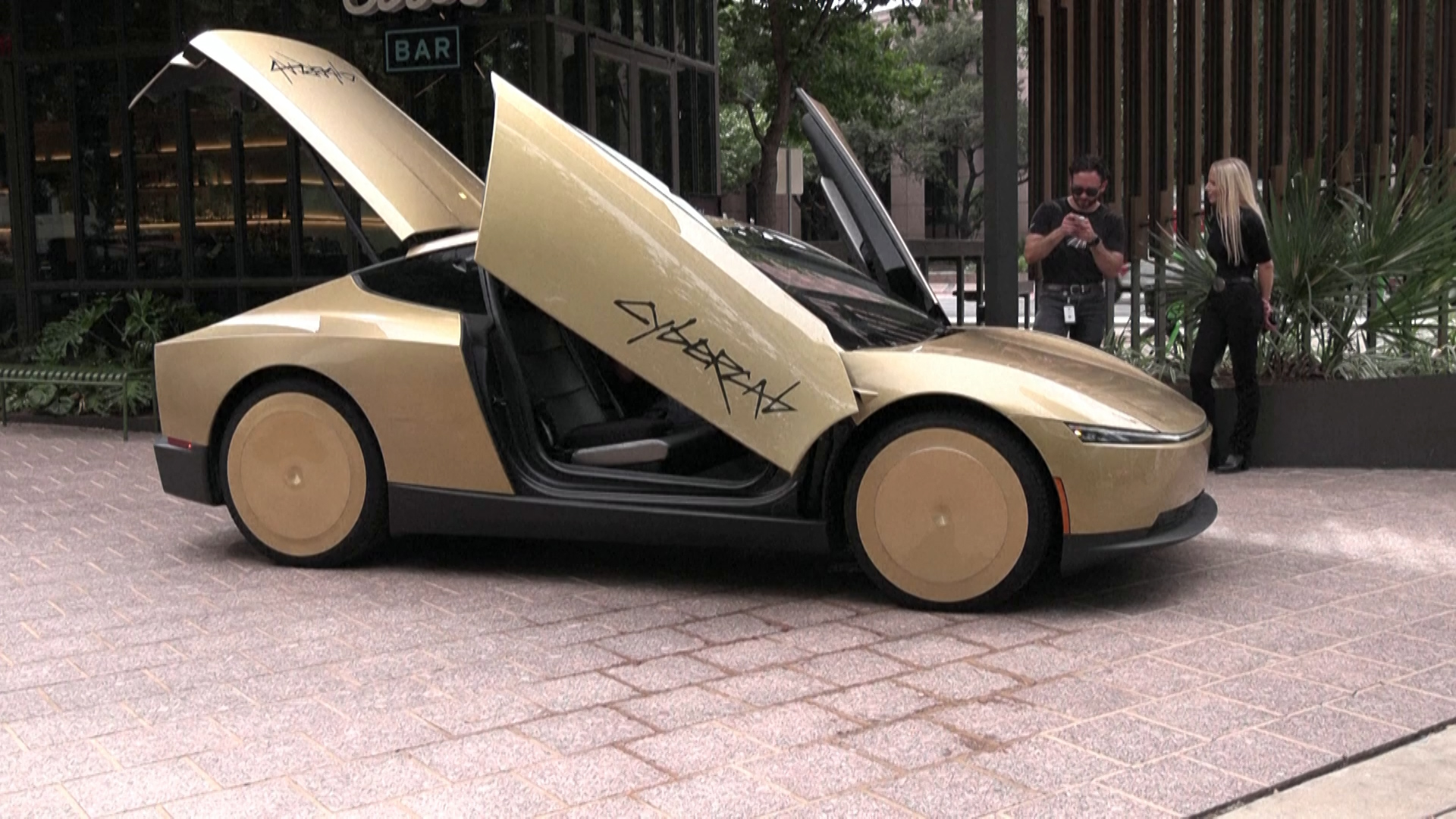
Electric vehicle-maker Tesla has launched its self-driving robotaxi, dubbed the “Cybercab,” on the streets of Austin, Texas, as the company seeks to strengthen its position in the growing autonomous ride-hailing market and compete with established players such as Uber and Waymo.
The Cybercab is designed to operate without a human driver, with no steering wheel or pedals for passengers to take control. The two-seat electric vehicle relies on Tesla’s camera-based autonomous-driving system and onboard artificial intelligence to navigate roads and handle the journey, while riders simply enter the vehicle and are transported to their destination. Unlike some rival robotaxis that use lidar and radar alongside cameras, Tesla’s approach is centred on its vision-based system.
Tesla’s move puts it in direct competition with established players in the autonomous ride-hailing market, particularly Waymo, while also challenging traditional platforms such as Uber. Waymo already operates driverless services across 14 US cities with more than 4,000 autonomous vehicles, giving it a significant head start over Tesla. Tesla, meanwhile, is betting that its purpose-built Cybercab and camera-based technology can help it rapidly expand its own robotaxi network and capture a share of the growing market.
While the Cybercab’s current rollout remains limited to the United States, Tesla’s ambitions extend far beyond Austin. The company has already indicated plans to showcase the vehicle in Chinese cities, although those appearances do not yet represent a commercial robotaxi launch.
Any wider international expansion is likely to depend on regulatory approvals, safety requirements and Tesla’s ability to prove that its autonomous technology can operate reliably in different road environments. If those hurdles can be overcome, the Cybercab could eventually become part of Tesla’s broader push to reshape urban transportation beyond the US.