
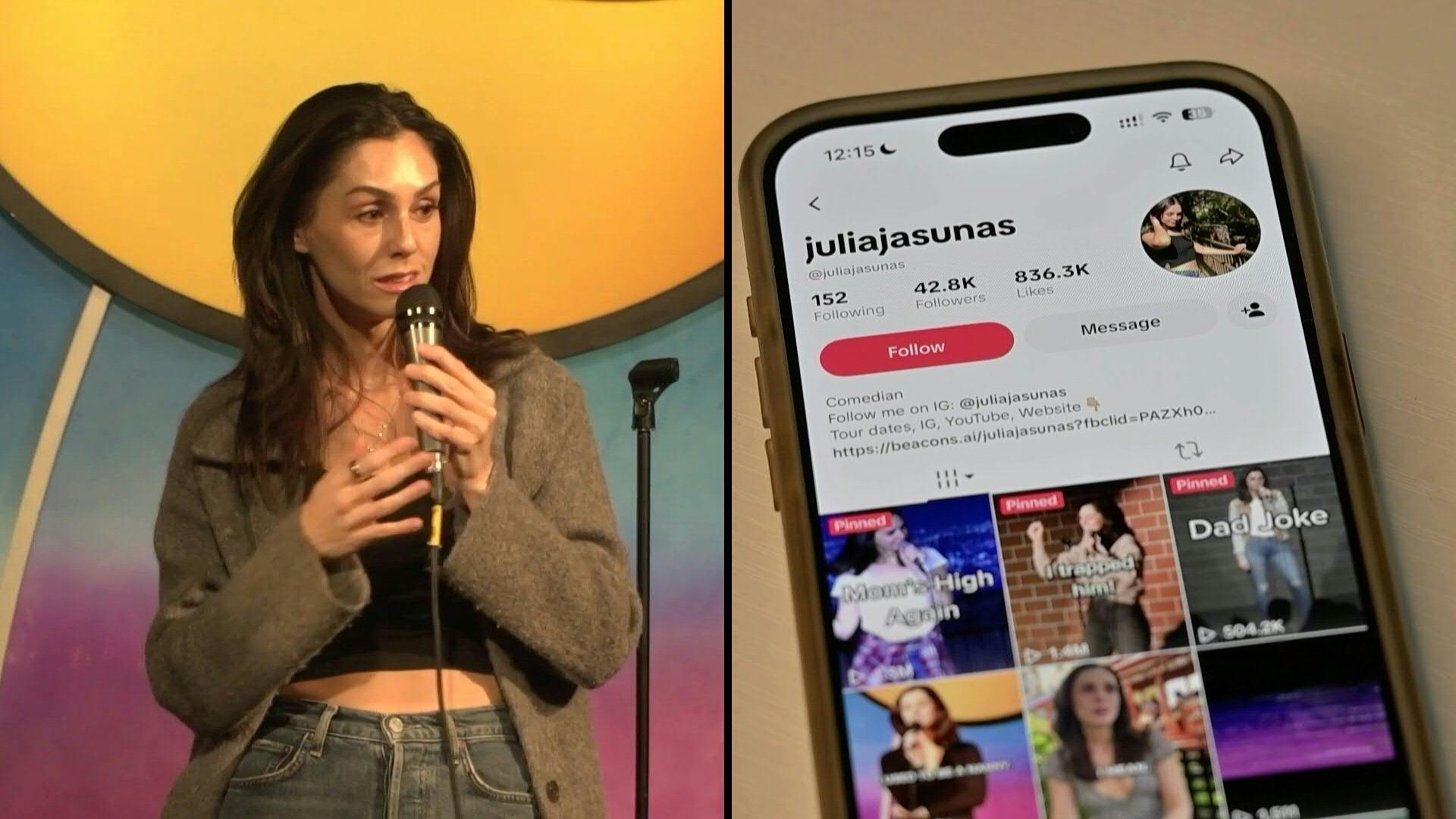
Julia Jasunas is calling for stronger safeguards to protect creative work after discovering that an AI-generated social media personality had reproduced one of her stand-up routines, raising concerns about the growing use of artificial intelligence to exploit artists’ work for profit.
American comedian Julia Jasunas has called on social media companies to take greater responsibility for preventing artificial intelligence-generated accounts from stealing comedians’ jokes and using them without permission or acknowledgement.
Jasunas made the call after discovering that an AI-generated female personality had reproduced a joke from her stand-up routine, which she said she had spent years developing.
The account, known as Aylen Skye, featured a blonde, AI-generated character delivering Jasunas’s joke about kissing a roommate, presenting the material as its own performance.
The Los Angeles-based comedian said the experience was disturbing and called on technology companies to introduce stronger measures to protect artists from the unauthorised use of their work.
“I think any kind of social media platform has the technology and has the power and the money to put into more stringent regulations on AI on their platforms. And I think that they have a duty to do that,” Jasunas told the Agence France-Presse (AFP).
She described the experience as “violating”, particularly because her intellectual property was being redirected towards commercial platforms offering adult content.
The AI account had reportedly attracted more than 230,000 followers on Instagram and received a Meta verification badge before it was removed. However, the account remained active on TikTok, where videos reproducing comedians’ material continued to attract views.
Jasunas is among a growing number of stand-up comedians who say AI-generated personalities are reproducing their performances, sometimes using realistic digital characters to make the stolen material appear original.
The trend has raised concerns about how artists can protect their work as AI tools become increasingly capable of recreating human performances and personalities.
Michael Smith, a professor of information technology at Carnegie Mellon University, told AFP that comedians traditionally relied on an informal understanding within the industry not to steal one another’s jokes.
However, he said the widespread use of large language models, which can process and reproduce information gathered from across the internet, has made enforcing that understanding more difficult.
Smith warned that AI-generated accounts could affect the livelihoods of emerging comedians by taking away opportunities to build audiences, attract followers and secure live performances.
For comedians such as Jasunas, the issue is not simply about AI-generated entertainment but about ensuring that the people who create original material retain control over how their work is used and who benefits from it.