
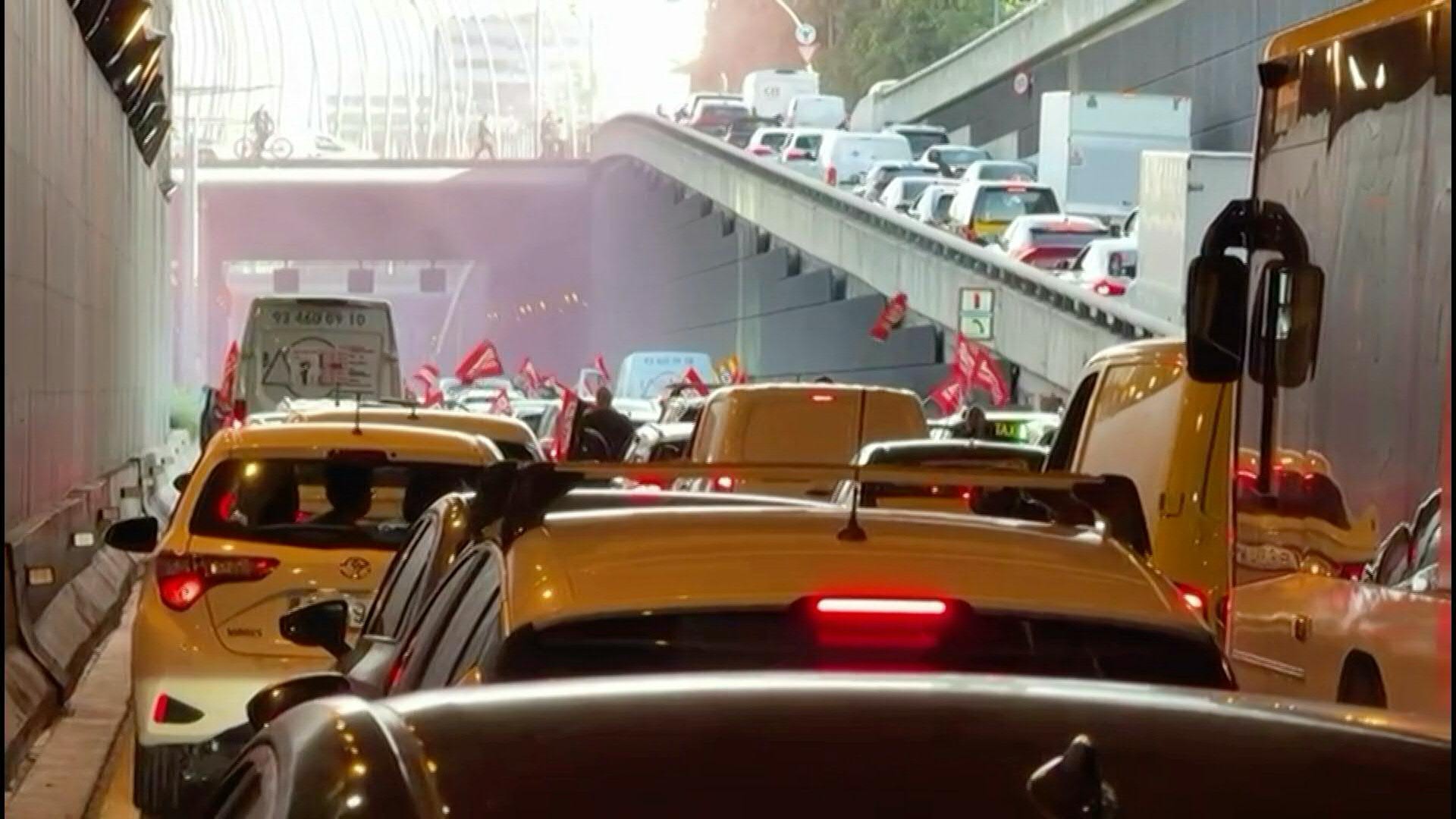
Trade unionists and housing activists have blocked major roads in Barcelona as workers across Spain stage a nationwide general strike over rising housing costs, declining purchasing power and the increasing cost of living.
The 24-hour industrial action, which began at midnight on Wednesday, November 11, has disrupted transport, factories, schools and other public services, with roadblocks and picket lines reported in several parts of the country.
Members of the Confederación Sindical de Comisiones Obreras (CCOO), one of Spain’s largest trade unions, joined other labour organisations and housing campaigners in the demonstrations, which have drawn attention to the country’s worsening housing affordability crisis.
The strike is jointly backed by CCOO and the General Workers’ Union (UGT), alongside other labour groups and tenants’ associations. It is the first nationwide 24-hour general strike jointly supported by Spain’s two largest unions since 2012.
Under the slogan “Salaries, Housing, Prices,” the unions are demanding stronger government intervention in the housing market, improved wages and measures to protect workers’ purchasing power. Housing campaigners are also calling for restrictions on speculative property investments, stronger protection for tenants and action against the spread of tourist apartments.
The mobilisation follows weeks of protests sparked by the eviction of 87-year-old Maricarmen Abascal from her Madrid home in September. Abascal, who had lived in the property for decades, was forcibly removed after a dispute over increased rent and died days later.
Images of her eviction drew widespread public attention and turned her case into a rallying point for housing activists, who argue that rising rents and property speculation are making secure accommodation increasingly difficult to obtain.
Spain’s housing shortage has added to the pressure on renters. The Bank of Spain estimates that the country has a deficit of about 750,000 homes, a figure projected to exceed one million by 2028. Meanwhile, rental costs have risen sharply, leaving many young people struggling to afford accommodation on their salaries.
The housing dispute has also become a major issue ahead of Spain’s snap general election scheduled for November 29. Prime Minister Pedro Sánchez called the early election after his government failed to secure parliamentary approval for measures intended to curb evictions and ease pressure on tenants.
The strike therefore comes at a politically sensitive moment for Sánchez’s administration, with the housing crisis competing for attention alongside corruption allegations involving figures close to the government and a deadly high-speed train collision that has also affected the political debate.
Participation in Wednesday’s strike has varied across sectors and regions, although unions reported significant stoppages in strategic industries, including automotive production and port operations. Roadblocks, clashes between picketers and police, and disruption at major distribution centres were also reported in the early hours.