

Compiled by Malami Haruna Dogon daji
ABUJA, September 18 2026
OYO STATE · FEDERAL HIGH COURT, ABUJA.
Five suspected Ansaru commanders were back in an Abuja courtroom this week, months after gunmen dragged 46 pupils, teachers and a school principal out of their classrooms in Oriire, Oyo State. The children are home now. Two of their teachers never made it back. Here is the full arc of the story — the fear, the 56-day wait, the rescue, and the questions the coming trial must answer.
On the morning of May 15, 2026, gunmen on motorcycles rode into three schools around the farming villages of Ahoro-Esinele and Yawota, in Oriire Local Government Area of Oyo State. Within minutes, dozens of children sitting an exam were marched into the bush at gunpoint, along with their teachers and, ultimately, their principal. By evening, a quiet corner of south-west Nigeria had become the country’s latest mass school abduction.
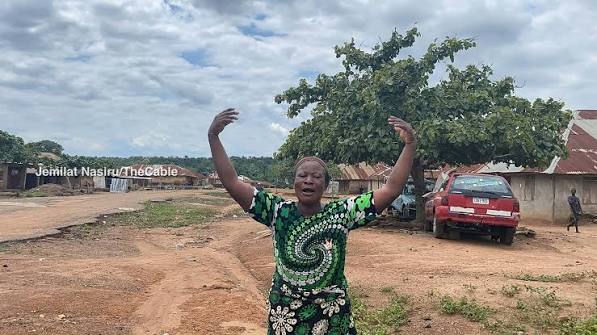
What followed was almost two months of silence, fear and waiting. What followed after that is the part of this story that deserves to be told properly: a rescue without ransom, a reunion that broke a hospital ward into tears, and — this week — a courtroom in Abuja where the men accused of orchestrating it all pleaded not guilty.
How the Oriire case unfolded
| Date | Event | Key details |
|---|
| Date | Event | Key details |
|---|---|---|
| May 15, 2026 | The attack | Armed men storm three schools in Oriire LGA, abducting 39 pupils and 7 teachers (46 in total). Two teachers, including principal-figure Michael Oyedokun, are later killed in captivity. saharareporters+1 |
| May 31, 2026 | The federal response | President Bola Tinubu sends his security chiefs to Oriire and approves 1,000 forest guards for Oyo State. |
| Jul 10, 2026 | The rescue | After 56 days in captivity, security forces free all 44 remaining captives in a joint military, police and DSS operation. No ransom is paid; eight suspected kidnappers are arrested. reuters |
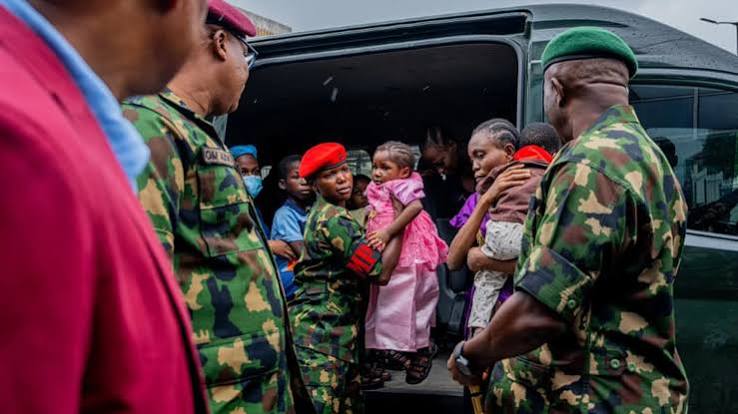
| Jul 13–15, 2026 | Going home | Survivors are examined at LAUTECH Teaching Hospital, Ogbomoso, then reunited with their families. |
| Sep 2026 | The trial begins | The DSS re-arraigns five suspected Ansaru members on an amended seven-count charge before the Federal High Court, Abuja. |
| Oct 18, 2026 | Next hearing | The case returns to court, with masked witnesses expected to testify under protection orders granted by Justice Salim Ibrahim. |
The reunion Nigeria needed
Before there was a trial, there was a hospital ward. When the rescued pupils and teachers arrived at LAUTECH Teaching Hospital in Ogbomoso for discharge, parents had been waiting since early morning for the doctors to call names. As each child’s name was announced, mothers rushed forward; some, overcome, sank to the floor in relief. One mother, clutching her baby, thanked God and the security agents who brought her daughter home. It is the kind of scene Nigerians have now watched too many times — in Chibok, in Kankara, in Kuriga, in Papiri, and now in Oriire — but it never stops being worth telling.

The school principal, Rachael Alamu, later described how the kidnappers moved their captives through the forest at night, sometimes for hours at a stretch, whenever they feared security forces were closing in. Doctors screening the children for discharge found a congenital heart defect in one child that had gone undetected before the abduction — a reminder that the ordeal exposed gaps in more than just security.
“This successful military operation has ended the siege and standoff of over 50 days.” — President Bola Tinubu, on the July 10 rescue operation
Officials say the operation ended without a naira of ransom changing hands, and with eight suspected kidnappers arrested on the spot. It is one of the more encouraging security outcomes Nigeria has recorded in a season of mass abductions — a case where patience, intelligence work and restraint from paying kidnappers appear to have paid off.
Why five men are back in court
The five defendants now facing trial — Mahmud Muhammad, Abubakar Abbas, Abdulrazak Umar, Yunusa Musa and Shamsu Adamu Sani, all going by multiple aliases — are accused by the DSS of belonging to Ansaru, a proscribed Islamist militant group with roots in northern Nigeria. The amended seven-count charge covers conspiracy, aiding terrorism, concealing information about the attack, and direct involvement in the kidnapping and killings.

Justice Salim Ibrahim of the Federal High Court in Abuja has granted prosecutors’ request to shield witness identities and allow masked testimony — a protection typically reserved for cases where witnesses face real danger of retaliation. The trial continues on October 18, 2026, with the defendants remanded in DSS custody.
Why this case matters beyond Oriire
Prosecutors say the men charged include alleged commanders, not just foot soldiers. Going after leadership rather than low-level operatives is how security agencies try to degrade a group’s ability to plan the next attack — and it is the clearest signal yet that this case is meant to be a test of whether Nigeria can convict, not just arrest.
What pulls a community into this cycle
None of this happened in a vacuum. Researchers who study crime and radicalization in Nigeria point to a familiar set of pressures that make rural communities vulnerable to armed groups: widespread poverty, thin state presence in remote areas, and the way armed groups offer money, belonging and status to young recruits who see few other paths forward. For groups like Ansaru, religious and political framing gives that recruitment a moral cover — turning extortion and kidnapping into something its members can tell themselves is righteous.
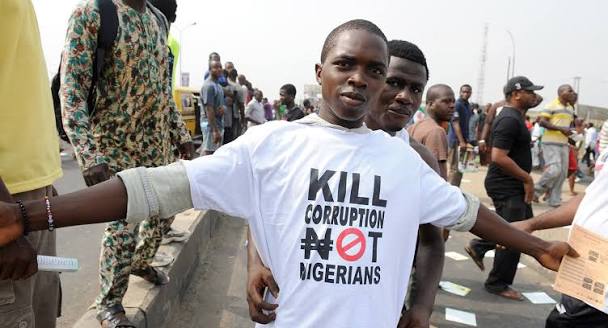
These pressures do not excuse what happened in Oriire. But they explain why the same conditions — hardship, weak local security, family and community strain — that push some young people toward petty crime can, in a different setting, feed a pipeline into organised terror networks capable of an attack this coordinated.
A mixed record — and a test still to come
The Department of State Services, Nigeria’s domestic intelligence agency, has operated since 1986 with a reputation shaped by both real security wins and real controversy — including past criticism over detentions and its use in political disputes. In 2026, the agency has pointed to disrupted terrorist cells, weapons seizures and convictions in major cases like the Owo church attack and the Papiri school kidnapping as evidence of growing operational strength.
Yet the numbers tell a harder truth too: more than 600 pupils and teachers were abducted in seven separate mass school attacks between March 2024 and May 2026, despite a ₦145 billion Safe Schools Initiative meant to prevent exactly this. Oriire’s rescue is a genuine win. It does not, on its own, break the pattern.
What the community is asking for now
The Catholic Bishops of Ibadan, responding to the rescue, made a point that survivors’ families have echoed since: freedom is only the first step. The bishops called on government to prioritise trauma healing and long-term medical care for the survivors, not just the security response that got them home, and urged residents to work with local vigilance groups to keep watch over their own communities.
A community-driven petition circulated after the abduction asked for something specific and reasonable: a published Safe School Emergency Plan for Oriire and other vulnerable parts of Oyo State, covering risk mapping, safer routes to school, emergency contacts and clear protocols before children are asked to sit in a classroom there again. Months later, that plan has not been made public.
What real accountability looks like from here
Oriire’s children are home. That part of the story has a good ending. What happens next — in the courtroom on October 18, and in the villages of Ahoro-Esinele and Yawota long after the cameras leave — is still being written. Three things would move this from a rescue story to a lasting one:
- Oyo State should publish the Safe School Emergency Plan it was asked for months ago — with a public timeline for school security audits in Oriire and comparable communities, not just a promise.
- Trauma care for survivors needs to outlast the news cycle. The bishops were right: a 56-day ordeal does not end at hospital discharge. Government and civil-society partners should commit to funded, long-term counselling and school reintegration support for every child and teacher involved.
- Watch the October 18 hearing. A case this significant, with protected witnesses and alleged commanders in the dock, is a real test of whether Nigeria’s courts can turn security wins into convictions. Follow it, and hold the institutions to their word.
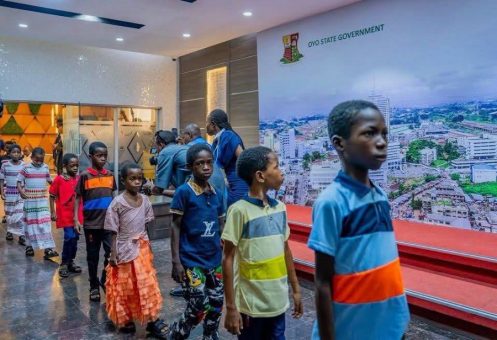
Justice for Oriire will be measured less by this week’s arraignment than by whether its children ever have to run from their classrooms again.