

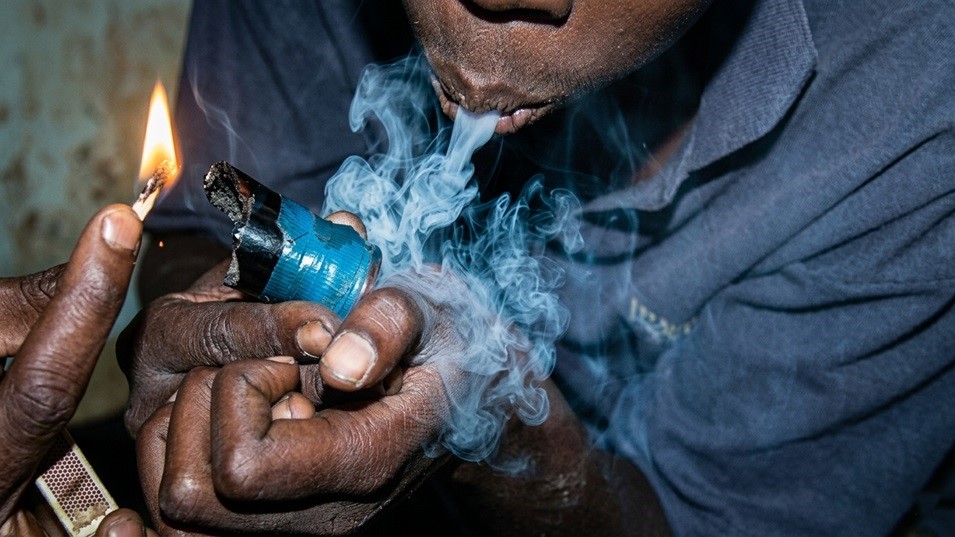
Nigeria’s battle against drug abuse is increasingly revealing itself as more than a law enforcement challenge. It is a public health emergency, a socio-economic crisis, and, according to some experts, a growing threat to national stability and democratic integrity.
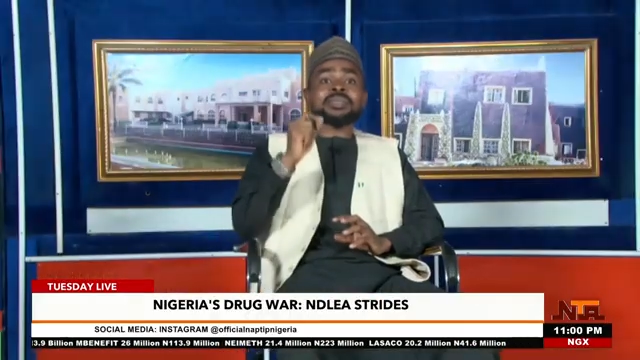
These critical dimensions came into sharp focus during a recent edition of NTA Tuesday Live, where security experts, public health advocates, youth leaders, and academics examined the evolving realities of substance abuse in Nigeria.
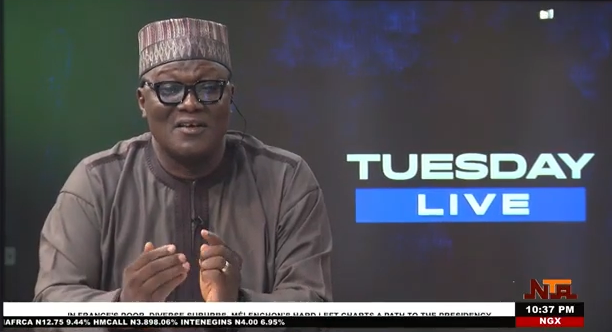
The discussions painted a complex picture: one that combines aggressive anti-drug enforcement successes with deep concerns about rehabilitation capacity, youth vulnerability, unemployment, and the long-term implications of illicit drug economies.
Enforcement Gains and the Scale of the Crisis
Speaking on the programme, Femi Babafemi, Director of Media and Advocacy at the National Drug Law Enforcement Agency, outlined what he described as unprecedented operational achievements recorded by the agency under the leadership of Brigadier General Mohamed Buba Marwa (Rtd).
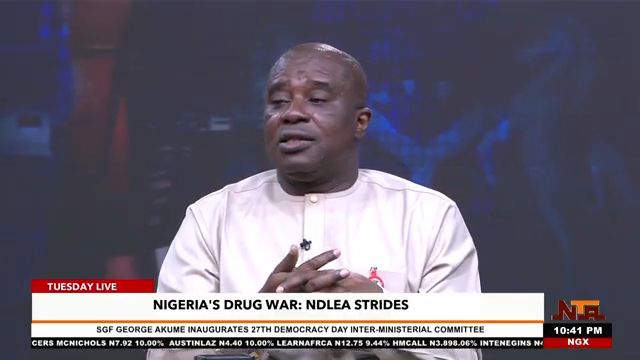
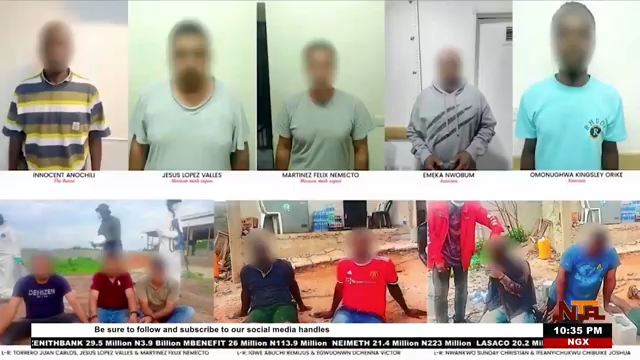
According to NDLEA data cited during the discussion, the agency has, since 2021, recorded over 80,000 arrests, secured more than 14,000 convictions, and seized millions of kilograms of illicit substances across the country.
The figures underscore the enormous scale of Nigeria’s drug challenge and the increasing intensity of enforcement operations targeting trafficking networks and local distribution chains.
Babafemi also highlighted the destruction of illegal cannabis plantations hidden in remote forest areas, describing the operations as both dangerous and resource-intensive.
However, analysts note that while the enforcement statistics are significant, they are cumulative figures spanning several years and are largely based on agency-released operational data. Still, they point to an undeniable reality: illicit drug trafficking and abuse remain deeply entrenched within Nigerian society.
Cannabis Remains Nigeria’s Most Widely Used Drug
One of the most alarming revelations revisited during the programme was the widespread prevalence of cannabis use in Nigeria.
Drawing from the latest available National Drug Use Survey conducted jointly by the Nigerian government and the United Nations Office on Drugs and Crime (UNODC), discussants noted that approximately 14.3 million Nigerians were estimated to have used drugs, with about 10.6 million linked specifically to cannabis consumption.
Although the survey dates back to 2018, it remains the country’s most comprehensive national dataset on substance abuse prevalence.
Experts on the programme warned that the accessibility and normalization of cannabis among young people continue to fuel broader concerns about addiction, mental health disorders, and long-term social consequences.
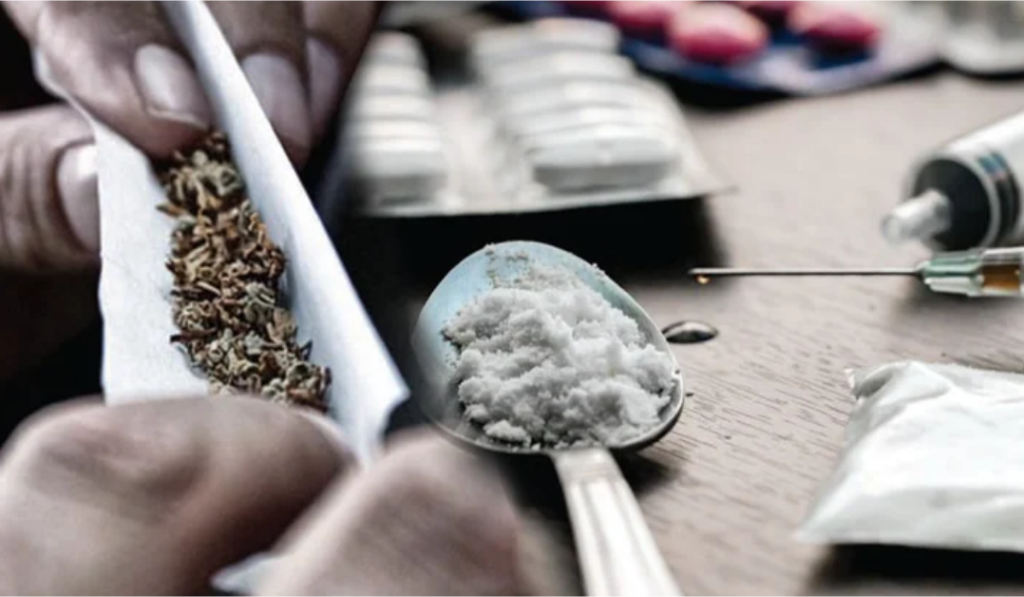
The discussion also emphasized that drug abuse is no longer confined to stereotypical environments. Increasingly, experts say, it is spreading across schools, urban communities, and even rural populations with devastating effects on families and social cohesion.
The Rehabilitation Gap
Beyond arrests and seizures lies another troubling reality: Nigeria’s limited rehabilitation infrastructure.
Dr. Chinme Nwafor, Country Director for Nigeria at Sector the Future International Initiative, warned during the programme that millions of Nigerians struggling with substance dependence may not have access to proper treatment.

Referencing public health estimates linked to the national drug survey, he explained that nearly three million Nigerians may require some form of structured rehabilitation or treatment for drug use disorders.
Yet access to treatment facilities remains severely constrained.
Public rehabilitation centres are limited, while private treatment options are often financially out of reach for many families. This has created what health advocates describe as a major “treatment gap,” where only a fraction of affected individuals can obtain adequate care.
The consequence, according to experts, is that many individuals battling addiction remain untreated, increasing risks of deteriorating mental health, criminal exposure, homelessness, and family breakdown.
For public health professionals, this imbalance highlights a crucial issue: while Nigeria has strengthened supply reduction through enforcement, demand reduction through treatment and prevention still requires substantial investment.
Drug Abuse and National Security Concerns
The programme also explored growing concerns about the relationship between substance abuse and insecurity.
Zaidu Ayuba Alhaji, President of the Youth Consultative Council, argued passionately that drug abuse is contributing significantly to rising violence, street crime, and youth-related insecurity across communities.
While some of the numerical claims made during the discussion could not be independently verified through national datasets, security analysts generally acknowledge that substance abuse can intensify violent behaviour and social instability in vulnerable environments.
Experts caution, however, that insecurity in Nigeria is driven by multiple complex factors including poverty, weak governance structures, organized criminal networks, and armed conflict dynamics. Drug abuse may aggravate these conditions, but it should not be viewed as the sole driver.
Nonetheless, the discussion reinforced growing calls for a more coordinated national response that integrates security operations with mental health support, youth engagement, and economic empowerment.
Poverty, Unemployment and the Social Roots of Addiction
Perhaps one of the most analytically grounded interventions came from Professor Sam Smah, Professor of Sociology and Criminology at Bayero University.

Professor Smah argued that enforcement alone cannot sustainably solve Nigeria’s drug crisis without addressing the socio-economic pressures driving substance abuse.
He pointed to rising unemployment, economic hardship, and social frustration among young Nigerians as major contributors to drug dependency and risky behaviour.
His position aligns with extensive criminology and public health research showing strong links between poverty, unemployment, psychological stress, and increased vulnerability to substance abuse.
For many experts, this perspective broadens the national conversation beyond criminality and punishment. It reframes drug abuse as both a social symptom and a development challenge requiring long-term structural interventions.
The implication is clear: sustainable progress may depend not only on stronger policing, but also on education, skills development, job creation, and improved social support systems.
Emerging Concerns Over Youth Drug Concealment
The programme further highlighted concerns about evolving methods of drug concealment among young people.
Dr. Nwafor recounted a reported incident involving a student who allegedly died after consuming a dangerous substance hidden inside a beverage container.

While the case was presented as an illustrative warning rather than verified national trend data, it reflects broader anxieties among educators and parents over experimentation with dangerous substances and chemical mixtures among youths.
Stakeholders on the programme stressed the importance of stronger parental engagement, school-based awareness campaigns, and early intervention mechanisms to reduce exposure among adolescents.
Drug Money and Democratic Vulnerability
Another dimension raised during the discussion was the potential threat posed by illicit drug financing to democratic institutions.
Professor Smah warned that if criminal networks and illicit financial actors are allowed to infiltrate political systems, they could undermine electoral credibility and governance structures.

Globally, concerns over “narco-politics” have shaped debates in several regions where drug trafficking organizations wield economic and political influence.
Although direct evidence of systemic cartel capture within Nigeria’s political system remains limited and often difficult to prove judicially, experts acknowledge that West Africa’s strategic position within global trafficking routes creates vulnerabilities that cannot be ignored.
The concern, analysts say, is not merely hypothetical. It speaks to the broader need for transparency, financial accountability, and stronger institutional safeguards within democratic processes.
A Multi-Dimensional Challenge
The conversations on NTA Tuesday Live ultimately revealed that Nigeria’s drug challenge cannot be solved through a single strategy.

Law enforcement remains essential. Public awareness is critical. Rehabilitation infrastructure must improve. Economic opportunities for young people need expansion. Schools, families, communities, and institutions all have a role to play.
Perhaps most importantly, the discussions underscored the need for evidence-based policymaking grounded in verified data, balanced analysis, and long-term national planning.
As Nigeria continues to confront the realities of substance abuse, the message from experts remains consistent: the country is not merely fighting drugs; it is confronting a broader struggle over public health, youth development, national security, and the future stability of society itself.