
In 2016, Nigerian-born surgeon Dr. Oluyinka Olutoye co-led a groundbreaking operation that removed a life-threatening tumour from an unborn baby, allowing her to return to the womb and continue developing before her eventual birth.
Ten years after a Nigerian-born surgeon helped save the life of an unborn baby in one of the most extraordinary fetal surgeries ever performed, Dr. Oluyinka Olutoye’s remarkable story is once again drawing attention.
A massive tumour was growing from the base of her spine, placing enormous strain on her tiny heart and threatening her chances of surviving until birth. Doctors faced an extraordinary dilemma: delivering Lynlee at 23 weeks would leave her dangerously premature, but waiting could allow the tumour to overwhelm her heart.
The medical team therefore made a decision that seemed almost unimaginable—they would operate on the unborn baby while she was still inside her mother’s womb.
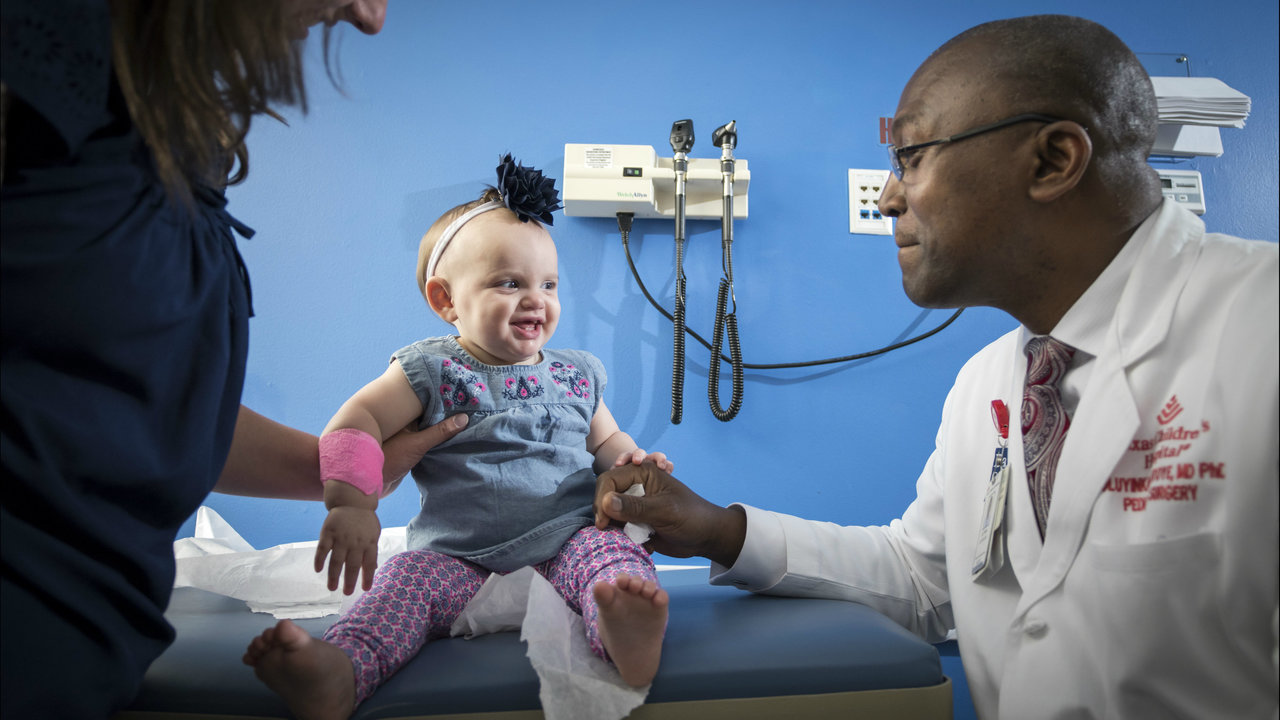
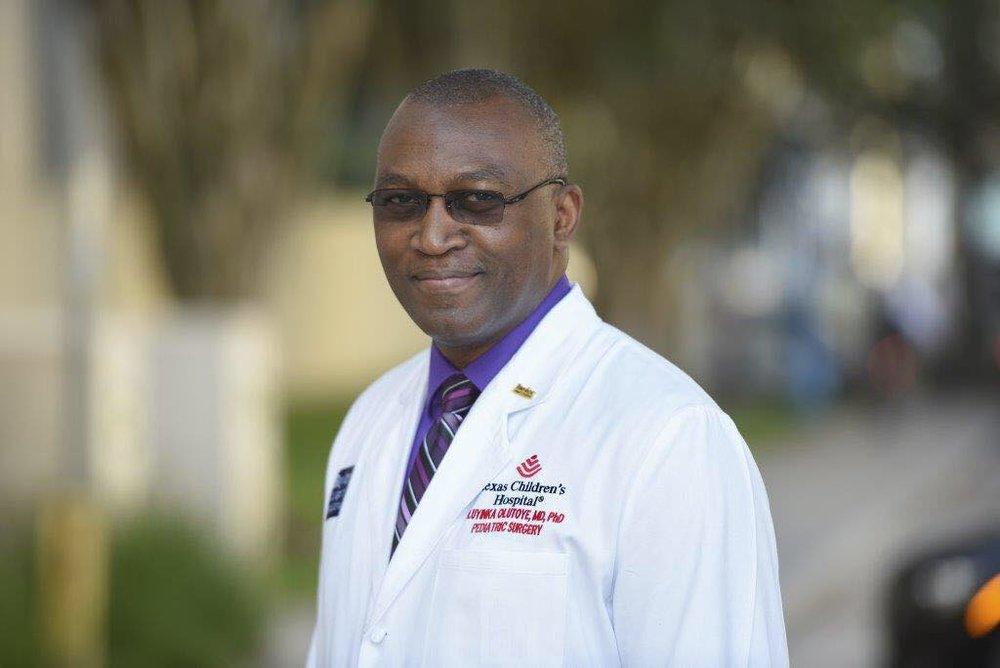
Among the surgeons involved was Nigerian-born pediatric and fetal surgeon Dr. Oluyinka Olutoye, who co-led the procedure with Dr. Darrell Cass and a multidisciplinary team at Texas Children’s Hospital.
The Nigerian Behind the Breakthrough
For Dr. Oluyinka Olutoye, the procedure became one of the defining moments of a distinguished career in pediatric and fetal surgery.
Born in Nigeria, Olutoye went on to build an international reputation as a surgeon specialising in the treatment of children and unborn babies with complex medical conditions.
His role in Lynlee’s surgery also became a source of pride for Nigerians, placing a Nigerian-born surgeon at the centre of one of the most remarkable examples of fetal medicine.
Importantly, Olutoye was part of a much larger team. The operation required specialists from several medical disciplines working together, with every stage carefully coordinated to protect both mother and child.
A Race Against Time
Lynlee’s condition was caused by a sacrococcygeal teratoma (SCT), a rare tumour that develops near the tailbone. Although these tumours are usually detected during pregnancy and can sometimes be treated after birth, Lynlee’s had grown to a dangerous size.
The tumour was drawing a significant amount of blood from her developing body. As her heart worked harder to supply both herself and the tumour, she faced the risk of heart failure.
At only 23 weeks, however, Lynlee was far too premature for doctors to consider a conventional delivery as a safe solution.
The team had to find another way.
Surgery Before Birth
In 2016, surgeons performed a highly complex five-hour operation. They opened Margaret Boemer’s uterus and carefully brought Lynlee partially out of the womb while keeping her attached to the placenta and umbilical cord.
This allowed oxygen and blood to continue reaching the fetus as the surgeons worked.
With extraordinary precision, the team removed approximately 90 percent of the tumour.
The operation carried enormous risks. Any significant blood loss, damage to the fetus, premature labour or complications involving the mother could have turned the procedure into a tragedy.
But the surgery succeeded.
Rather than delivering Lynlee, the surgeons carefully returned her to the womb. The uterus and surrounding membranes were closed, allowing the pregnancy to continue.
For almost three more months, Lynlee remained inside her mother, continuing to grow and develop after undergoing major surgery.
The Baby Who Was “Born Twice”
At around 36 weeks, Lynlee was finally delivered by Caesarean section.
This time, she was truly entering the world.
The extraordinary circumstances of her treatment led to her being described in media reports as “the baby born twice.” While the phrase is not medically literal, it captured the remarkable sequence of events: Lynlee had been partially removed from the womb, operated on while still connected to her mother’s placenta, returned to the uterus and allowed to continue developing before being delivered.
Her story became an extraordinary example of how fetal surgery can intervene before birth when a condition threatens a baby’s survival.
For generations, doctors could do little when a serious medical condition threatened a baby before birth. Advances in imaging, fetal diagnosis, surgery and maternal care have changed that reality, allowing specialists in carefully selected cases to intervene while a baby is still developing in the womb.
In Lynlee’s case, that intervention gave her more time—the time she needed to grow strong enough to survive birth.
The story is ultimately bigger than the phrase “born twice.” It is about a medical team willing to take an extraordinary risk when the alternatives offered little hope, and a mother who continued her pregnancy after an operation few parents could imagine.
Years later, Lynlee’s journey remains a powerful illustration of what can happen when medical expertise, technology and determination come together—and a reminder that, in some cases, the fight to save a life can begin long before birth.