
Compiled By Malami Haruna Dogon daji,
Published: September 16, 2026 | Abuja
Nigeria’s 2027 presidential election just moved from speculation to statute. On September 12, 2026, the Independent National Electoral Commission (INEC) published the final list of 18 presidential candidates and their running mates, the only names legally permitted to contest the January 16, 2027 presidential poll under the Electoral Act 2026.
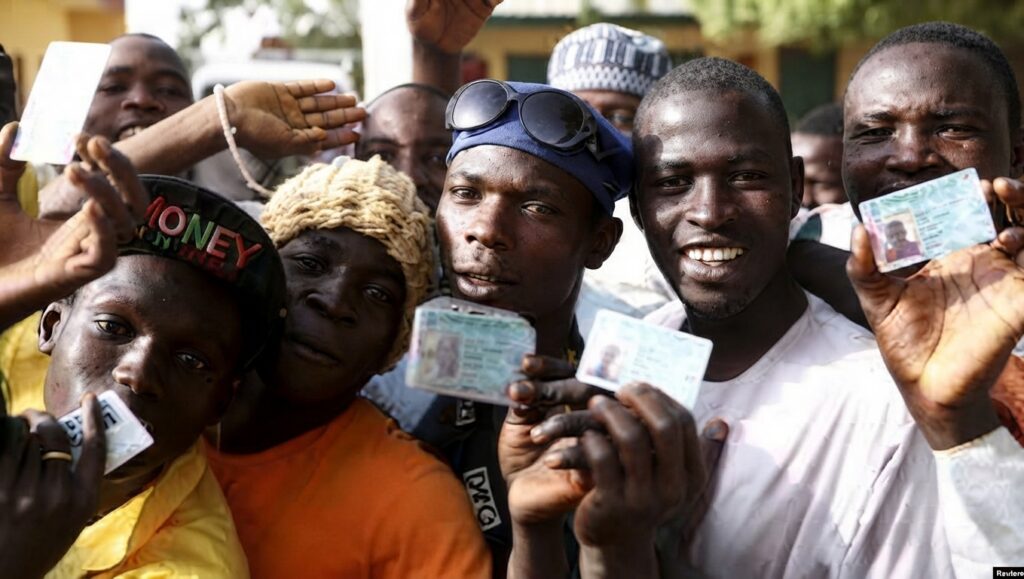
This is not merely a procedural update. It is a voter’s milestone: the moment Nigerians can shift from “who might run?” to “who deserves my vote—and why?” With 18 tickets, two women at the top, four female running mates, and an age spread from 35 to 79, the field is wide enough to reward scrutiny and punish slogans.
Below is a clear-eyed, evidence-based guide to help citizens, civil society, and the media turn this list into a decision-making tool—not a cheerleading sheet.
Why this list matters now
- Legal finality: INEC’s publication closes the door on any other presidential names. Campaign materials showing unlisted candidates are misleading.
- Ballot reality: With 18 options, ballot papers will be crowded; voter education on party logos and candidate names is now urgent to prevent accidental votes.
- Threshold math: Nigeria’s constitutional requirement (highest votes plus 25% in at least two-thirds of states) means a large field can fragment support and complicate outcomes if no ticket clears the bar.
In short: the rules are set, the players are named, and the burden of proof has shifted to the campaigns.
Fast Facts: The 2027 Presidential Field at a Glance
| Metric | Detail |
|---|---|
| Election date | Saturday, January 16, 2027 (presidential & National Assembly) |
| Total presidential candidates | 18 (16 men, 2 women) |
| Female vice-presidential candidates | 4 across different tickets |
| Age range (presidential) | 35 – 79 years |
| Oldest presidential candidate | Atiku Abubakar (ADC), 79 |
| Youngest presidential candidate | Moses Olusoji Adebisi (DLA), 35 |
| Oldest running mate | Kabiru Rabiu (PRP ticket), 80 |
| Incumbent ticket | APC: Bola Tinubu (74) / Kashim Shettima (59) |
| Key repeat contenders | Atiku Abubakar (ADC); Peter Obi (NDC) |
| Notable new entrants | Seyi Makinde (APM); Donald Duke (PRP); Sandy Onor (PDP) |
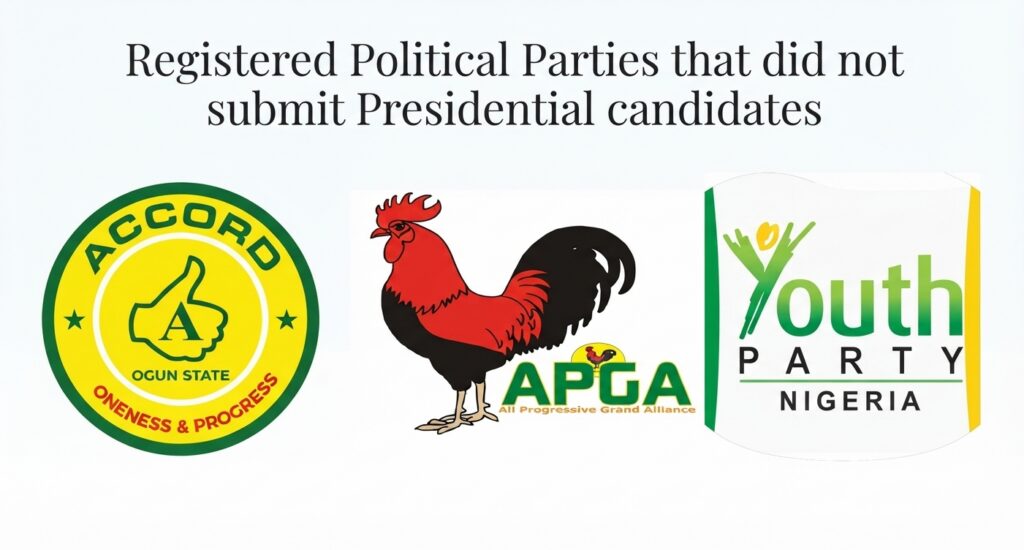
| Parties with no presidential candidate | 3 registered parties submitted none |
The Full Ticket List (Party / Presidential Candidate / Running Mate)
- APC – Bola Tinubu / Kashim Shettima
- ADC – Atiku Abubakar / Chibuike Rotimi Amaechi
- NDC – Peter Gregory Obi / Musa Mohammed Rabiu Kwankwaso
- LP – Sunday Chibuzo Okereke / Hajja Bintu Konto
- PDP – Sandy Ojang Onor / Umaru Babangida
- AA – Rufai Adekunle Omo-Aje / Shehu Hussaini
- ADP – Aliyu Abbas-Bin / Chinazam Ike
- APP – Kabiru Yusuf / Peace Egobia Ofordile (female VP)
- AAC – Omoyele Sowore / Haruna Garba Magashi
- APM – Oluseyi Abiodun Makinde / Musa Lawal Daura
- BP – Sunday Adenuga / Usman Turaki Mustapha
- DLA – Moses Olusoji Adebisi / Nafisat Usaku Abubakar (female VP)
- NDP – Ada Elizabeth Fredrick Okwori (female) / Uchenna Anthony Chukwuemeka
- NRM – Nkem Esther Okereke (female) / Nasir Muhammed Sulaiman
- PRP – Donald Duke / Kabiru Rabiu
- SDP – Adewole Ebenezer Adebayo / Usman Muhammed Bugaje
- YPP – Peter Ada Agada / Patience Ndidi Key (female VP)
- ZLP – Daniel Daberechukwu Nwanyanwu / Hassan Khalid
From “Who Is Running?” to “Who Deserves My Vote?”
The question Nigerians must now ask is not about eligibility but desert: which ticket has the plan, team, and track record to reduce insecurity, stabilize the economy, and expand opportunity—while respecting electoral rules and Nigeria’s diversity?
1) Demand costed policy, not slogans
Every serious campaign should publish, before December 2026, a Year-1 action plan with numbers:
- Economy: Inflation target range, exchange-rate framework, power-generation hours, job-creation metrics.
- Security: Specific steps to cut killings, kidnappings, and communal violence (intelligence reform, community policing, prosecution pipelines).
- Fiscal honesty: How promises will be funded (tax reforms, subsidy policy, debt management) without blowing up the budget.
If a ticket cannot present a costed, measurable agenda, treat its promises as campaign poetry, not policy.
2) Audit records, not résumés
- Executives (president, governors, ex-governors): Look for delivered projects, budget execution rates, security outcomes, education/health indicators during their tenure.
- Legislators/party insiders: Check sponsored bills, committee work, voting records, and public positions on key reforms.
- Activists/journalists (e.g., Sowore/AAC): Review past advocacy, legal battles, and whether proposed policies are implementable within Nigeria’s fiscal and institutional constraints.
Past performance is the most honest preview of future governance.
3) Test coalition math and governability
Some tickets pair rivals or ideologically distant figures to broaden appeal. Voters should ask: Can this team work together under pressure? Check whether the running mate complements the presidential candidate (region, expertise, network) or is purely a balancing act.
4) Score commitment to electoral integrity
Note public positions on INEC transparency, result transmission, and acceptance of outcomes. Be wary of campaigns that pre-emptively discredit INEC without evidence, or that promise “guaranteed victory” through non-electoral means.
Red Flags and Green Flags for Voters
Red flags (lower a candidate’s “deserving” score)
- No published, costed policy program beyond generic promises.
- History of incitement or ethnoreligious polarization without clear repudiation.
- Pattern of party-hopping purely for office with no consistent reform thread.
- Refusal to commit to accepting INEC’s final results subject to lawful challenge.
- Dependence on a single region or demographic with no national inclusion plan in an 18-candidate race.
Green flags (raise a candidate’s “deserving” score)
- Clear, costed policy agenda with measurable targets (inflation band, power hours, school enrollment, security benchmarks).
- Documented executive or legislative record that aligns with current promises.
- Inclusive ticket and messaging that addresses Nigeria’s regional, religious, and gender diversity.
- Commitment to electoral integrity and peaceful post-election conduct.
- Team depth: visible policy advisers, economic/security teams, and a credible transition plan.
Call To Action: Turn This List Into a National Audit
Nigeria does not need more cheerleaders; it needs citizen auditors. Here is how you can help make the 2027 election a milestone for accountability:
- Share this article across your WhatsApp groups, X/Twitter threads, and community forums. Tag party handles and ask: “Where is your costed Year-1 plan?”
- Host town halls and radio call-ins using the five-question voter checklist below. Invite local campaign coordinators to respond on record.
- Build a public scorecard. Civil society, student unions, and professional bodies can publish a simple tracker: policy published (yes/no), costed (yes/no), security plan (yes/no), fiscal plan (yes/no), integrity pledge (yes/no).
- Demand debates. Media houses should organize at least three presidential debates before December 2026, focusing on economy, security, and electoral integrity.
- Protect the process. Report hate speech, incitement, and result-tampering rumors to INEC and security agencies. Defend the count, not the candidate.
The Five-Question Voter Checklist
Before you mark your ballot, ask each ticket:
- What exactly will you do in Year 1 on economy, security, and power?
- What evidence from your past shows you can deliver it?
- How will you fund it without unsustainable borrowing?
- Do you accept INEC’s process and results, win or lose?
- Does your team reflect Nigeria, not just a zone or clique?
If a campaign cannot answer these plainly, your vote is better spent on a ticket that can.
The Milestone Moment
INEC’s release of the final 18 is Nigeria’s invitation to move from personality politics to policy politics. The ballots will carry 18 names, but the real test is whether citizens carry 18 sets of hard questions—and insist on answers before voting day.
This is how a milestone becomes a movement: not by shouting louder, but by asking better questions—and refusing to settle for less.