
Compiled By: Malami Haruna Dogon daji
Published: September 16, 2026
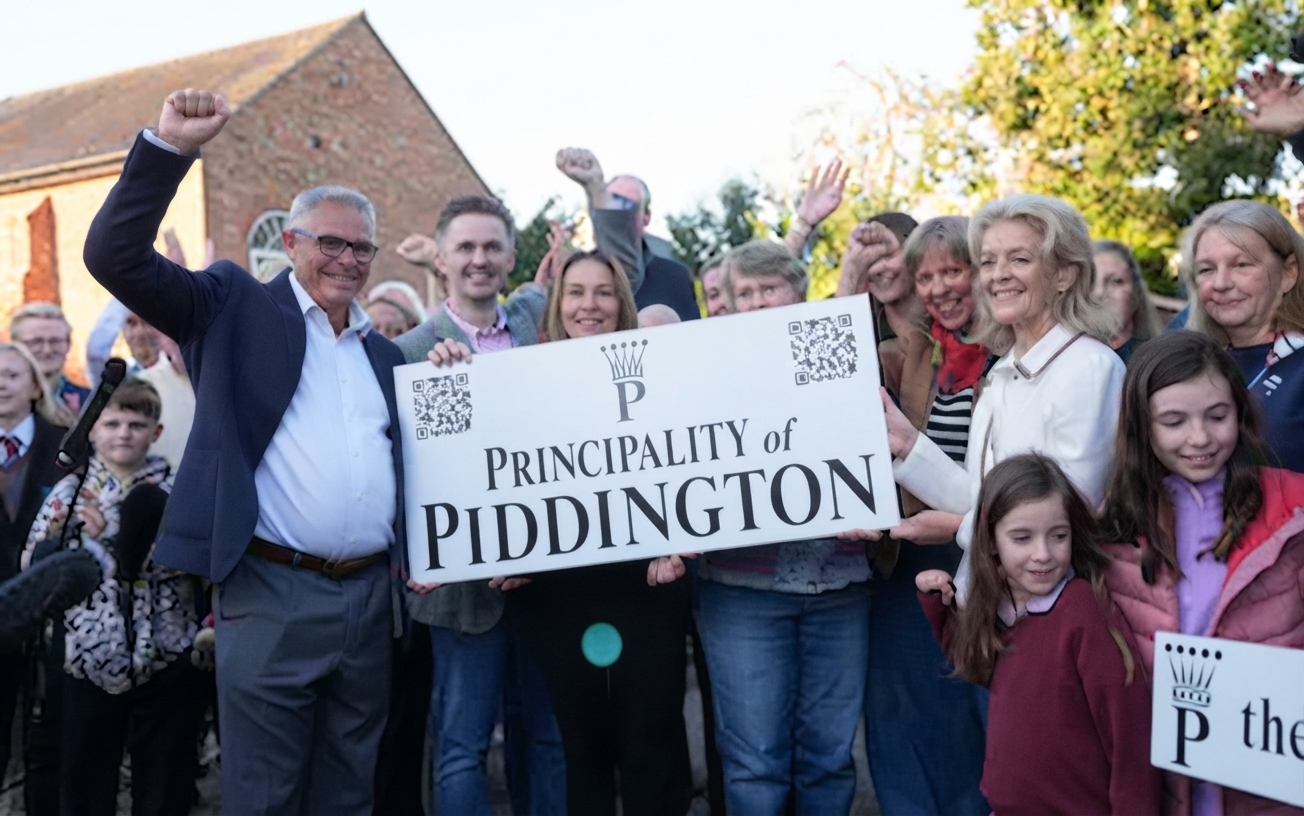
A tiny English village of about 350 people has voted overwhelmingly to “secede” from the United Kingdom. Not to form a new country, but to send a loud message: “Do not impose this on us without our consent.”
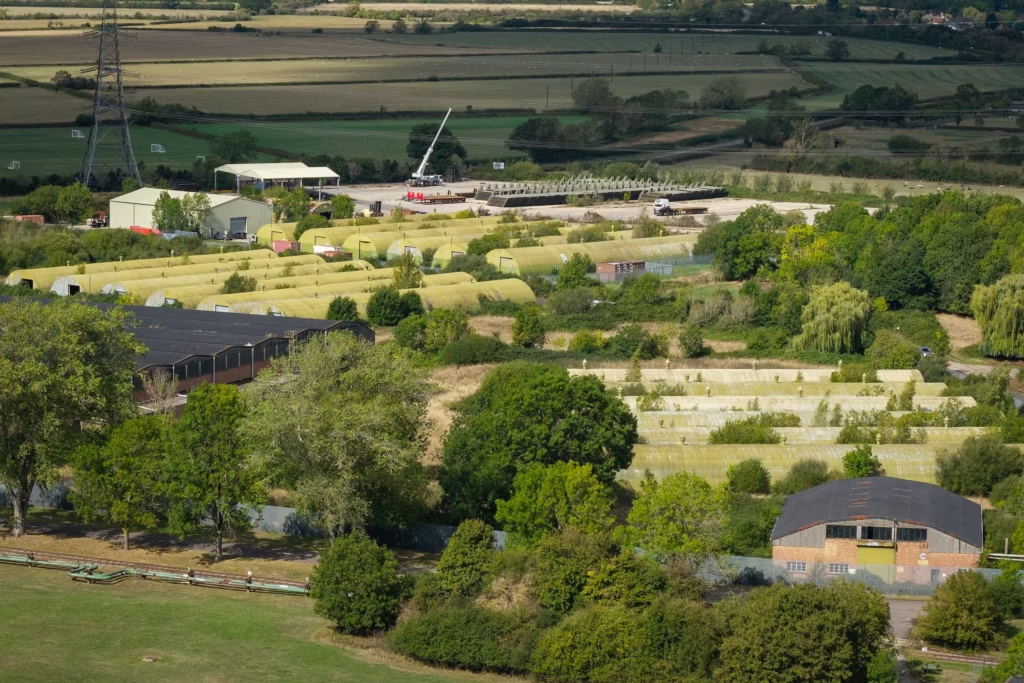
The village is Piddington, near Bicester in Oxfordshire, central England. On Wednesday, its parish council announced that 285 out of 312 voters backed a symbolic “independence referendum” to protest government plans to house more than 1,200 male asylum seekers at a nearby disused military base.
The vote has no legal power. Piddington cannot actually leave the UK. But as a piece of political theatre, it has captured global attention—and holds clear lessons for African communities facing top‑down decisions on land, housing, security and migration.
What happened in Piddington?
- Population: Around 350 residents.
- Trigger: UK government plans to convert a former army site (MoD Bicester) into a camp for about 1,256 male asylum seekers.
- The ballot question: “I support Piddington seeking to secede from the United Kingdom and pursuing self‑determination.”
- Result: 285 Yes, 26 No, 1 spoiled; turnout about 92%.
- Status: Purely symbolic; no legal mechanism exists for a village to break away from the UK.
Residents call their campaign the “town that roared” and some have dubbed the vote the “Battle of Britain”—a playful but pointed challenge to Westminster.

Why this matters beyond Britain
At its core, Piddington’s story is not about asylum policy alone. It is about consultation, consent and community agency—issues that resonate deeply across Africa, where central governments often announce big projects with little local input.
1) People want to be heard before decisions are final
In Piddington, anger grew because residents felt the asylum camp was imposed, not discussed. The referendum was a way to say: “You did not ask us; now hear us.
Lesson for Africa: Whether it is a new refinery, a dam, a refugee camp or a housing estate, communities react badly when they learn about life‑changing projects from the news, not from town halls. Early, honest consultation can reduce conflict and build trust.
2) Symbolic protest can be powerful—if it stays peaceful
Piddington’s vote cannot change law, but it shifts the narrative. It forces national media, MPs and ministers to answer: “Why are so many residents so unhappy?
Lesson for Africa: Peaceful, creative protest—petitions, referendums, community declarations, art, music—can draw attention and pressure leaders to negotiate, even when the act itself has no legal force.
3) Migration debates are emotional everywhere
In Britain, as in Nigeria, South Africa, Kenya or Ghana, migration touches nerves: jobs, housing, security, culture, identity. Piddington’s residents say their worry is not hatred of migrants, but the scale and speed of the plan and its impact on a small village.
Lesson for Africa: Leaders must separate genuine community concerns (infrastructure, services, safety) from xenophobic rhetoric. Dismissing all criticism as “racism” or “tribalism” often makes tensions worse, not better.
4) Local government is the first line of trust—or crisis
Piddington’s parish council organised the vote. That local body became the channel for frustration with national policy.
Lesson for Africa: When local councils, traditional rulers and community leaders are sidelined, people look for other ways to be heard. Strengthening local governance and giving it real voice can prevent small disputes from becoming national crises.
What Piddington is asking for
Residents do not expect to become a micro‑state. Their demands are practical:

- Meaningful consultation before finalising the asylum camp plan.
- Clear information on security, services and infrastructure impacts on the village.
- Assurance that the community’s safety and quality of life will not be sacrificed without mitigation.
In short: “Talk with us, not at us.”
Clear parallels for African communities
Consider these familiar scenarios:
- A federal ministry announces a refugee camp near a small town without local meetings.
- A state government approves a waste dump or industrial zone beside a residential area.
- A national agency plans a dam or mining project that will displace villages, with compensation details released late.
In each case, the Piddington lesson applies:
- Announce early, explain clearly. Share the plan, the numbers, the timeline and the reasons in simple language.
- Hold real town halls, not photo‑ops. Let people ask hard questions and record their concerns.
- Publish impact studies (security, traffic, water, schools, clinics) and show how risks will be managed.
- Offer mitigation and benefits: better roads, more health workers, school upgrades, jobs for locals, not just burdens.
- Create a feedback loop: a named contact, regular updates, and a complaints mechanism that actually works.
When people feel respected, they are more likely to negotiate. When they feel ignored, they look for dramatic ways to be heard—even if it is a mock “independence” vote.
What this is not
- This is not a call for secession across Africa. Piddington’s vote is symbolic, not a blueprint for breaking up countries.
- This is not an endorsement of xenophobia. The village’s message is framed around process and scale, not hate against asylum seekers.
- This is not a model for violence or intimidation. The power of Piddington’s protest lies in its peaceful, democratic style.
The lesson is about how to disagree without destroying, and how governments can turn conflict into conversation.
For African leaders: three hard questions
- If your next big project were announced tomorrow in your own neighbourhood, would you be happy with the level of consultation?
- Can you point to one recent example where you changed a plan because a community said “no” or “not like this”?
- What permanent mechanism exists in your ministry or agency to ensure no major decision is taken without documented local engagement?
If the answers are weak, Piddington is a warning sign.
For African citizens: three practical steps
- Organise peacefully. Use recognised channels: town halls, petitions, community meetings, local councils, traditional institutions.
- Demand information in writing. Ask for impact assessments, timelines, budgets and contact persons. Keep records.
- Propose solutions, not only complaints. Suggest alternatives: different sites, phased implementation, added services, monitoring committees.
Peaceful, informed pressure is harder to ignore than angry rumours.
The bigger picture: migration, dignity and shared responsibility
Piddington sits inside a wider global struggle: how to balance humanitarian duty to people fleeing war and poverty with legitimate concerns of host communities about capacity and safety.
Africa knows this tension well—from refugee‑hosting regions in East and West Africa to cities strained by internal displacement. The answer is never simple, but the method can be clear:
- Treat both migrants and hosts with dignity.
- Share costs and benefits fairly.
- Make decisions with people, not only for them.
The roar that should be heard, not feared
Piddington’s “independence” vote will not create a new flag or passport. But it has created something more valuable for democracies everywhere: a mirror.
For Britain, it asks: “Are we listening to small communities before big decisions?”
For Africa, it asks: “Are we building a culture where consultation is normal, not optional?”
The village that roared does not want to break away. It wants to be taken seriously. That is a lesson every leader, every citizen can use.