
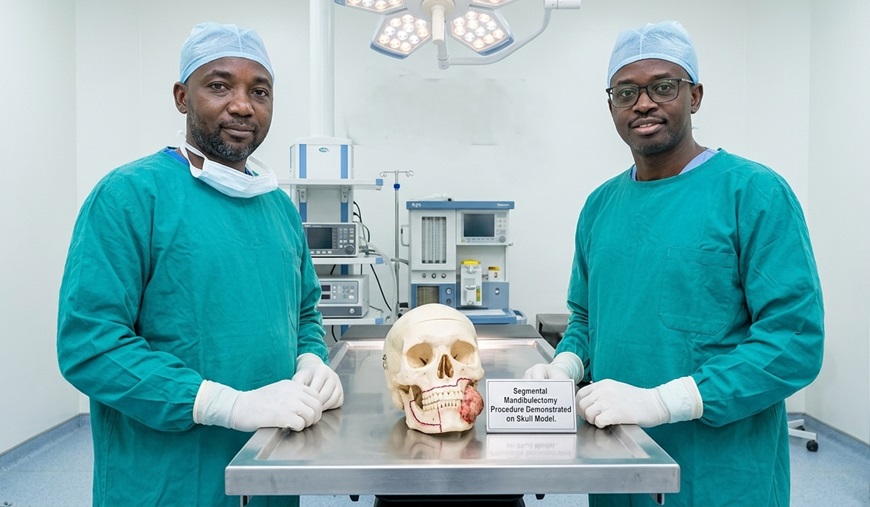
Compiled By: Malami Haruna Dogon daji
DAMATURU, NIGERIA — In a monumental stride for regional healthcare self-reliance, indigenous medical practitioners at the Yobe State Specialist Hospital have successfully executed a highly complex lower-jaw reconstruction surgery. This historic procedure marks a critical turning point for public healthcare delivery and specialised surgical capacity across North-East Nigeria.
The Patient and the Pathology
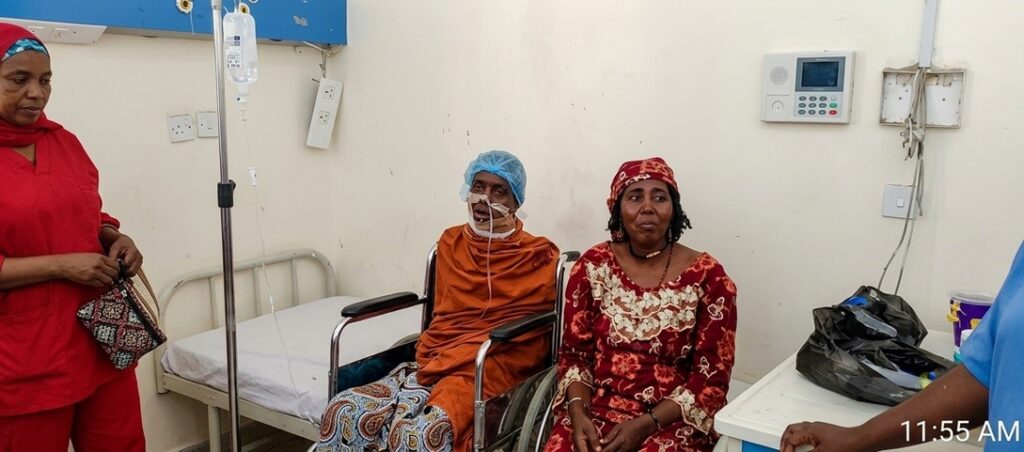
The intensive six-hour operation was performed on Acca Girgiri Sheriff, a 40-year-old mother of six from the rural Ummarari Matti community in Bursari Local Government Area. For an extended period, she suffered from mandibular ameloblastoma, a rare but locally aggressive tumour originating in the jawbone.
While pathologically classified as benign, this destructive condition progressively hollows out the mandible. Left unchecked, the growth causes severe facial distortion and severely impairs a patient’s fundamental capacity to breathe, speak, and swallow food properly.
Inside the Six-Hour Surgical Theatre
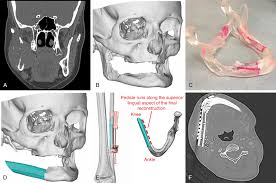
Executing this procedure required far more than a simple excision of diseased mass. The multi-disciplinary team, led by Consultant Oral and Maxillofacial Surgeon Dr. Muhammad Ayuba Fusami and the facility’s Chief Medical Director, Dr. Usman Abba Geidam, performed a segmental mandibulectomy.
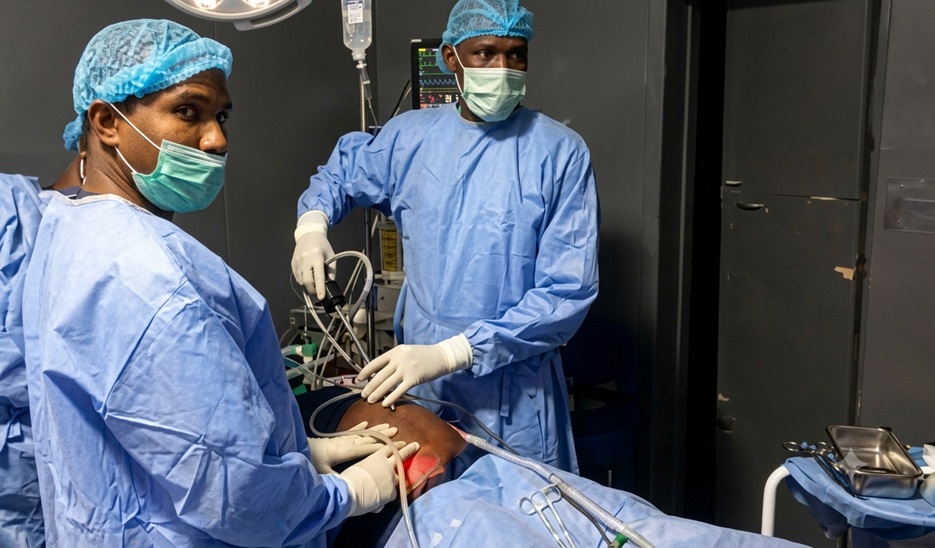
To bridge the structural gap left behind by the removal of the diseased bone, surgeons harvested a living iliac crest bone graft directly from the patient’s own hip. This intricate micro-surgical technique relies on rebuilding the physical continuity of the lower jaw using the patient’s own biological tissue, drastically reducing the risk of implant rejection.
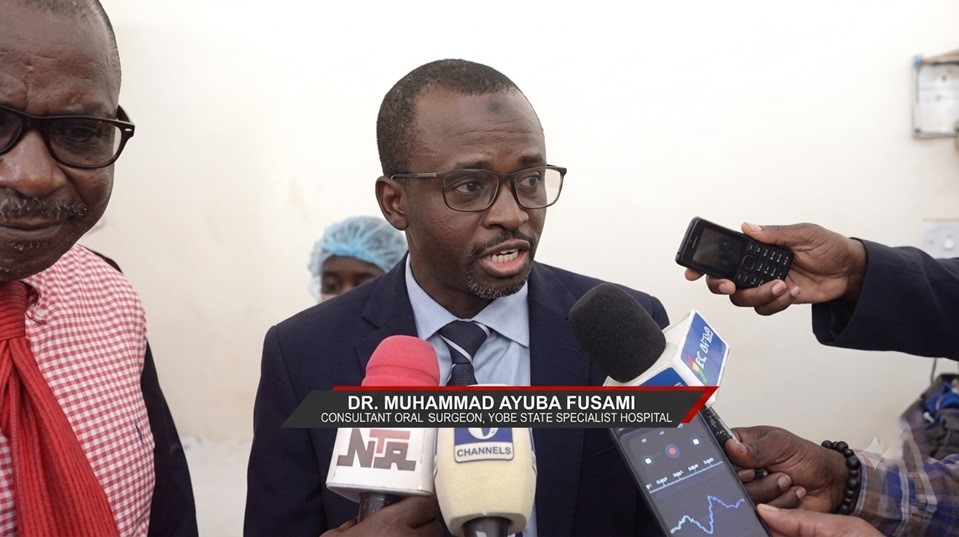
“The patient is currently stable and responding exceptionally well to post-operative clinical management. Reconstructing the jaw continuity is not merely about treating an aggressive disease; it is about completely restoring a human being’s functional capacity and facial dignity.” — Dr. Muhammad Ayuba Fusami, Consultant Oral and Maxillofacial Surgeon
Institutional Dividends of Public Investment
This milestone stands as the first operation of its complexity recorded at the Yobe State Specialist Hospital. Hospital leadership explicitly credited this success to sustained infrastructure upgrades and deliberate state funding directed toward the secondary and tertiary health sectors.
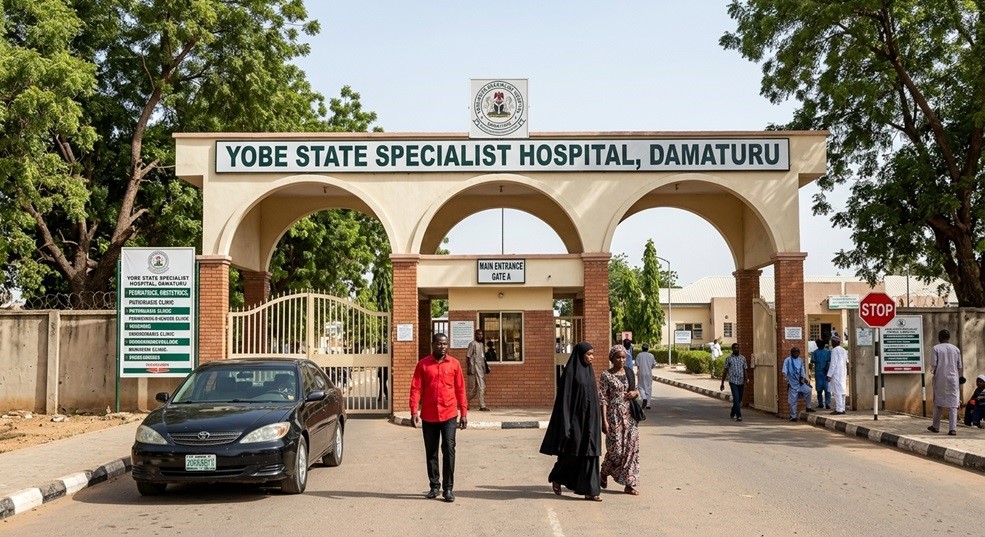
By proving that advanced maxillofacial interventions can be successfully managed within public state hospitals, this breakthrough challenges the historic reliance on distant metropolitan tertiary centres or costly foreign medical tourism. It ensures that vulnerable or underserved populations within the region can access life-saving clinical interventions closer to home.
Digital Transparency and Health Infrastructure
To capture, archive, and share these domestic medical milestones with the international scientific community, the digitalisation of healthcare data remains paramount. The seamless electronic storage and public dissemination of clinical success stories are being heavily formalised across public systems
5. Context Box: Fast Facts
| Clinical Dimension | Case Specification & Analytical Detail | Systemic Impact |
| Patient Profile | 40-year-old mother of six; resident of Bursari LGA. | Highlights healthcare access equity for rural communities. |
| Primary Diagnosis | Mandibular Ameloblastoma (Aggressive odontogenic tumour). | Overcomes a condition causing severe bone destruction. |
| Surgical Technique | Segmental mandibulectomy with an autogenous iliac crest bone graft. | Demonstrates localized capacity for advanced autografting. |
| Operation Duration | Approximately six hours under full anaesthetic support. | Confirms advanced theatre and post-operative monitoring depth. |
| Systemic Shift | Transition from medical referral reliance to localized execution. | Mitigates the financial burden of outbound medical tourism. |
A Global and Historical Perspective
Mandibular ameloblastoma has a long surgical history within international oral and maxillofacial practices. There is no singular, universally acknowledged pioneering surgeon globally, as treatment paradigms have evolved incrementally over the last century from basic resections to modern micro-vascular reconstructions.
The achievement in Damaturu demonstrates that contemporary, multi-stage reconstructive science is no longer confined to international medical capitals. Nigeria’s public health grid is actively proving it possesses the intellectual capital and engineering precision required to restore structural health and human dignity on home soil.
The Social Call-to-Action (CTA)
What is your view? How can Nigeria best sustain and replicate this level of specialised surgical success across all state-owned public hospitals? Share your perspectives and celebrate our local medical heroes in the comment section on the official NTA digital platforms using the hashtag #NTADigitalInnovation.