
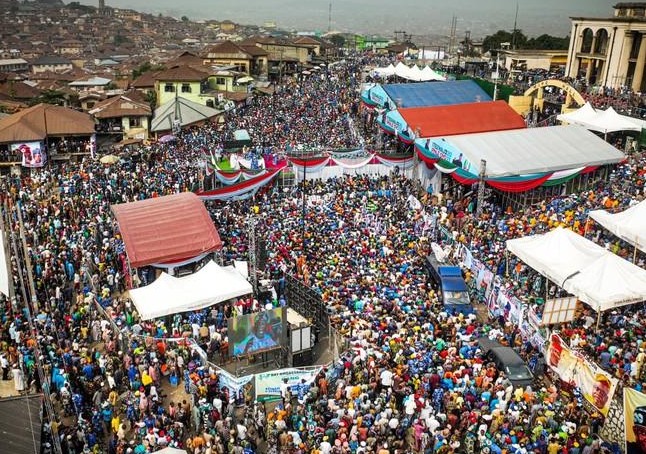
Nigeria’s 2027 presidential campaign is officially underway, bringing with it the familiar sights of political rallies, campaign posters, branded vehicles, television appearances and candidates travelling across the country in search of votes. But behind these visible activities is an elaborate campaign operation, and the numbers involved show just how large a presidential contest has become.
Under the Electoral Act 2026, a presidential candidate can spend up to ₦10 billion on an election campaign. That is a legal ceiling, not a compulsory budget, but it provides an indication of the scale at which a nationwide campaign can operate. For a candidate seeking votes across 36 states and the Federal Capital Territory, resources have to cover everything from rallies and transportation to campaign offices, publicity, media appearances, personnel and grassroots mobilisation.
One example of the cost of simply putting a campaign message in front of voters has emerged in Kogi State, where a presidential candidate is expected to pay ₦150 million for campaign signage and related promotional materials across the state under the approved 2027 campaign fee structure. The state says the charges are part of regulating political advertising and ensuring compliance with signage regulations.
Then there are the rallies. A major political gathering can involve transportation for supporters, venue preparation, stages, sound systems, branding, security, media coverage and other logistics. Multiply that across several states and the scale becomes easier to appreciate. The same applies to television and radio advertising, billboards, printed materials and the increasingly important digital campaign, where candidates are competing for the attention of voters on multiple platforms.
The campaign also creates work for people outside the political parties themselves. Transport operators move campaign teams and supporters, printers produce posters and branded materials, event organisers prepare venues, broadcasters provide airtime and media professionals cover the candidates. In that sense, a presidential campaign is not only a political exercise but a nationwide logistical operation involving thousands of people.
For voters, however, the most important question remains what all this activity eventually produces. Behind the rallies, posters and publicity are the policies, programmes and records that candidates will place before Nigerians. And with the campaign now officially open, the ₦10 billion ceiling offers a useful measure of the resources that can legally be deployed in the contest, while the coming months will show how each candidate chooses to use those resources to reach the electorate.
And when the campaign eventually gives way to election day, all the travelling, advertising and rallies come down to one simple moment — a Nigerian standing at the polling unit, deciding who deserves their vote.