
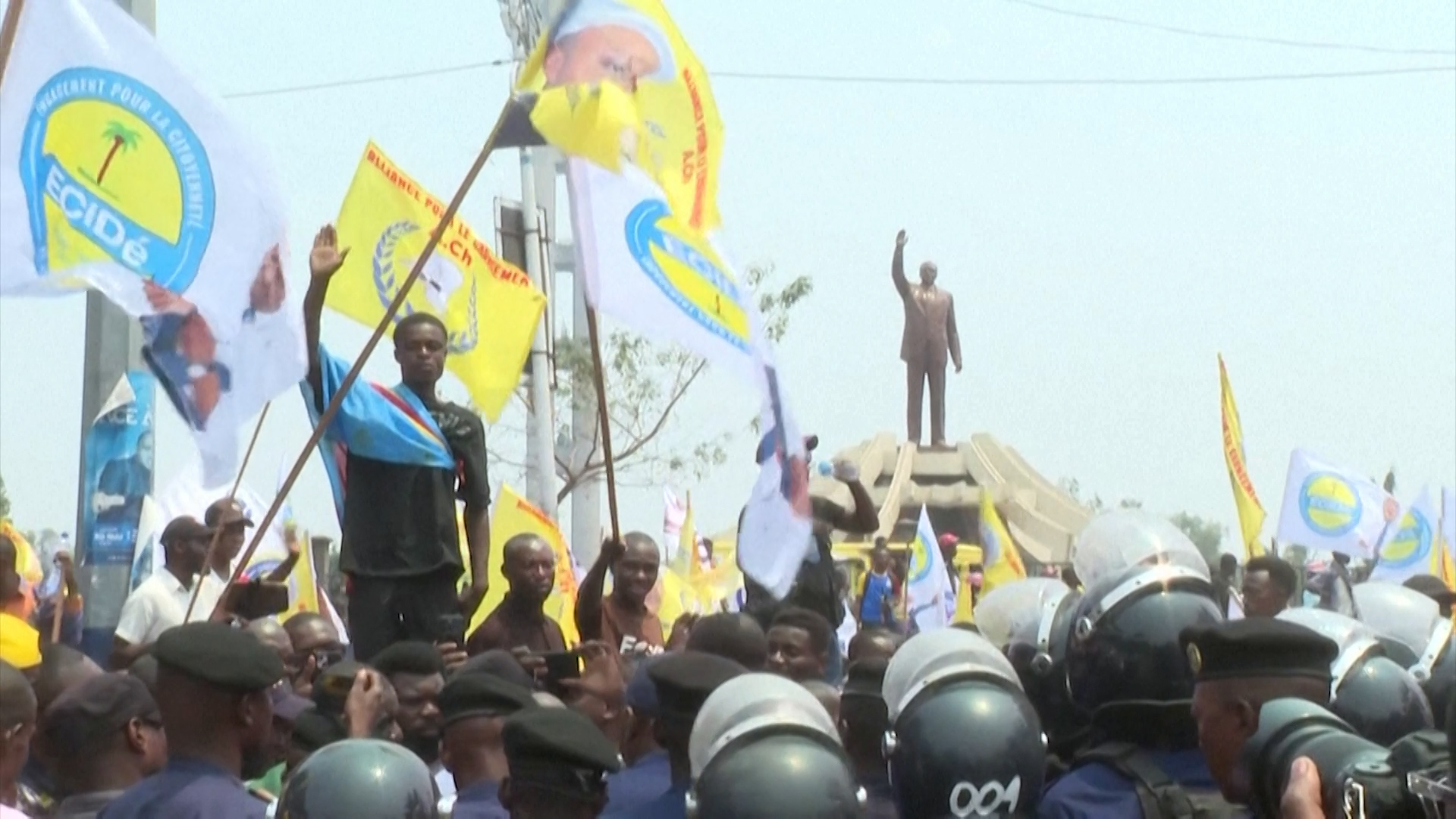
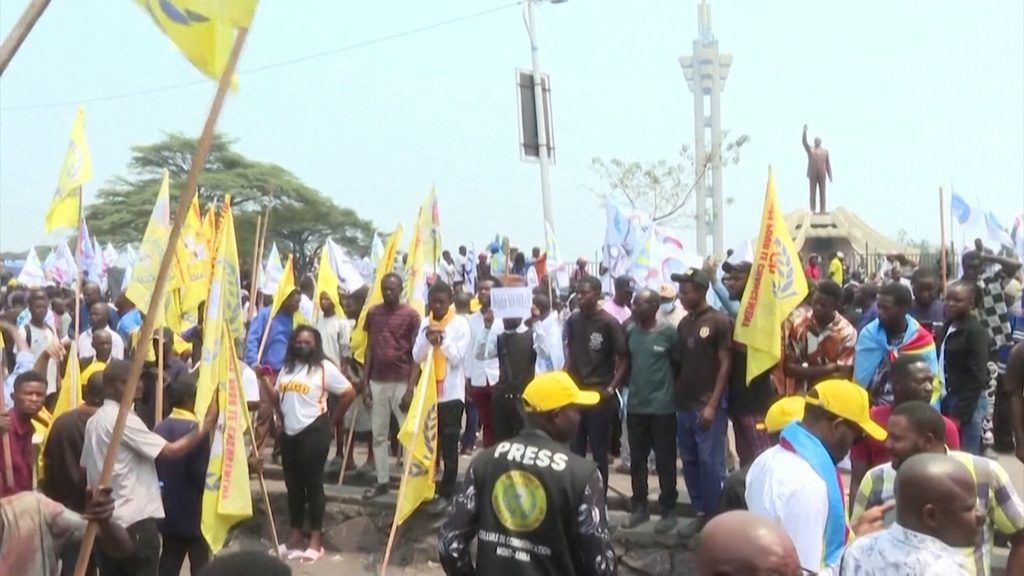
Hundreds of protesters gathered in Kinshasa, the capital of the Democratic Republic of Congo, to oppose a government-backed constitutional amendment that critics fear could clear the way for President Félix Tshisekedi to seek a third term.
Tshisekedi was first elected in 2019 and re-elected in 2023, and demonstrators say changing the constitution to allow another presidential bid would threaten the country’s democratic institutions and undermine existing term limits.
The protests come as the Democratic Republic of Congo faces a growing political dispute over the future of its constitution and the 2028 presidential election. President Félix Tshisekedi, who was first elected in 2019 and re-elected in 2023, is constitutionally limited to two terms under the current framework.
A proposed constitutional overhaul, however, has raised fears among opposition groups and civil society that the rules could eventually be changed to allow him to seek another term. The Senate adopted a bill in June that could open the door to such a third-term bid, intensifying concerns over the direction of the reform process.
The debate is particularly sensitive in a country with a recent history of political struggles over presidential term limits. Before Tshisekedi came to power, former President Joseph Kabila faced sustained opposition over attempts or perceived attempts to remain in office beyond the constitutional limit. The controversy contributed to years of political tension before Tshisekedi’s election marked the first peaceful transfer of presidential power in the country’s history.
For the government and Tshisekedi’s supporters, constitutional reform is presented as a broader effort to revise the country’s political framework. But the timing — ahead of the 2028 election — has made the question of presidential term limits especially contentious. The possibility of a referendum adds another layer to the debate, as any attempt to alter the constitutional rules would ultimately face a major test of public and political legitimacy.
For the DRC, the central issue is therefore not simply whether one president can seek another term, but whether constitutional rules can be changed to suit those in power without weakening the principle of democratic succession. Term limits are designed to prevent the concentration of political power and ensure that leadership can change through elections.
The protests in Kinshasa are a warning that many Congolese see the debate in precisely those terms. How Tshisekedi’s government handles the reform — and whether the process is transparent, inclusive and accepted by the opposition and wider public — will help determine whether the DRC strengthens its democratic institutions or returns to the cycle of constitutional and electoral disputes that has marked much of its recent political history