
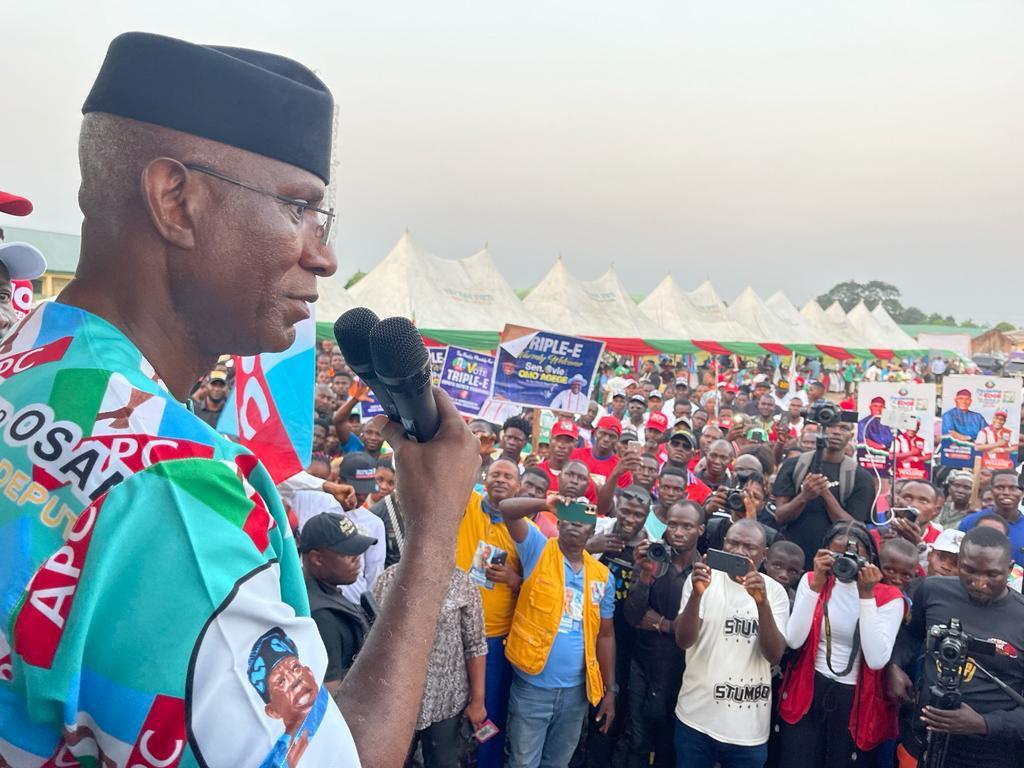
Former Deputy Senate President Ovie Omo-Agege, who is seeking the Delta Central Senatorial seat under the Nigeria Democratic Congress (NDC), has drawn attention for warning that anyone who rigs the 2027 elections would be killed. Speaking at a campaign event in Uvwie, Delta State, reported on October 23, 2026, he said: “Anybody who rigs the election on that day, we will kill him. It is rig and die.” He also said he would not rely on the courts to challenge electoral malpractice.
In a clarification issued on October 27, Omo-Agege defended the remark, saying it was aimed at people who falsify results or steal electoral materials, not ordinary voters. He described it as a warning against electoral fraud and a call to defend the people’s mandate.
A History of Combative Election Rhetoric
Combative election language is not new in Nigeria. In 2014, Bola Tinubu, then an opposition leader, warned against alleged plans to rig the Ekiti and Osun governorship elections, describing the prospect as “rig and roast”.
In 2019, then-President Muhammadu Buhari warned ballot-box snatchers and political thugs that they would be risking their lives.
Olusegun Obasanjo’s description of the 2007 election as a “do-or-die affair” was widely criticised. These remarks differ in wording, context and target, and should not be treated as equivalent or as proof that any of them caused violence.
When Does Defending Votes Become Dangerous?
There is no disagreement that rigging, intimidation, vote buying and theft of election materials must not be tolerated. The concern is that threats of lethal violence can be read by supporters as permission to confront suspected offenders physically or even as extreme as causing fatal injuries or harm.
Hence, there’s been a warning that this could lead to violence over unverified allegations, with innocent people becoming targets. It could also create fear around polling units and collation centers, discouraging voters and electoral stake holders, thereby making disputes harder to settle peacefully.
These are risks, not inevitable outcomes, and depend on the wider political environment, the conduct of supporters and how security agencies and officials respond.
What Does The Law Provide?
Under the Electoral Act 2026, electoral misconduct carries offences and penalties. The law separates reporting an offence from punishing it. Politicians and citizens can report suspected fraud, keep evidence and ask for investigations, but they have no authority to punish anyone themselves. Security agencies enforce the law, and the courts decide cases.
Omo-Agege’s concern that votes should be properly counted is legitimate, but critics say the method matters. Leaders can make clear that supporters must not attack anyone accused of rigging, and call for vigilant voters, transparent collation, impartial security personnel and prompt investigations without suggesting that suspected offenders should be killed.
As campaigning gathers pace, the question is not whether Nigeria should be thoroughly brutal on electoral fraud, but how to confront it without putting lives at risk.