
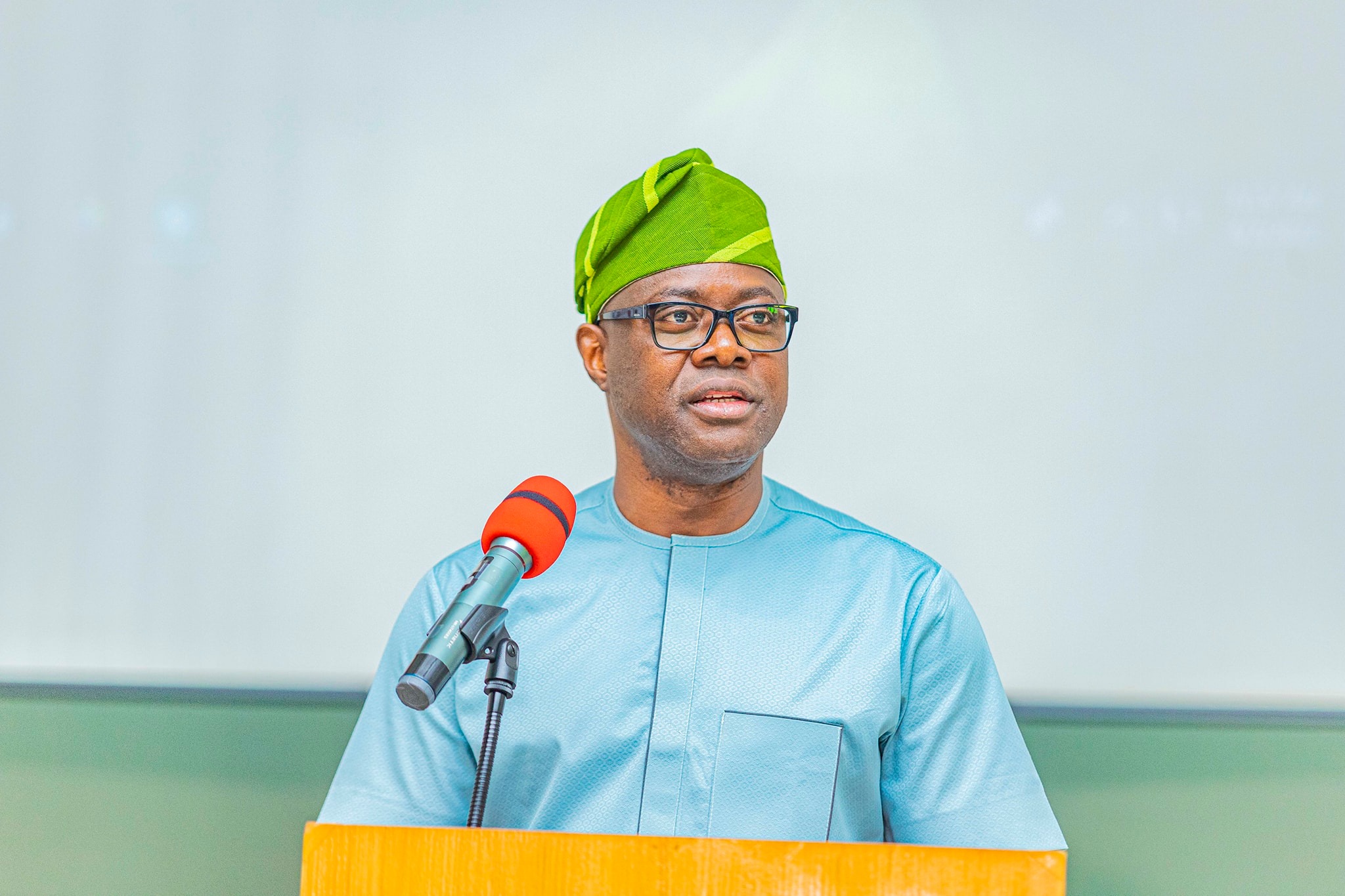
With Nigeria’s economic pressures, insecurity, education challenges and governance concerns featuring prominently in public debate, Seyi Makinde has unveiled a policy agenda that he says would address some of the country’s most pressing problems if elected president.
The Oyo State governor and presidential candidate of the Allied Peoples Movement (APM) presented his Reset Nigeria Agenda in Abuja on Wednesday, November 4, alongside his running mate, Lawal Musa Daura.
The manifesto is built around four pillars: resetting the economy, restructuring the security architecture, reforming education and resetting the country’s socio-political system.
While the proposals outline the direction of a possible Makinde administration, a major question remains: how would the agenda come into play, especially within the first 100 days of assuming office?
The manifesto highlights priorities and identifies areas where the proposed administration would seek change. However, the published document does not provide a detailed first-100-days timetable plan to breakdown how the immediate actions would be implemented.
This leaves questions about the order of priorities, the resources required and how Nigerians would be able to assess progress.
Economy
Makinde proposes cutting the structural cost of living by tackling the factors that make production, transportation and doing business expensive.
The plan stresses infrastructure that links farms to markets, businesses to customers and workers to opportunities. It also proposes cutting unnecessary administrative processes and letting public institutions share information more efficiently. Turning these into real relief would require identifying priority projects, working out their funding and partnering with state governments and the private sector.
Security
The agenda proposes stronger intelligence gathering, better information sharing among security agencies, clearer systems for responding to threats, and reviews of major security incidents to identify failures.
In Oyo State, the administration points to its 615 emergency line, control room, CCTV infrastructure and agency coordination as examples. A national system is much wider, so the reforms would need to explain how responsibilities are shared among federal agencies, state authorities and local communities, how intelligence is acted upon and how performance is assessed.
Education
The manifesto says the system should be judged not only by enrolment or schools built, but by whether pupils learn basic literacy and numeracy. It proposes addressing why children stay out of school, including poverty, insecurity and distance, and linking education to technical and vocational training, apprenticeships and jobs.
Makinde cites the removal of the ₦3,000 levy in Oyo public secondary schools as an example. Nationally, this would require cooperation with state governments and education authorities, since challenges differ across regions.
Governance
Makinde argues that too much power sits at the federal level and proposes devolving more authority to states, with stronger institutions and accountability. He names security and natural resources as areas where federal and state responsibilities should be reviewed. Such changes would need the National Assembly, state Houses of Assembly and the constitutional amendment process, so they cannot be achieved by executive decision alone.
The first 100 days
The early period would show how the agenda moves from proposals to action. A clearer plan would need to name the priority reforms, the institutions responsible, the funds required and the timelines for results. It would also need to separate actions that can start immediately from those that depend on legislation, constitutional amendments or state cooperation, and give Nigerians regular updates on progress, delays and reasons for setbacks.
For voters, the question is not only what Makinde wants to reset, but how he intends to do it and how soon the results would show.