

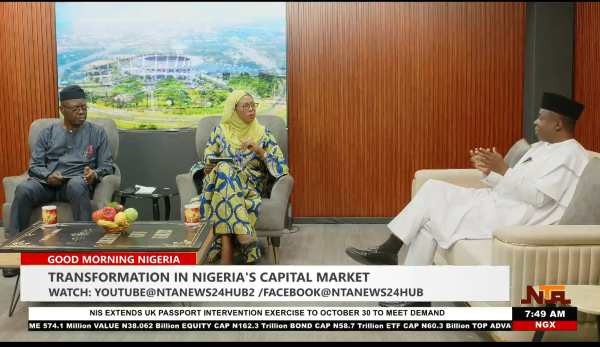
Nigeria’s capital market is undergoing a significant transformation as regulatory reforms, technological innovation and broader economic changes reshape the investment landscape.
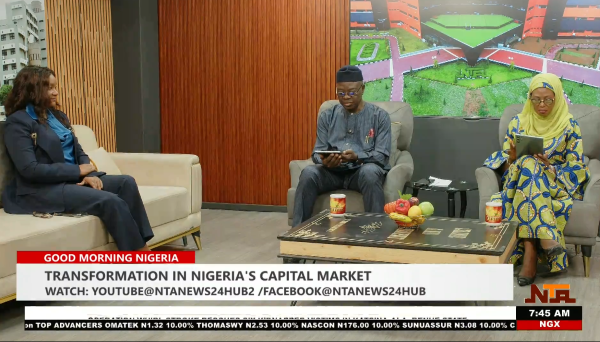
The reforms are aimed at building a deeper, more efficient and more inclusive market capable of attracting domestic and international capital while supporting long-term economic growth.
Guest on Nigerian Television agreed that the centre of the transformation is the Nigerian Capital Market Master Plan, developed under the leadership of the Securities and Exchange Commission (SEC) which provides a framework for expanding the market, improving efficiency, strengthening investor protection and promoting financial literacy.
The President of the Chartered Institute of Stockbrokers, Dr Fiona Ahmed Ahimie, says Nigeria’s Capital Market still has significant room for growth despite reduced international capital inflows.
Dr Fiona said recent reforms have strengthened the market and positioned it for further growth.
The President of the Association of Capital Market Academics of Nigeria, Prof. Uche Uwaleke, says ongoing reforms have improved economic stability, with moderation in inflation, exchange-rate stability thereby promoting balance-of-payments surpluses (BOP).
He said the reforms have also boosted investor confidence.
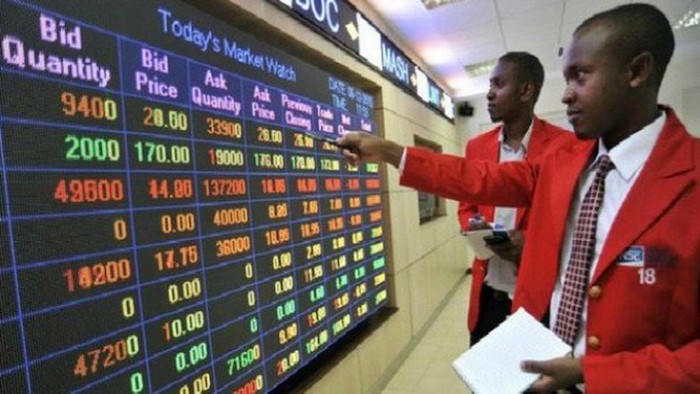
A Professor of Commercial and Industrial Law at the University of Lagos, Joseph Abugu, says Nigeria’s capital market has recorded appreciable development, contributing to the National economic growth.
Prof. Abugu stated that regulation has evolved significantly from the market’s formative years to keep pace with emerging practices.
The master plan also seeks to increase the range of financial products available to investors and encourage greater participation by retail investors, pension funds, insurance companies and other institutional players.
Technology has become one of the major drivers of change in Nigeria’s capital market. Market institutions are increasingly adopting digital tools to reduce barriers to investment and improve the speed and convenience of transactions.
The introduction of digital and USSD-based platforms is expected to make it easier for more Nigerians to access market information, open investment accounts and participate in the buying and selling of securities, particularly those who may not have access to conventional brokerage channels.
The Nigerian Exchange Limited (NGX) and other market stakeholders are also investing in modern trading, reporting and post-trade infrastructure. These developments are intended to enhance transparency, reduce transaction costs and improve the overall investor experience.
The SEC has introduced a range of reforms aimed at improving market efficiency and strengthening confidence in the financial system.
Among the areas receiving attention are registration processes, disclosure requirements, market surveillance, investor protection and settlement procedures. Regulators are also working toward shorter settlement cycles, including discussions around the adoption of same-day, or T+0, settlement in the future.
A shorter settlement period could reduce counterparty and settlement risks, improve liquidity and allow investors to access their funds more quickly. However, achieving this would require significant investment in market infrastructure, technology and operational coordination among brokers, exchanges, custodians, clearing houses and regulators.
The reforms are also expected to improve the ease of raising capital through the Nigerian market. A more efficient primary market could help companies, state governments and other public institutions secure funding for infrastructure, expansion and development projects.
Nigeria’s capital market has experienced substantial growth in market capitalisation in recent years, supported by higher equity prices, new listings and increased investor activity.
They explained that the rise has taken place against the background of major macroeconomic reforms, including changes in foreign-exchange policy, the removal of fuel subsidies and monetary-policy adjustments. While these measures have created short-term economic pressures, they have also influenced asset prices and investor strategies.
Analysts note that the growth in market capitalisation does not automatically translate into broad-based economic prosperity. Inflation, exchange-rate volatility, high interest rates and declining household purchasing power remain significant challenges for investors and businesses.
They argue that sustainable growth will depend on whether the market can attract long-term capital, increase the number of quality listings and provide reliable investment opportunities that offer protection against inflation.