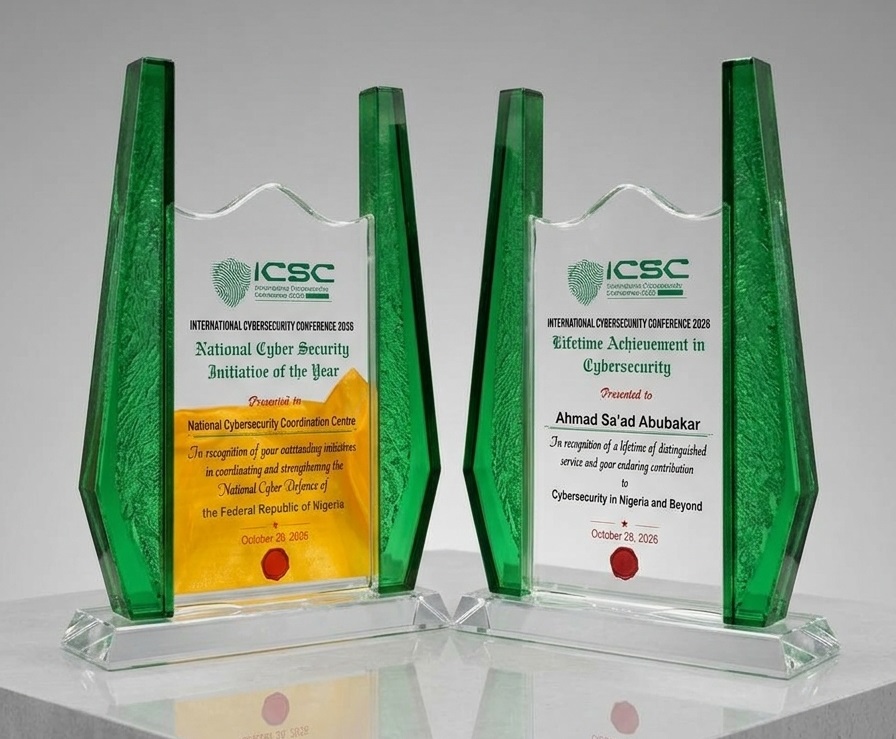

From a simple frustration with the cost of international calls to an ambitious technology platform developed with Nigerian engineering talent, the story of Austin Ugbebor and ESDIAC offers a compelling lesson in how local ingenuity can contribute to global innovation.
By Malami Haruna Dogondaji
04 NOVEMBER, 2026
There are conversations people should never have to rush.
A mother speaking to her child thousands of kilometres away. A father checking on his family abroad. A business owner trying to reach a client in another country. Or someone calling home simply because they miss the sound of familiar voices.
Yet, for many people, the cost of making an international telephone call can influence how long these conversations last and how often they happen.
Technology has made the world smaller in many ways. People can exchange messages, share photographs and participate in video meetings across continents. But access to affordable and reliable communication remains an important concern, particularly for people who depend on ordinary telephone calls to reach others.
It was against this background that Nigerian entrepreneur Austin Ugbebor began thinking about a different approach to telecommunications.

CEO ESDIAC Global Systems
His idea was not to build another messaging application or to displace companies already providing telephone services. It was to explore how existing technologies could work together to make communication more accessible, particularly for people who want to call ordinary telephone numbers without requiring the person receiving the call to download another application.
That thinking eventually found expression in ESDIAC Global Systems.
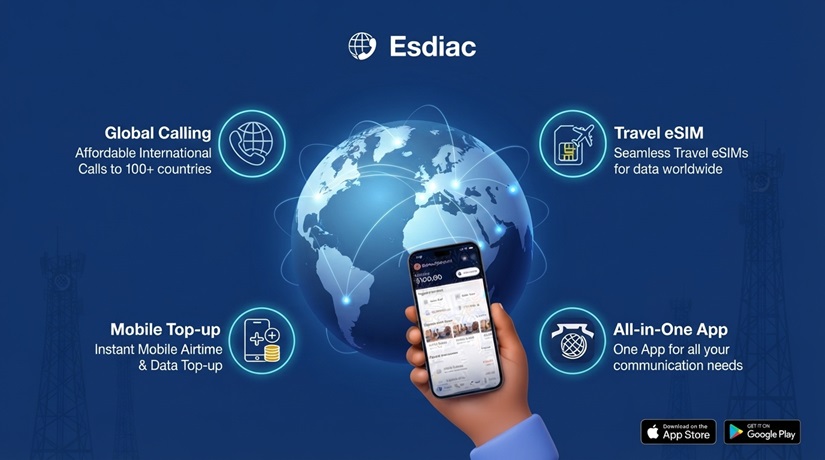
Today, ESDIAC brings together international calling, electronic SIM services, airtime and data top ups, and business communication solutions within one digital platform. Its ambition is to make communication easier for individuals, travellers and businesses while creating opportunities for technology professionals and commercial partners.
But the product is only part of the story.
Perhaps the more significant development is the decision to place Nigerian engineering talent at the centre of building the technology.
It is a story worth examining, not simply because a Nigerian entrepreneur has entered the international telecommunications market, but because it raises a more important question: what becomes possible when Nigerians are given the opportunity, resources and encouragement to develop technology rather than remain on the receiving end of it?
ESDIAC at a glance: The facts behind the story
Before examining the bigger picture, it is useful to understand the company, its products and the developments that have brought it into the spotlight.
| Area | Key information |
|---|---|
| Company | ESDIAC Global Systems Ltd |
| Founder | Austin Ugbebor |
| Business focus | International telecommunications and digital communication services |
| Main services | International calling, eSIM data packages, airtime and data top ups, and business communication |
| Calling model | App to phone, allowing users to call supported conventional telephone numbers |
| Announced starting call rate | ₦13 per minute for selected international destinations at the October 2026 Nigerian launch |
| Nigerian regulatory milestone | Listed by the Nigerian Communications Commission under International Data Access |
| License period | 1 August 2026 to 31 July 2036, according to the NCC register |
| International reach | Founder says the company has arrangements involving approximately 400 telecommunications carriers and reach across more than 150 countries |
| Nigerian engineering contribution | Founder says Nigerian engineers have played a substantial role in developing the platform, with early operations in Kano |
| Potential opportunities | Individual customers, travelers, businesses, resellers, technology professionals and commercial partners |
Editorial note: The international reach and carrier figures are claims made by the founder during the Tech Mode interview. The announced calling rate applies to selected destinations and should not be interpreted as a universal tariff. The NCC listing confirms a specific Nigerian regulatory authorization, not ownership or operation of mobile networks in every country.
A personal experience that became a business idea
Austin Ugbebor’s journey into telecommunications did not begin in an engineering laboratory.
He describes himself primarily as an entrepreneur, with professional and business experience spanning the United States and Africa. After spending almost 28 years abroad, he returned to Nigeria in 2015. What he encountered in the telecommunications environment prompted him to reconsider how people were paying to communicate.
During his appearance on NTA’s Tech Mode, Ugbebor recalled the frustration of expensive international calls and the financial difficulties this could create for families.
He described a particularly familiar situation. Someone living abroad might receive a request for assistance from family members in Nigeria, provide the support they could, and then discover that the people they had helped still had to spend money purchasing airtime simply to continue the conversation.
It was a cycle that made little sense to him.
His concern was not merely about the amount charged for a call. It was about the value people received for the money they spent.
He began asking whether technology could provide a better arrangement, one in which people could communicate without feeling that every conversation was an expensive undertaking.
This was how his interest in telecommunications developed.
It is an important aspect of Ugbebor’s entrepreneurial journey. He did not present himself as someone who had personally mastered every technical discipline involved in building a telecommunications platform. Rather, he identified a problem, developed a business vision and brought together the engineering capacity needed to pursue it.
There is a lesson here for aspiring entrepreneurs. A good technology business does not necessarily begin with someone knowing how to write every line of code. It can begin with recognising a problem that others have accepted as normal, understanding the people affected by it and having the determination to assemble the right people to develop a solution.
For Ugbebor, that solution became ESDIAC.
Understanding ESDIAC: Why app to phone matters
One of the easiest ways to misunderstand ESDIAC is to assume that it is simply another application for making internet calls.
That would miss an important distinction.
Many popular internet communication applications operate through an app to app arrangement. Both the caller and the person receiving the call generally need access to the same application and an internet connection.
ESDIAC takes a different approach with its international calling service.
The company describes its model as app to phone. The person making the call uses the ESDIAC application and an internet connection, while the person receiving the call can use an ordinary mobile phone or landline.
The receiver does not necessarily need to install ESDIAC, own a smartphone or have an internet connection.
This distinction matters.
Consider a Nigerian living in Abuja who wants to speak to an elderly relative in London. The relative may have a basic mobile telephone and may not use WhatsApp or any other internet calling application. With an app to app service, that limitation can become an obstacle. With an app to phone arrangement, the caller can use the application to reach an ordinary telephone number, subject to destination and network availability.
How does it work?
ESDIAC uses Voice over Internet Protocol, commonly known as VoIP, to carry voice communication over an internet connection. Its network arrangements then allow calls to be connected to conventional telephone networks in supported destinations.
The caller experiences an application based service. The recipient receives an ordinary telephone call.
In simple terms, the technology brings together two different communication environments.
This is not an attempt to bring back the old landline system or to suggest that internet communication applications have become irrelevant. Rather, it provides another way of connecting people who may not be using the same technology.
That is the gap ESDIAC is seeking to address.
A different approach to competition
Perhaps one of the most revealing aspects of Ugbebor’s thinking is his position on competition.
He repeatedly emphasized during the Tech Mode conversation that technology should not always be approached as a contest in which one company must eliminate another.
He described it as a community based process in which existing ideas can be improved upon and made more useful to the people who depend on them.
That philosophy helps explain where ESDIAC intends to position itself.
The company is not claiming that WhatsApp, conventional mobile networks or other established communication services should disappear. Each serves particular needs.
Messaging applications are useful for communication between people using the same platform. Mobile network operators provide essential telephone and data infrastructure. International calling services provide another route for reaching ordinary telephone numbers.
ESDIAC seeks to complement these arrangements by offering an additional option for communication.
This distinction is important for consumers. Choosing a communication service should depend on the particular need, the price, the quality of service and the convenience it provides.
The emergence of another service does not automatically make existing providers irrelevant. What it can do is widen consumer choice and encourage the industry to keep improving.
For Nigerians, especially those who regularly communicate with family, friends and business associates abroad, that additional choice is worth examining.
What does ESDIAC actually offer?
Beyond its calling service, ESDIAC is developing a wider collection of digital communication products.
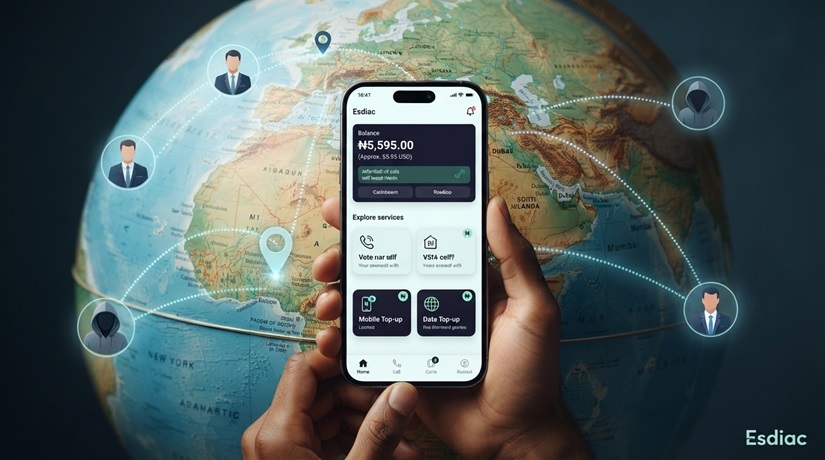
The company’s website identifies three principal offerings: ESDIAC Call, ESDIAC Data and ESDIAC Pay. Its business communication platform adds another dimension to the company’s plans.
Each addresses a different need.
International calling
This is the service most directly connected to the problem that inspired the company.
Users can make calls to supported international telephone numbers through the application. The receiving party does not have to be an ESDIAC subscriber.
At its October 2026 Nigerian launch, the company announced international calling rates starting from ₦13 per minute for selected destinations, including the United States, United Kingdom, Canada, Germany and Australia.
The published starting rate is an important development, particularly for people who regularly make international calls. However, prospective customers should check the current tariff for their specific destination and number type before purchasing credit.
The actual experience should ultimately be judged by what customers pay, the quality of the connection and the reliability of the service.
eSIM and international data
Travelling abroad often creates another connectivity challenge.
People may arrive at an airport and immediately begin looking for a local SIM card, purchase an expensive roaming package or depend on public WiFi.
An eSIM offers another option.
An eSIM is a digital SIM profile that can be activated on a compatible device without inserting a physical SIM card. Depending on the destination and the package purchased, it can provide mobile data access while travelling.
ESDIAC offers international eSIM packages intended to make this process easier.
For Nigerians travelling for business, education, tourism or family visits, this could be useful. Travellers should, however, confirm that their devices support eSIM technology and that the selected package covers their destination and intended use.
Airtime and data top ups
The company also provides airtime and data top up services.
This is particularly relevant to people who support relatives abroad or need to purchase mobile credit for themselves or others.
Rather than treating calling and mobile credit as completely separate activities, ESDIAC is bringing these services together within its wider platform.
The attraction is convenience. Customers can explore several communication needs through one account, subject to the destinations and operators supported.
ESDIAC for Business
Perhaps one of the more interesting opportunities lies in the company’s business communication offering.
Consider a small company with ten employees. Each member of staff uses a personal mobile telephone to communicate with customers.
The arrangement may appear convenient, but it creates problems. Customer information can become scattered across individual devices. Customers may struggle to identify the official business contact. When an employee leaves, important business relationships and communication records may leave with that person.
ESDIAC says its business platform is designed to address some of these challenges.
The model allows a business to operate through a central telephone number while several employees make and receive calls through the platform.
During his Tech Mode interview, Ugbebor explained that the arrangement could accommodate dozens of employees using one recognised business number.
For small businesses, hotels, medical practices and other service providers, the potential benefit is easier communication management without necessarily investing in expensive conventional office telephone equipment.
The company also discusses artificial intelligence assisted business communication, including automated customer interaction.
This is an area worth watching as businesses increasingly seek ways to improve customer service while managing operating costs.
The Nigerian engineers behind the technology
There is a particularly important Nigerian dimension to the ESDIAC story.
When the company decided to develop its technology for the Nigerian and African markets, Ugbebor said he did not simply assign the work to an engineering team abroad.
Instead, the company deliberately involved Nigerian engineers.
He explained that although ESDIAC has engineering capacity in the United States, its local product development work relied substantially on professionals based in Nigeria.
The company’s early Nigerian operations also began in Kano rather than the more frequently chosen technology and commercial centres of Lagos and Abuja.
According to Ugbebor, some of the first Nigerian recruits were students from Kano. Some have remained with the company through years of development work.
This decision deserves attention.
Nigeria’s technology conversation often focuses on talented young people leaving the country in search of better professional opportunities. There is nothing wrong with international exposure or the pursuit of global careers. The challenge is ensuring that local institutions and companies can also provide meaningful opportunities for those who wish to build their careers at home.
ESDIAC’s approach, as described by its founder, offers an example of how that can happen.
The company says it has invested in additional training for its engineers, including opportunities to work with experienced professionals in the United States. Ugbebor also spoke about company supported professional certifications and further academic development for members of the engineering team.
He mentioned that the company’s Chief Technology Officer was pursuing doctoral studies in machine learning with company support.
These are company reported commitments, but their wider significance is clear. Recruiting local professionals is valuable. Helping them acquire new skills, work with experienced colleagues and take responsibility for developing real products can be even more valuable.
The distinction is between simply employing Nigerian engineers and investing in their ability to lead technology development.
That is the aspect of ESDIAC that other Nigerian businesses and entrepreneurs should examine closely.
It also creates an opportunity for young software developers, network engineers, cybersecurity professionals and other technology specialists who want to participate in building products with international ambitions.
Ugbebor has indicated that the company remains interested in recruiting and developing additional talent.
For Nigeria, the opportunity should not be measured only by the number of applications downloaded or calls completed. It should also be measured by the knowledge transferred, the professionals trained and the products developed by people who might otherwise have had to look elsewhere for such opportunities.
Why the American and Nigerian connection matters

ESDIAC’s international identity raises a question that deserves a clear explanation.
Is it an American company operating in Nigeria, or a Nigerian technology company with an international presence?
The most useful way to understand the arrangement is to distinguish the company’s international business structure from the origin and development of its technology.
Ugbebor describes ESDIAC as an American based company with a substantial Nigerian presence. He has also emphasised that the Nigerian engineering team played a central role in developing the product for the African market.
This combination can offer advantages.
The American connection provides an international business base and access to relationships within a major global technology and telecommunications market.
The Nigerian operation provides proximity to the customers the company wants to serve, access to local professional talent and an opportunity to develop solutions informed by the realities of the African market.
It also creates a channel through which professional experience, technical knowledge and commercial relationships can move between both environments.
However, it is important to distinguish this business model from questions of legal ownership, intellectual property and investment. Those require company registration documents and other formal records. A Nigerian founder, Nigerian engineering team and Nigerian operations do not, by themselves, establish that the entire company is legally Nigerian owned.
What can reasonably be celebrated is the contribution of Nigerian professionals to an internationally positioned technology business.
That is significant in its own right.
The larger lesson is that Nigerian innovation does not have to remain within Nigeria’s geographical boundaries to retain its Nigerian identity. A technology product can draw on international business relationships while depending on local talent, experience and problem solving.
The regulatory milestone: Why the NCC approval matters
Operating in telecommunications requires more than a good application and a promising business idea.
There are regulatory responsibilities, technical requirements and commercial arrangements that must be addressed before services can be provided within the applicable market.
For ESDIAC, obtaining an International Data Access licence from the Nigerian Communications Commission represents an important milestone.
The NCC’s published individual category licensee register lists Esdiac Global Systems Ltd under International Data Access, with a licence period beginning on 1 August 2026 and ending on 31 July 2036.
This provides independent confirmation of the company’s Nigerian regulatory listing.
The significance should be understood accurately.
An International Data Access licence is not the same thing as a licence to operate a nationwide mobile network or to own mobile infrastructure in every country where calls can be connected.
It establishes a particular regulatory authorisation within Nigeria’s telecommunications framework. The precise services ESDIAC may provide must remain within the scope of its licence and any other applicable approvals.
For the company, the Nigerian regulatory milestone is an important step in establishing its domestic operations and pursuing its wider connectivity ambitions.
For consumers and business partners, it is a relevant part of the due diligence process when evaluating a new telecommunications provider.
It also gives the company’s Nigerian expansion a more substantial institutional foundation.
What does the international reach really mean?
One of the claims that attracted attention during the Tech Mode interview concerned ESDIAC’s international calling reach.
Ugbebor explained that the company could transmit and terminate calls in more than 150 countries through arrangements involving approximately 400 telecommunications carriers.
He was careful to clarify that this did not mean ESDIAC had established physical offices or independently operated telecommunications networks in all those countries.
That distinction is important.
In international telecommunications, a company can establish agreements with other licensed carriers and network operators to connect calls to destinations outside the countries where it maintains its own operations.
In practical terms, ESDIAC can use such arrangements to reach customers through existing telecommunications infrastructure.
This is another example of how the company intends to complement rather than replace existing providers.
The international reach also comes with a responsibility to be transparent. Customers should be able to establish which destinations are supported, what rates apply and whether particular mobile or landline networks are included.
The company should also continue publishing clear information as its coverage arrangements develop.
What should prospective customers know?
A new communication platform naturally raises questions. Consumers should not have to become telecommunications experts before deciding whether to use a service.
Some of the most important questions are relatively straightforward.
Must the person I am calling have ESDIAC?
For the app to phone international calling service, no. The receiving person can use an ordinary supported mobile or landline telephone number.
Does the receiver need internet access?
Not for the conventional telephone call to be received. The caller, however, needs an internet connection to use the application.
Can I use ESDIAC when travelling?
The company offers international connectivity services, including eSIM packages. Customers should confirm the availability of their destination and the compatibility of their devices before purchasing.
Is the ₦13 rate applicable to every country?
The company announced this as a starting rate for selected destinations. Customers should consult the current published tariff before making a purchase.
What happens if my call fails or I am charged incorrectly?
Customers should consult the company’s published support and refund terms and retain relevant transaction details when reporting a problem. A clear, accessible complaint and refund process will be essential to building confidence.
Is my personal information protected?
This is an important question for any digital communications provider. Customers should review ESDIAC’s privacy policy to understand what information is collected, how it is stored, whether communications are recorded and the circumstances in which information may be shared.
A paid service should not automatically be assumed to provide complete privacy. Trust must be supported by clear policies, appropriate technical safeguards and compliance with applicable data protection requirements.
These questions are not reasons to dismiss a new service. They are the questions a responsible consumer should ask of any company handling communication, personal information and payments.
ESDIAC’s long term credibility will depend partly on how consistently it answers them.
An opportunity beyond making telephone calls
Perhaps the most important reason Nigerians should pay attention to ESDIAC is that its business proposition extends beyond individual subscriptions.
The company has identified opportunities for commercial resellers, technology professionals and business partners.
For a prospective reseller, the model could provide an opportunity to introduce communication products to customers in Nigeria and other markets, subject to the company’s commercial terms and the relevant regulatory requirements.
For small businesses, the central number and business communication platform could offer a more organised way to manage customer contact.
For engineers, the company’s reported investment in local development and professional training presents another possible route into the telecommunications and software industry.
For Nigerians in the diaspora, affordable international calling and travel connectivity may provide practical benefits.
For families at home, the attraction is the possibility of communicating with relatives abroad without depending exclusively on expensive conventional international calling arrangements.
These are different markets, but they share one underlying need: people and organisations want communication that is accessible, reliable and reasonably priced.
The company has an opportunity to serve those needs while creating a commercial ecosystem around its products.
However, the opportunities must be supported by actual customer experience, transparent commercial agreements, dependable service and responsive support.
That is what will turn interest into lasting participation.
The future of ESDIAC and what Nigeria stands to gain
ESDIAC is entering a competitive industry.
It will have to demonstrate that its pricing can remain attractive, that its international connections are dependable and that its products can meet the expectations of customers who already have several alternatives.
Its eSIM offering will be judged by coverage and actual connectivity. Its calling service will be judged by clarity, reliability and cost. Its business platform will be judged by how effectively it helps organisations manage communication.
The company will also need to maintain confidence in the way it handles customer information and resolves complaints.
These are not small responsibilities.
But they are also the tests that every serious technology business must be prepared to face.
Ugbebor has indicated that the company’s Nigerian expansion is only the beginning and that additional products are expected.
The ambition is to establish ESDIAC as more than an international calling application. It wants to develop a broader communication and digital services platform while expanding opportunities for Nigerian professionals and commercial partners.
For Nigeria, the wider question is whether businesses with international reach can increasingly see local engineering talent as a resource worth developing and retaining.
That would be a welcome direction.
The country’s technology future should not be measured only by how many foreign applications Nigerians use. It should also be measured by how many useful products Nigerian professionals can develop, improve, maintain and take to international markets.
The lessons in Austin Ugbebor’s approach
There are several lessons in the ESDIAC story that go beyond telecommunications.
The first is the importance of paying attention to everyday problems. Some of the most useful business ideas begin with an inconvenience people have simply learned to tolerate.
The second is the value of assembling the right team. An entrepreneur does not have to possess every technical skill personally, but must understand the problem well enough to bring capable people together.
The third is the importance of investing in local talent. Employing young professionals is a beginning. Mentoring them, training them and giving them meaningful responsibilities can produce a much greater contribution.
The fourth is the value of international collaboration. A business can benefit from relationships, expertise and opportunities across borders while maintaining a strong commitment to the country where its products are being developed.
The fifth is a more generous understanding of innovation. Improving an existing system can be just as important as introducing something entirely new.
Ugbebor’s argument that technology should complement and improve the wider ecosystem is worth taking seriously.
It is a philosophy that can encourage healthier competition, greater cooperation and more attention to the people who ultimately use the products.
Tech Mode: Keeping the conversation going
The story of ESDIAC and the questions surrounding global connectivity formed the subject of an edition of NTA’s Premium Technology programme ”Tech Mode,” Produced by Ridwan Hamisu Umar, hosted by Malami Haruna Dogondaji.
Titled The World at a Price: The Cost, Technology and Future of Global Connectivity, the programme brought Austin Ugbebor into a conversation about the cost of international calls, the possibilities of VoIP and eSIM technology, the company’s business model, its Nigerian engineering team and the opportunities it hopes to create.
The discussion went beyond introducing a new application. It examined the practical questions consumers should ask before choosing a communication service and the responsibilities technology companies have when handling customers’ money and personal information.
For viewers, the programme offers an opportunity to hear the founder explain the thinking behind ESDIAC, including why the company chose to invest in Nigerian engineers and why it sees its technology as complementary to existing telecommunications services rather than competing.
It is also an invitation to follow the wider conversations taking place on Tech Mode.
Technology is changing how people work, communicate, learn and do business. Those changes deserve thoughtful examination, especially when Nigerian innovators are contributing to solutions with international ambitions.
Tech Mode will continue to bring these conversations to audiences, highlighting the people, ideas and technologies shaping the future.
More than a cheaper call: A bigger opportunity for Nigeria
At its heart, ESDIAC began with a simple concern: people should have better options when they want to communicate across borders.
That concern has developed into a business that brings together several technologies and services, with Nigerian engineering talent playing an important role in the development of its platform.
There is still much for the company to demonstrate. Its long term success will depend on the quality of its services, the confidence it earns from customers, the strength of its partnerships and its ability to deliver on its promises.
But its Nigerian engineering story already provides an important point for reflection.
A country does not build a stronger technology industry merely by encouraging its people to consume digital products. It also needs entrepreneurs willing to invest, professionals given the opportunity to create, and institutions that support responsible innovation.
ESDIAC’s ambition brings these elements into one conversation.
Whether as customers, engineers, business partners or observers of Nigeria’s growing technology industry, Nigerians have a reason to pay attention.
Because the real value of an innovation is not simply in the technology behind it. It is in the problems it solves, the opportunities it creates and the people whose lives become easier because it exists.
And that is a conversation worth continuing.
Join the conversation. Be part of the future.
Have you ever had to cut short an international call because of its cost? Do you believe Nigerian engineers can build technology platforms that compete confidently on the global stage? What should customers expect from a modern telecommunications company in terms of affordability, reliability and transparency?

These are questions worth discussing.
Explore ESDIAC’s services and verify the current tariffs, supported destinations and terms directly through its official website: www.esdiac.com.
For businesses, technology professionals and prospective commercial partners, the next step is to examine the opportunities available and establish the applicable requirements directly with the company.
And for viewers who want to keep up with the people and ideas shaping the technology landscape, follow NTA’s Tech Mode, share this article and join us for more conversations that go beyond the headlines.
The future of technology should not simply be watched. It should be understood, questioned and, where possible, built by us.
Tech Mode. Exploring the ideas, people and technologies shaping tomorrow.