
Compiled BY: Malami Haruna Dogon daji
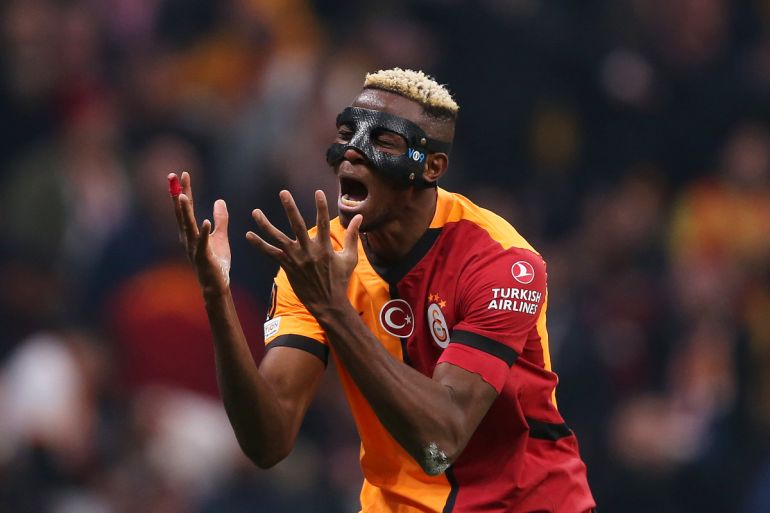
Folarin Balogun, the dynamic forward of Nigerian descent, currently finds himself at the centre of an unprecedented global football controversy that threatens to redefine the boundaries between sporting integrity and political power.
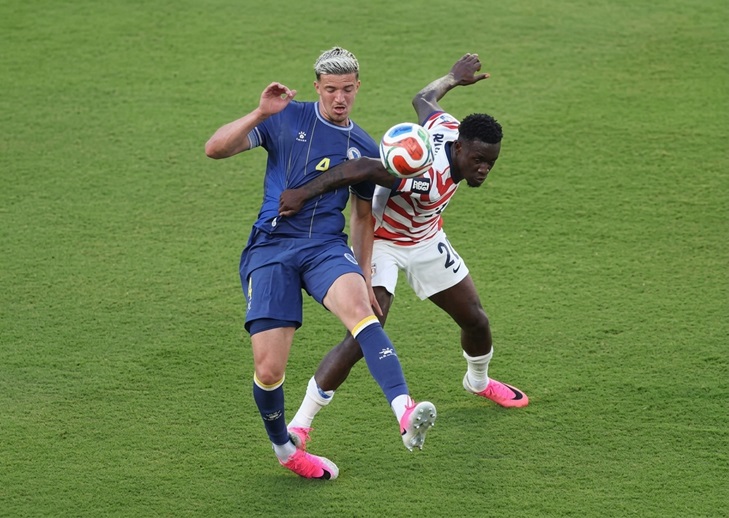
The Balogun red-card saga transcends a simple on-pitch dispute, sitting squarely at the intersection of player identity, tournament governance, and alleged political interference. FIFA recently suspended the player’s automatic one-match ban just before the United States’ crucial knockout match against Belgium. This controversial use of Article 27 of the disciplinary code followed a VAR-reviewed sending-off for a foul on Bosnia’s Tarik Muharemovic, triggering massive backlash from European football authorities.
A Global Star with Nigerian Roots
Born in New York in 2001 to Nigerian parents, Balogun relocated to London as a child and developed his craft at Arsenal’s academy from the age of eight. Although he featured in the English youth system, he ultimately committed his senior international future to the United States.
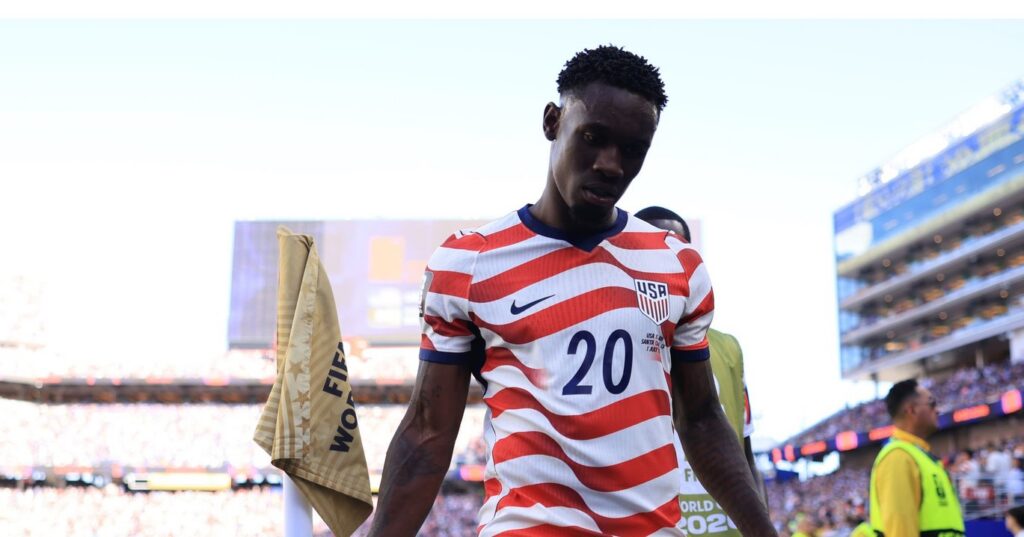
His rich heritage—blending American birthright, Nigerian lineage, and an elite English football education, amplifies the intense global scrutiny surrounding his career and this recent disciplinary saga.
The Incident and The Unprecedented U-Turn
The drama began in the 64th minute of the USA’s round-of-32 victory over Bosnia and Herzegovina on Wednesday, July 1, 2026. Following a VAR review, referee Raphael Claus issued a red card after Balogun’s studs caught the back of Muharemovic’s leg and foot.
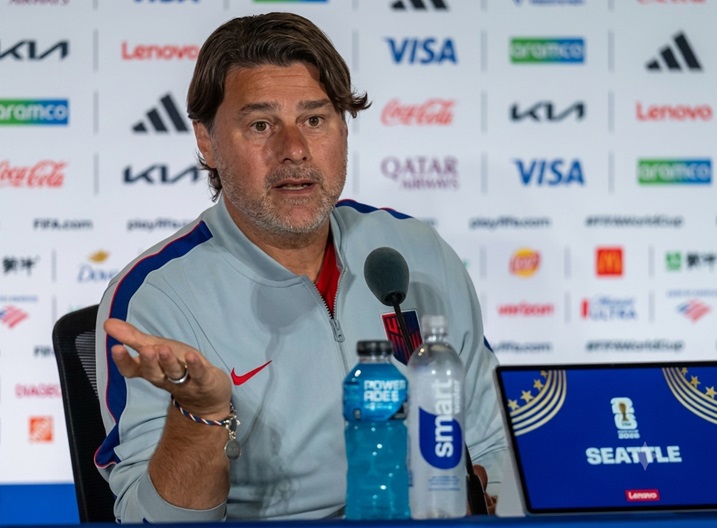
“The contact was unintentional and ‘never’ a red card.” – Mauricio Pochettino
Despite the on-field dismissal, FIFA intervened by invoking Article 27 of its disciplinary code, pausing the one-match suspension in favour of a one-year probationary period. This decision, which clears him to face Belgium, is widely regarded as unprecedented in World Cup history.
Context Box: Fast Facts
- The Player: Folarin Balogun is a highly visible dual-national star with Nigerian family roots.
- The Incident: Sent off in the 64th minute after his studs dragged down a defender’s leg.
- The Rule: FIFA Disciplinary Code Article 27 allows a sanction to be suspended for a one-year probationary period.
- The Precedent: FIFA previously used Article 27 to mitigate a suspension for Cristiano Ronaldo.
The Shadow of Political Interference
The timing of the disciplinary reversal has drawn intense suspicion due to high-profile political optics. Reports indicate that the U-turn occurred shortly after Donald Trump made direct contact with FIFA President Gianni Infantino. Trump publicly celebrated the reversal, prompting the Belgian football federation to express astonishment at the ruling.
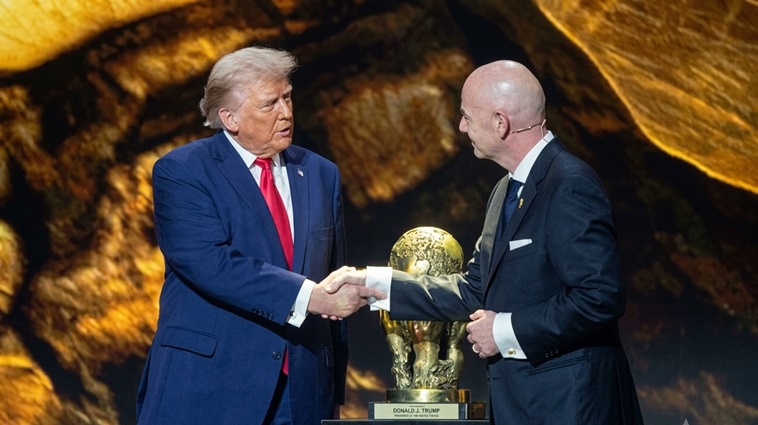
UEFA has fiercely criticised FIFA, arguing that sporting decisions must remain insulated from political figures. The perception that a host nation benefitted directly from external political pressure creates a severe credibility crisis. Analysts now view this incident as a critical stress test for the fundamental integrity and sporting independence of global football.
A Threat to Football Governance?
While powerful institutions have historically attempted to shape football decisions, this case uniquely combines a contentious VAR ruling with extraordinary disciplinary reversal within a 48-hour window. European authorities fear that this precedent weakens confidence in the sport’s ability to police itself independently.
Ultimately, Balogun has become the focal point of a vital governance debate: whether the established rules of football still hold absolute authority over political influence.
5. The Social Call-to-Action (CTA) What are your thoughts on FIFA’s decision? Does this unprecedented U-turn threaten the integrity of international football, or was it a fair application of the disciplinary rules? Share your views with us on NTA’s official X (formerly Twitter) and Facebook platforms using the hashtag #NTAFootball.