
The ECOWAS Parliament has launched a major legislative and policy push to accelerate rural electrification across West Africa, declaring that access to clean, reliable energy must become the cornerstone for tackling poverty, food insecurity, and economic stagnation in the sub-region.
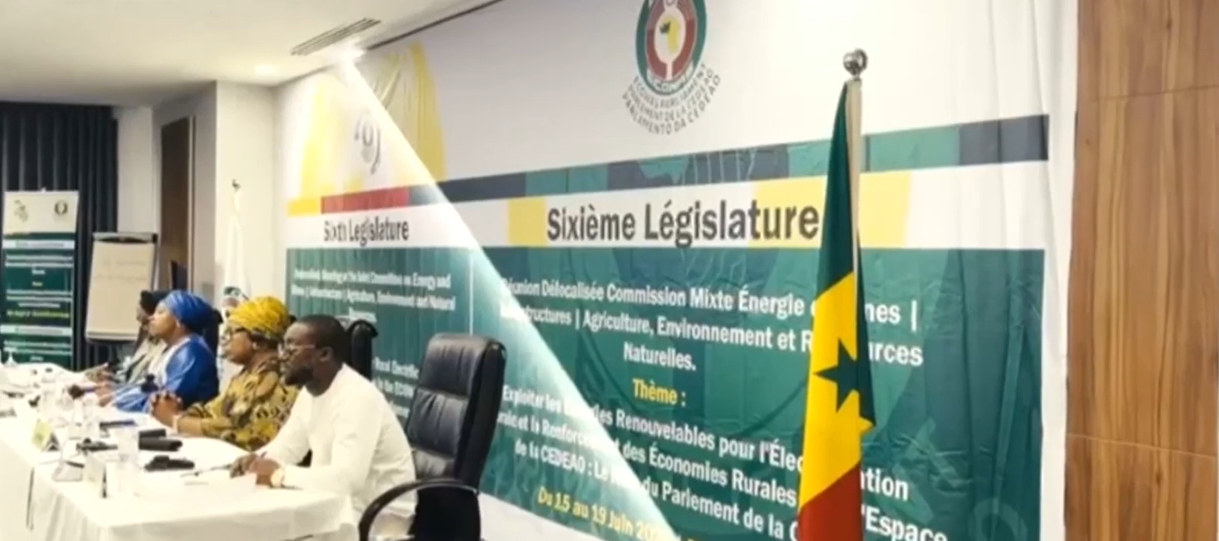
The resolution was the climax of a week-long Delocalized Joint Committee Meeting held in Dakar, Senegal, under the theme: “Harnessing Renewable Energy for Rural Electrification and Empowerment of Rural Economies in the ECOWAS Region: The Role of the ECOWAS Parliament.”
Regional lawmakers, energy experts, and development finance stakeholders unanimously adopted a comprehensive report outlining key strategies to deploy mini-grids, harmonize regulatory frameworks, and bridge the massive energy deficits currently crippling rural economies.
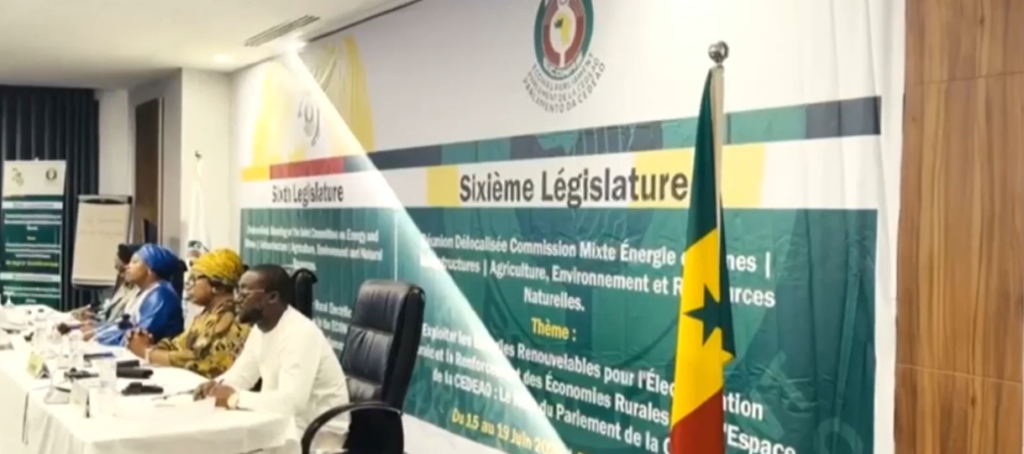
Opening the session on behalf of the Speaker of the ECOWAS Parliament, Rt. Hon. Hadja Memounatou Ibrahima, the Fourth Deputy Speaker, Hon. Billay Tunkara, emphasized that the sub-region can no longer afford to treat renewable energy as a mere technical project.
“Renewable energy is a key driver in transforming economic activities, particularly in rural areas,” Tunkara stated. “Our objective is that by 2030, West Africa should have 100 percent coverage in terms of access to electricity. We see electricity not as a privilege, but as a right.”
The urgency of the meeting was underscored by stark statistics presented by the Head of the Senegalese Delegation, Hon. Guy Marius Sagna, who revealed that rural electricity access across the ECOWAS region averages a dismal 12 percent. This is despite West Africa possessing some of the richest solar, wind, and hydro potentials on the continent.
Lawmakers warned that this energy paradox directly undermines healthcare delivery, leaves schools without modern instructional tools, and limits local industrial growth.
The joint committee—which spans the portfolios of Energy and Mines, Infrastructure, Agriculture, and Environment—highlighted how the lack of electricity actively hurts the agricultural sector, the backbone of West Africa’s rural economy.
Speaker Tunkara noted that rural women and farmers spend months cultivating produce only to lose a substantial portion to post-harvest decay due to a lack of cold-storage facilities. Providing solar-powered refrigeration and agro-processing tools, the parliament argued, would directly boost food security and maximize financial returns for local farmers.
A major highlight of the sessions was a passionate call by Nigerian federal lawmaker and Chairman of the ECOWAS Parliament Committee on Agriculture, Senator Ali Ndume. He urged West African governments to back their regional declarations with strong financial commitment by allocating at least five percent of their annual national budgets to rural development and renewable energy infrastructure.
Addressing the institutional bottlenecks, the ECOWAS Bank for Investment and Development (EBID) disclosed that renewable energy currently accounts for only four percent of its active energy financing portfolio. EBID representative Maimouna Sidibe cited weak project preparation, strict regulatory hurdles, and limited access to guarantees as major barriers keeping private capital away from rural energy markets.
However, Sidibe announced that under EBID’s 2026–2030 strategic window, the bank will heavily prioritize solar mini-grids, off-grid systems, and hybrid energy plants, utilizing blended finance models to de-risk private investments.
The Vice-Chairman of the Infrastructure Committee, Hon. Ahmed Munir, further urged member states to use external climate finances strategically to build local manufacturing industries rather than relying solely on imported technology