
In Kenya, the growing use of worms and insects is giving farmers a sustainable alternative to costly chemical fertilisers, while turning agricultural and food waste into valuable soil nutrients and new sources of income.
Kenyan farmers are turning to worms, insects and other natural alternatives as deteriorating soil health and rising fertiliser costs threaten agricultural productivity across East Africa.
For farmers such as George Muturi Kamau, the shift towards using insects and worms is offering a more sustainable way to restore soil fertility while reducing dependence on expensive chemical fertilisers.
Behind the shift towards worms and insects is a growing soil health crisis across East Africa. Years of excessive reliance on synthetic fertilisers have contributed to increasingly acidic soils and the loss of beneficial microorganisms that are essential for healthy crop growth. The problem has become widespread, with a 2025 report by the Heinrich Böll Foundation finding that more than 40 percent of East Africa’s soils are degraded.
Beyond the environmental consequences, the decline carries a heavy economic cost, with soil degradation estimated to deprive the region of more than $65 billion in agricultural productivity each year.
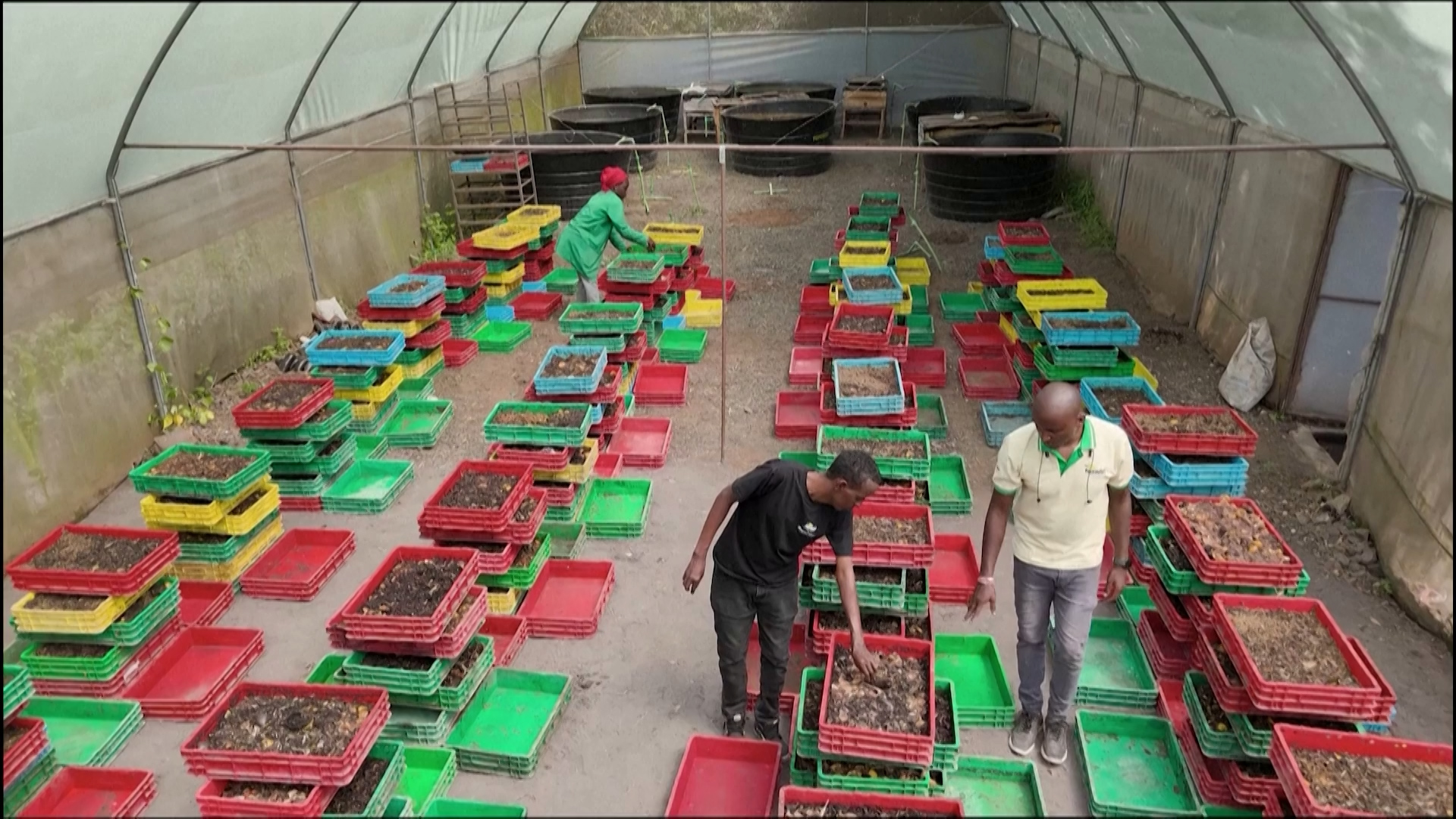
For farmers looking for alternatives to chemical fertilisers, worms and insects are becoming unlikely allies in the effort to restore depleted soils. Farmers such as George Muturi are using vermicomposting, a process in which redworms break down crop waste and cow dung to produce nutrient-rich, pH-balanced compost that can be returned to the soil.
At the same time, producers such as Mwangi are turning to black soldier fly larvae, which can process large quantities of urban food waste and transform it into nutrient-rich frass that can be used as an organic fertiliser. The approach also offers an additional source of income, as mature black soldier fly larvae can be dried and sold as high-protein animal feed.
Ultimately, the growing use of worms and insects offers more than an alternative to expensive chemical fertilisers; it points to a different way of thinking about farming. By turning crop and food waste into valuable soil nutrients and animal feed, farmers are finding ways to restore their land while creating new sources of income.
As soil degradation continues to threaten agriculture across East Africa, these small creatures could play an increasingly important role in building healthier farms, reducing waste and making food production more sustainable.