

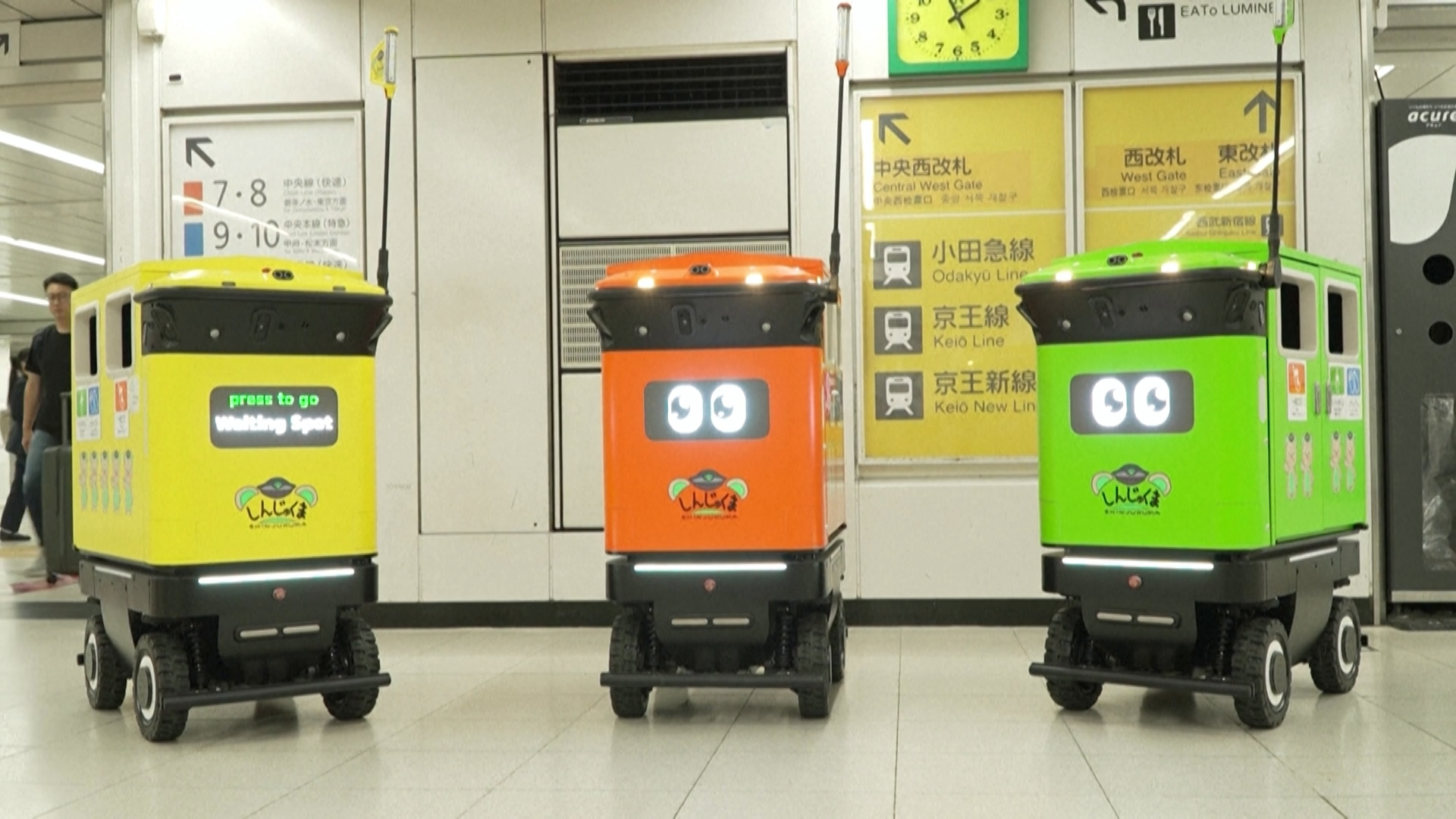
East Japan Railway is testing mobile robotic rubbish bins at Tokyo’s Shinjuku Station as it explores how automation can support sanitation workers in one of the world’s busiest transport hubs.
The world’s busiest railway station, Tokyo’s Shinjuku Station, is testing mobile robotic rubbish bins to determine whether the technology can reduce the workload of sanitation workers, according to a rail operator representative.
In a section of the sprawling station operated by East Japan Railway Company (JR East), rubbish bins are manually emptied more than 10 times a day, highlighting the challenge of managing waste in one of the world’s busiest transport hubs.
“We wanted to test how well something like this can operate automatically and safely in an environment like Shinjuku Station,” Shinya Kawamichi, a JR East research official, told AFP.
The mobile bins are being tested as part of efforts to explore how robots could take on routine tasks in crowded public spaces. Rather than remaining in one location, the units are designed to move around the station and collect rubbish where it is needed.
The trial reflects Japan’s wider interest in robotics and automation as the country faces labour shortages and an ageing population. Companies and public institutions have increasingly turned to robots to perform repetitive tasks and support workers in areas ranging from manufacturing to hospitality and transportation.
For sanitation staff at Shinjuku, the potential benefit could be significant. The station handles enormous numbers of passengers each day, generating a constant stream of waste that requires workers to monitor bins and empty them repeatedly.
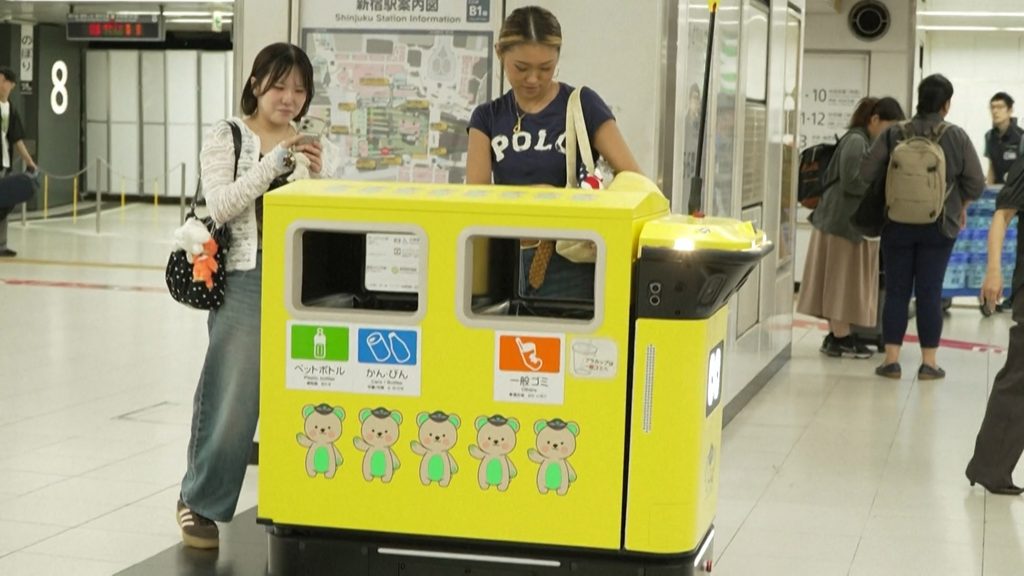
However, operating autonomous machines in such a crowded environment presents its own challenges. The robots must be able to navigate around passengers, avoid collisions and operate safely without disrupting the movement of people through the station.
The Shinjuku trial will therefore offer JR East an opportunity to assess not only whether the robots can collect rubbish efficiently, but also how well they can function alongside commuters in one of Tokyo’s busiest and most complex public spaces.
If the technology proves effective, mobile rubbish bins could provide another example of how automation is being introduced into everyday services in Japan, potentially helping workers manage demanding tasks while keeping busy transport hubs clean.