
Compiled By: Malami Haruna Dogon daji
In societies across Africa, where family unions are deeply rooted in faith, tradition, and emotion, the line between marital sentiment and legal reality remains blurred for many (Nigerians in this case). That is why a discussion like “Love and The Law” is both timely and necessary for building a more informed society around the family nucleus.
Demystifying the Legalities of Nigerian Marriage
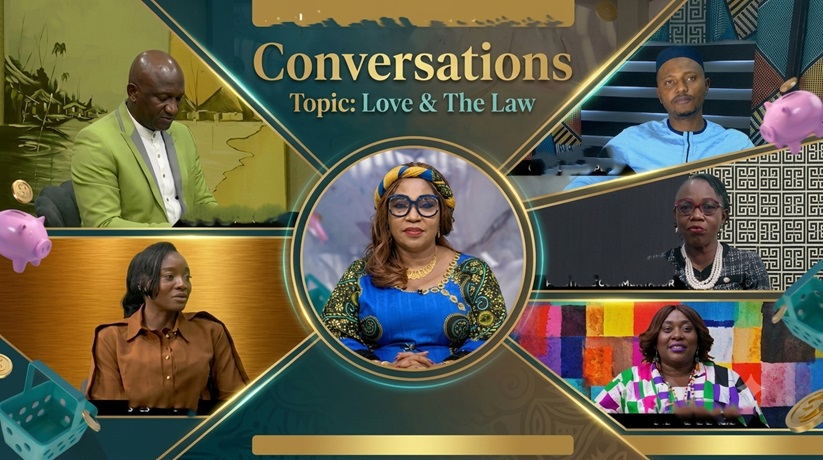
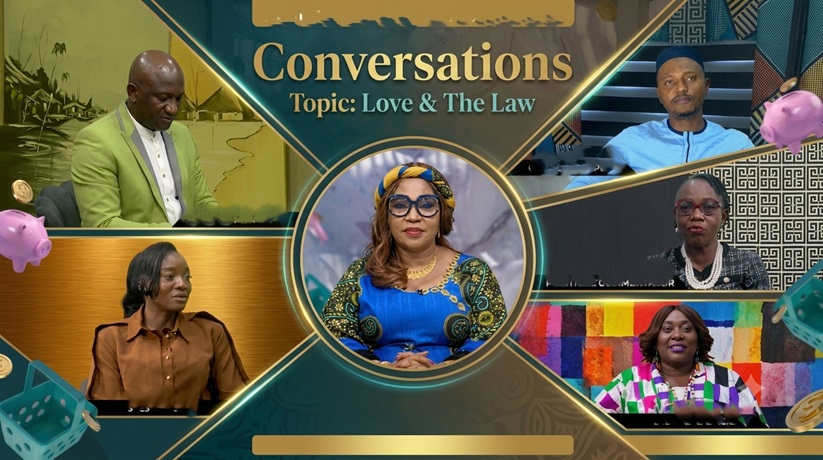
The Nigerian Television Authority’s flagship public-interest programme, Conversations, recently addressed this national blind spot in a groundbreaking episode titled “Love & The Law”. Hosted by veteran broadcaster and senior programmes executive in the Nigerian Television Authority, Elizabeth Agbai.
Before coming to the NTA Head Quartes in Abuja, Elizabeth Agbai had already built a strong broadcasting background at the Nigerian Television Authority, where records show she joined in 2002 and served as the pioneer AM Express presenter in Network Centre Enugu. She later expanded her work into productions and presentation on programmes such as Shackles, Healthline, and Labour Market, which helped establish her as a seasoned broadcaster before her move to the Nigerian Television Authority Head Quarters in Abuja, Nigeria

The programme episode “Love & The Law”. systematically deconstructed the complex legal frameworks governing marriage, separation, and inheritance in Nigeria.
The broadcast highlighted a major civic issue: many citizens enter matrimony without understanding the distinct obligations imposed by the state, the church, the mosque, or customary law. This lack of legal literacy frequently results in avoidable family crises, fractured inheritances, and unprotected children.
The Three Strands of Matrimony
Nigeria’s legal landscape accommodates statutory, customary, and Islamic marriages, each carrying unique rights and dissolution procedures. During the panel discussion, legal expert Barrister Ogi Abu clarified a critical point of confusion regarding statutory marriage, emphasizing that it is strictly monogamous.
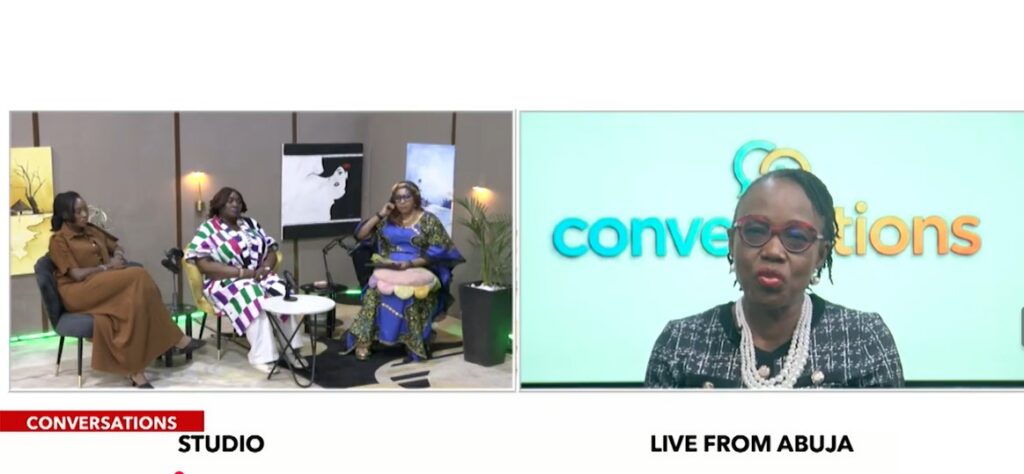
“Statutory marriage is legally binding in a way that requires formal dissolution through the courts. If a person in such a marriage attempts another marriage while the first is still active, it can amount to a criminal offence.” – Legal Practitioner, (Barrister) Ogi Abu,
The panel also addressed the widespread misconception that physical separation automatically ends a legal union. The experts warned that couples living apart remain legally bound until a court issued a decree nisi, followed by a decree absolute.
Statutory vs. Customary Realities
- Statutory Marriage: Governed by the Marriage Act, strictly monogamous, and can only be dissolved by a High Court.
- Customary & Islamic Marriage: Polygamous or potentially polygamous systems governed by native laws, customs, or Sharia principles.
- The Separation Trap: Emotional or physical separation does not equal divorce; entering another relationship before formal court dissolution constitutes bigamy under statutory law.
Faith, Protection, and the Vulnerable
The dialogue achieved a crucial balance by bringing legal requirements face-to-face with Nigeria’s deeply rooted religious institutions. Representing the Christian perspective, Rev. Ayuba John Bassa described marriage as a permanent, sacred covenant. However, he firmly noted that spiritual ideals do not mean victims should tolerate domestic violence or criminal abuse within a home.

From the Islamic perspective, the Imam Umar Musa Ani explained that marriage is built entirely on components of mercy, peace, and mutual companionship. He reminded viewers that while divorce is legally permissible under Sharia when reconciliation completely fails, it remains one of the most disliked options allowed by God.

Safeguarding Children and Assets
One of the most significant moments of the broadcast occurred when Barrister Abu challenged long-standing cultural stigmas regarding children born out of wedlock. She noted that Nigerian law does not recognize derogatory social labels, explicitly affirming that all children possess fundamental rights, including the right to inherit if a father dies intestate.
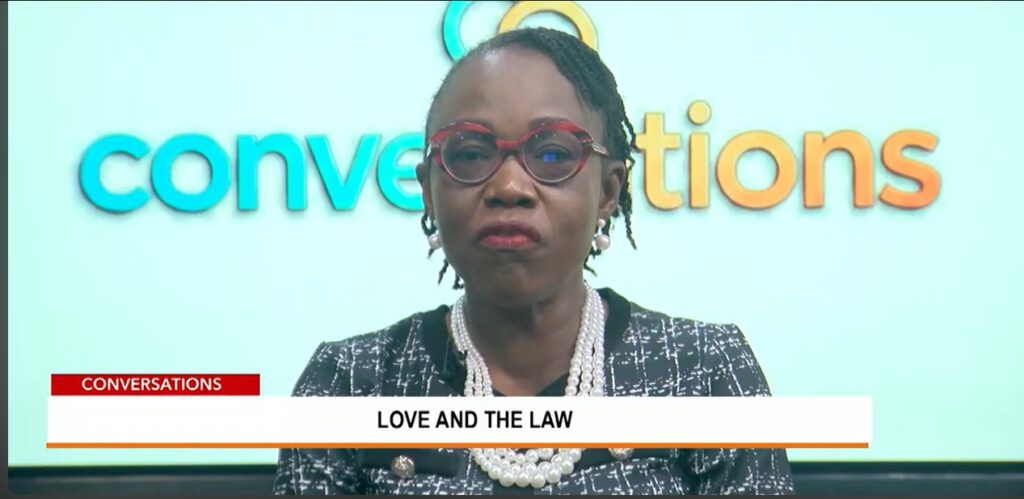
“The court’s absolute priority in custody decisions is the best interest of the children, not simply the financial status or employment of either parent.” – Legal Practitioner (Barrister)Ogi Abu,
The discussion concluded with a robust debate on prenuptial agreements. While traditionally viewed with skepticism in local settings, legal experts on the show strongly advocated for them to protect women from being left assetless after decades of contributing to a marital home.
The discussion featured Barrister Ogi Abu alongside Hiko and Le, Christian and Islamic clerics identified in the material as Reverend John and the Imam.”
Context Box: Fast Facts on NTA’s Conversations
- Programme Mission: A premium public-interest platform designed to translate complex regulatory, legal, and social policies into practical civic education.
- Production Leadership: Anchored by Elizabeth Agbai, NTA Deputy Director of Programmes, ensuring balanced, institutional depth over sensationalism.
- Scope of Coverage: Focuses on critical national subjects including technological adaptation, mental health frameworks, customer service reforms, and family law.
The Social Call-to-Action (CTA) Should prenuptial agreements become a standard practice in modern Nigerian marriages, or do they undermine the traditional and spiritual foundations of family life? Join the conversation and share your thoughts on NTA’s official X and Facebook pages using the hashtag #NTAConversations!