
Compiled By : Malai Haruna Dogondaji, 14 September 2026
On Monday, 14 September 2026, the Israeli human rights organization B’Tselem published a report titled “The Elimination Project,” accusing Israel of running a systematic campaign to dismantle Palestinian collective life in the occupied West Bank. The group argues that Israeli policies are not random abuses but parts of one coordinated system designed to make Palestinian existence fragmented and dependent, while entrenching permanent Israeli control.
Core claim
B’Tselem says about 3.5 million Palestinians in the West Bank now face intensified pressure that attacks “every aspect of Palestinian life,” including movement, work, education, health care, family ties, culture, and political organization.
The report defines “elimination” as the sustained undermining of the conditions that allow Palestinians to exist as a people with land, institutions, leadership, shared memory, and a political future. According to B’Tselem, Israel is reshaping the West Bank so that Jewish/Israeli presence becomes continuous and permanent, while Palestinian existence becomes fragmented and vulnerable.
Five main areas of pressure
The report identifies five interlinked “domains of action.
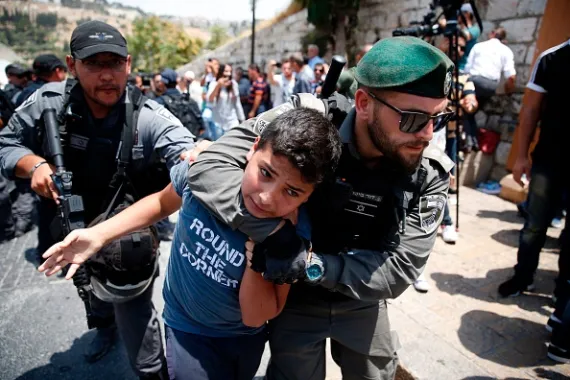
- Violence and intimidation – more raids, shootings, administrative detention, settler attacks, and documented abuse and torture in interrogations.
- Movement restrictions – more checkpoints, roadblocks, closed gates, and permit systems that separate people from schools, hospitals, farms, and family.
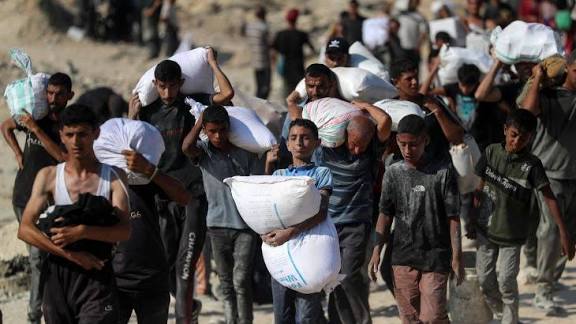
- Economic strangulation – mass revocation of work permits, damage to infrastructure, restrictions on farming and trade, rising unemployment and food insecurity.
- Social and political destruction – raids on NGOs and unions, closures of civil society groups, pressure on universities and schools, arrests of students and staff, tight control over protests and online expression.
- Ethnic cleansing and territorial takeover – forced displacement of entire communities (especially Bedouin and herding groups), home demolitions, denial of building permits, and rapid expansion of settlements and outposts on land previously used by Palestinians.
B’Tselem argues these domains reinforce each other to produce a single, coherent system rather than isolated incidents.
Link to Gaza and wider accusations
The report connects the West Bank situation to Israel’s war in Gaza. B’Tselem previously accused Israel of genocide in Gaza in a 2025 report and now says the genocide in Gaza and the Elimination Project in the West Bank are “different manifestations of the same regime project” against Palestinians’ ability to exist as a people.
Other bodies have raised similar concerns:
- Amnesty International (June 2026) described an ethnic cleansing campaign against Palestinian Bedouin and herding communities in the West Bank within a context of apartheid and unlawful occupation.
- The UN human rights office (March 2026) warned of possible ethnic cleansing linked to accelerated settlement expansion and mass forced relocations.
- In September 2026, UN High Commissioner for Human Rights Volker Türk said Israel’s actions in Gaza and the West Bank appeared aimed at “permanent demographic change,” again raising ethnic cleansing concerns.
Key figures cited
B’Tselem and other sources cited in media coverage provide several figures to illustrate the scale of harm since October 2023:
- 1,107+ Palestinians killed by Israeli forces in the West Bank since October 2023.
- 64 entire communities forcibly displaced in the West Bank since October 2023.
- Unemployment in the West Bank rose from 13.1% in 2022 to 31.3% in 2024.
- In 2024, the UN estimated 700,000 Palestinians in the West Bank needed food assistance, a 17% increase from the previous year.
- Between 8% and 20% of West Bank schools were closed at some point in the 2023–24 academic year.
These numbers are presented as evidence of systemic pressure, not isolated events.
Political context: the “Decisive Plan”
The report highlights a 2017 document by Bezalel Smotrich, now Israel’s finance minister with broad powers over civilian matters in the West Bank. Known as the “Decisive Plan,” it outlines a vision for expanding Israeli control and settlement in the territory.
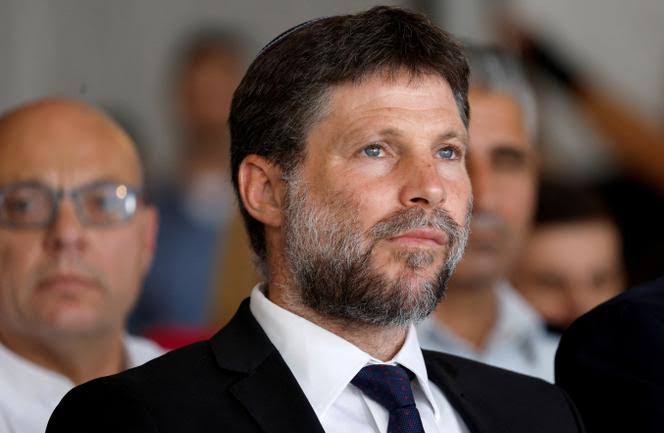
According to B’Tselem, the plan effectively offers Palestinians three options: live under Jewish supremacy and give up national claims, leave the territory, or face violent suppression if they resist. The group argues that elements of this plan have increasingly been translated into policy, budgets, and practices on the ground, especially after late 2022 and more sharply after October 2023.
How Israel and supporters respond
The Israeli government and many of its supporters reject these accusations. They typically argue that:
- Measures in the West Bank are primarily for security, aimed at preventing attacks by militant groups.
- Settlements are built on land that is legally disputed, not “occupied” in the way critics claim.
- Human rights groups like B’Tselem are biased and ignore Palestinian violence against Israeli civilians and soldiers.
- Terms like “apartheid,” “ethnic cleansing,” and “genocide” are misused to delegitimize Israel’s right to exist and defend itself.
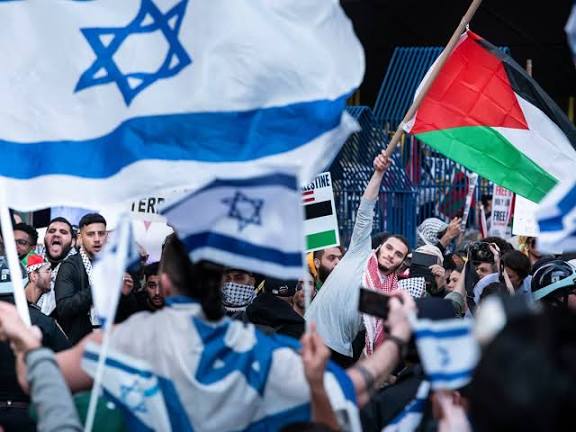
These positions have been repeated by Israeli officials in response to earlier reports by B’Tselem, Amnesty, and UN bodies.
Why this matters
For a global audience, the core issues are:
- Human rights: The report alleges widespread, systematic violations affecting millions of civilians under long-term military control.
- International law: It claims these practices amount to apartheid (a crime against humanity) and involve other serious breaches, including prohibitions on annexation, forced transfer, and settlement.btselem
- Conflict dynamics: The findings suggest the West Bank is not just a “side front” to the Gaza war, but part of a broader, long-term struggle over land, rights, and political future.
- Policy debate: The report adds weight to calls by some governments and organizations for stronger action, including sanctions on settlements, arms restrictions, or renewed peace efforts—while others warn against measures they say could endanger Israel’s security or one-sidedly blame one party.
The Bottom line
A prominent Israeli human rights organization is now arguing, with extensive documentation, that Israel’s actions in the West Bank form part of a long-term political project that systematically undermines the possibility of Palestinian collective life. Whether one accepts all of its conclusions or not, the report adds a heavy, well-sourced voice to an already intense global discussion about rights, law, and the future of the region.