


The Lead
In an audacious assault on national security and international trade integrity, transnational syndicate networks are increasingly exploiting Nigeria’s non-oil export value chain to traffic illicit narcotics and military-grade weaponry into global markets.
The Anatomy of a Sophisticated Bust
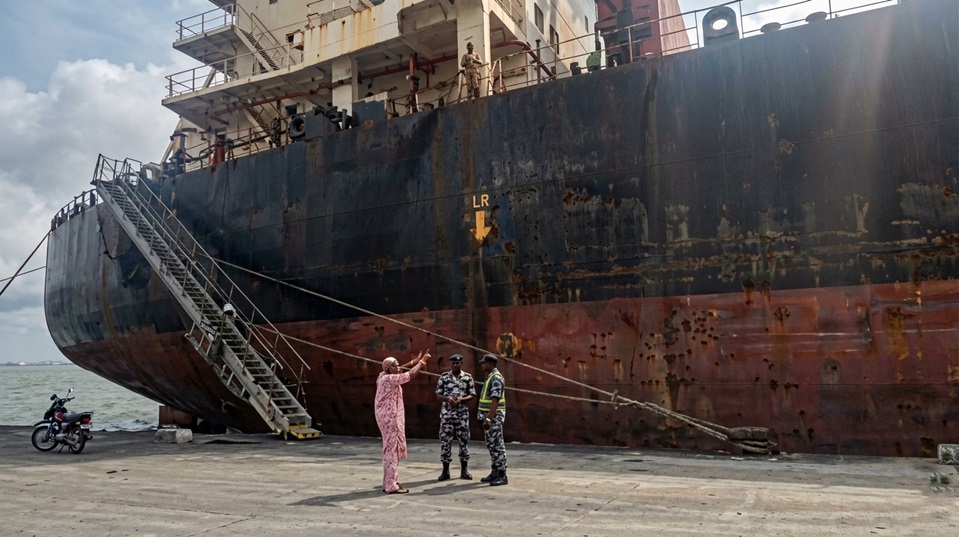
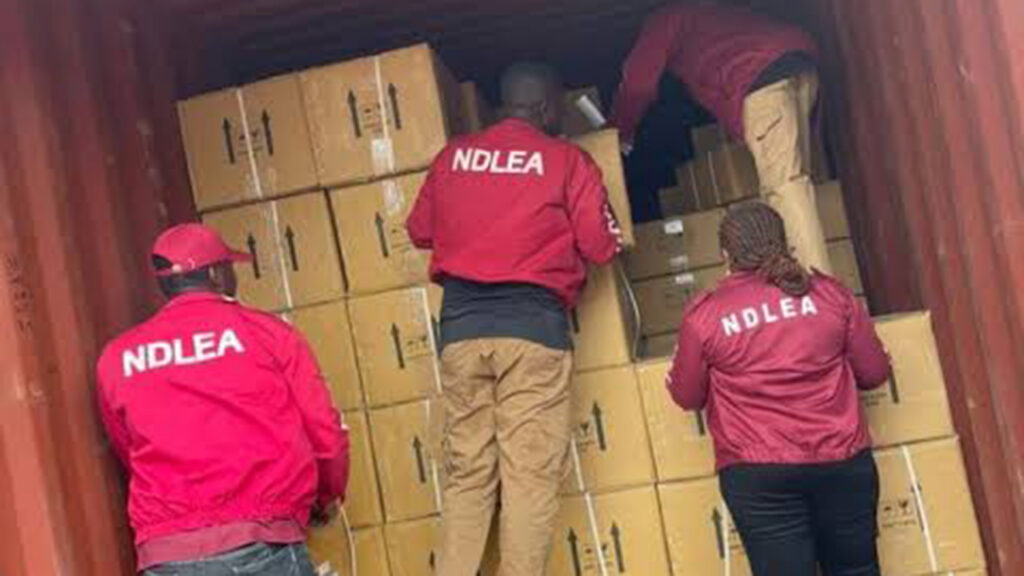
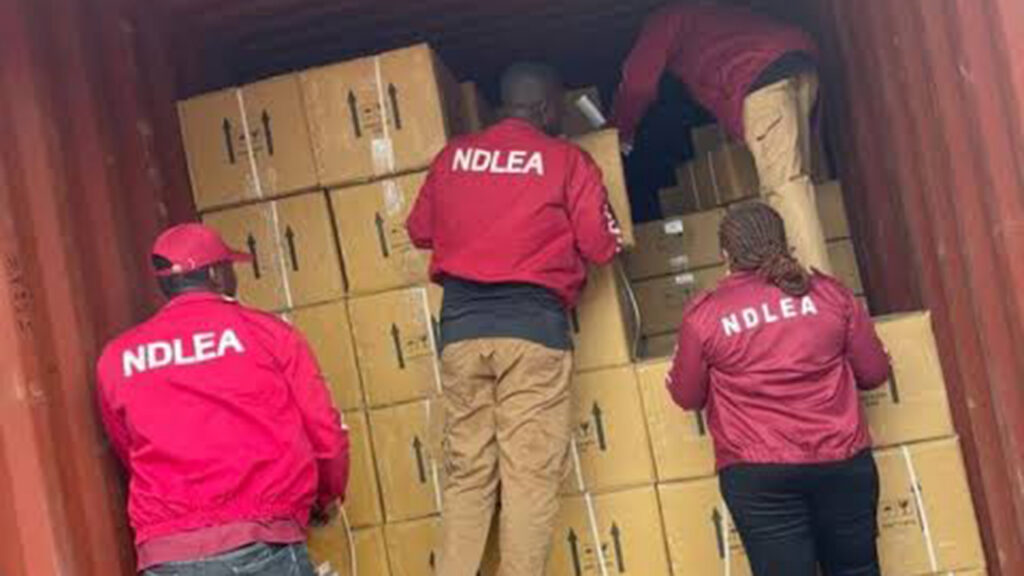
During a routine operational screening at eagle-eyed officers of the National Drug Law Enforcement Agency (NDLEA) intercepted a major consignment of cocaine and opioids. The illicit substances were meticulously concealed deep within export cartons ostensibly containing clothing and common commercial goods.
The cargo was bound for high-value international destinations, specifically the United Kingdom and Australia. More alarming to national security, however, was the parallel discovery of military-grade bullets hidden inside bags of “garri,” a staple Nigerian foodstuff.
A History of Camouflage and Deception
This recent operational breakthrough is not an isolated incident; it perfectly fits a decades-long pattern of criminal logistics. Since its establishment under Decree No. 48 of 1989, the NDLEA has continuously confronted a shifting ecosystem where Nigeria serves as both a source and a critical transit hub for global narcotics routes.


To bypass border controls, international trafficking cartels have systematically weaponised innocuous everyday items. Over the years, documented NDLEA cases have revealed hidden compartments in female garments, prayer beads, board games, vehicle parts, and courier parcels.
The Convergence of Drugs and Small Arms
The inclusion of military-grade ammunition alongside synthetic drugs signals a dangerous escalation in organized crime dynamics. It proves that the networks facilitating international drug smuggling are no longer operating in isolation but are deeply intertwined with broader contraband and arms trafficking networks.

“The tactical shift from smuggling purely pharmaceutical and synthetic drugs to embedding lethal ammunition within our staple foods reveals the desperation and lawlessness of these transnational cartels.”
— [Context Synthesis NDLEA ]
From Seizures to Sustained Convictions
Nigeria’s enforcement strategy has undergone a radical paradigm shift over the last few years. The agency has moved aggressively past simple border interdictions into a comprehensive regime of asset forfeiture, public destruction of illicit exhibits, and high-profile judicial victories.
CONTEXT BOX: THE NDLEA IN NUMBERS
| Enforcement Metric | Institutional Achievements |
| Total Arrests (2024) | Over 18,500 suspects taken into custody. |
| Gross Seizures (2024) | 2.6 million kilograms of illicit substances confiscated. |
| Historic Exhibit Destruction (April 2025) | 1.6 million kilograms of assorted drugs publicly destroyed. |
| Judicial Convictions (Past 4 Years) | 10,572 successful convictions secured in federal courts. |
Safeguarding the Nigerian Narrative
As the Federal Government aggressively promotes the export of Made-in-Nigeria goods to revitalise the economy, protecting the integrity of our cargo entry points becomes a matter of supreme economic survival. The relentless vigilance of the NDLEA ensures that the legitimate labour of law-abiding Nigerian entrepreneurs is not tarnished on the global stage.
By fortifying airport terminals, land borders, and courier hubs, the agency continues to defend the nation’s sovereign reputation against a criminal few.

The Social Call-to-Action (CTA)
How can Nigerian communities and logistics firms better collaborate with the NDLEA to expose these sophisticated concealment networks before they compromise our national security? Share your views on NTA’s social media platforms using the hashtag #NTADigitalNews.