
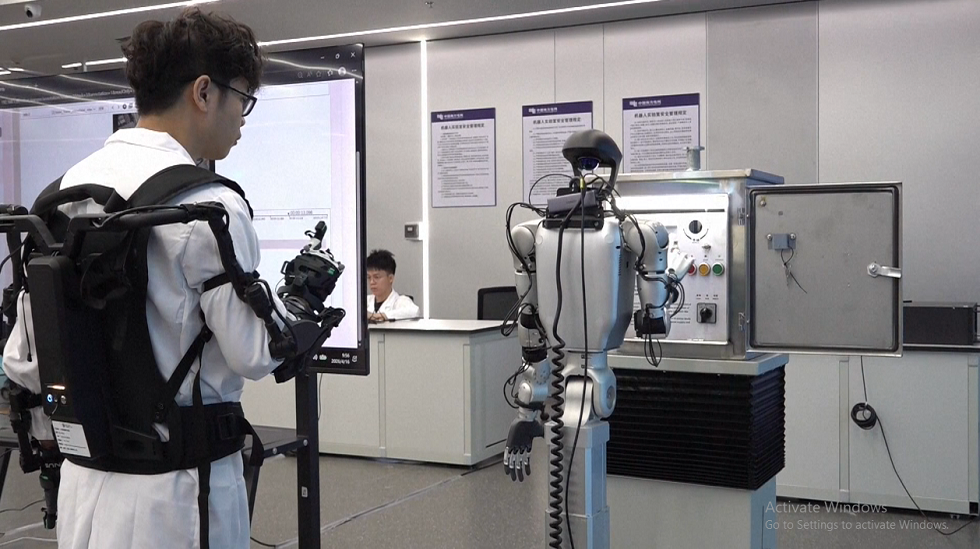
Robots are taking on a new task in this laboratory — power grid maintenance.
A dozen robots are learning by mimicking young engineers.
They open and close control boxes, switch equipment on and off, and check for electrical leakage using insulating rods.
One day, they are expected to operate on the front lines of power grid operations.
It’s one of the laboratories in the Guangdong Company of China Southern Power Grid.
The state-owned utility supplies electricity to 272 million people across five provinces, including major manufacturing hubs such as Guangzhou.
Referred to as “digital employees,” humanoid robots, drones, and quadruped robots have been deployed to work alongside human engineers, carrying out basic maintenance and inspection tasks in the field.
“We are starting with simple skills,” says Li Duanjiao, head of the company’s robotics laboratory.
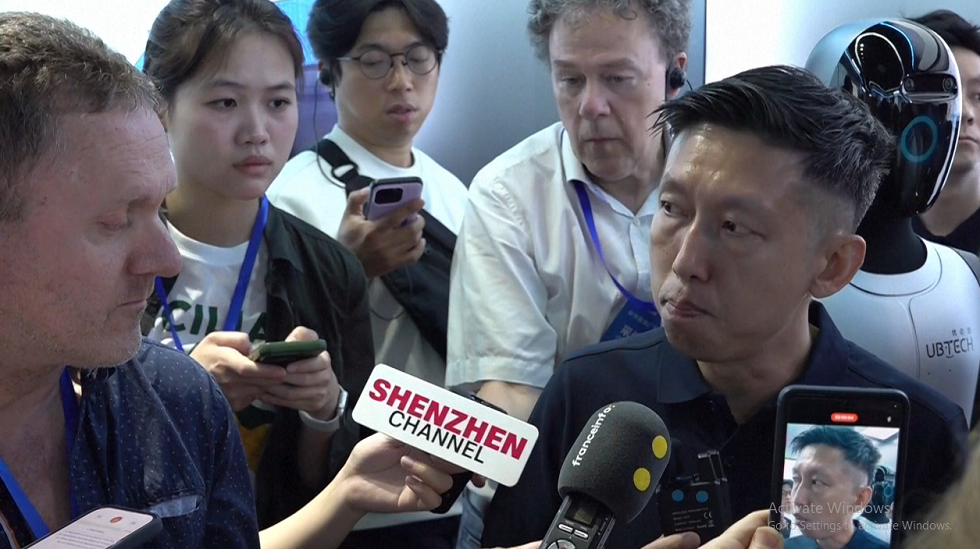
“At this stage, we are training robots to perform inspections and basic operations, covering six scenarios and 15 skills. In some cases, robots have already been deployed and tested since last year.”
Li says robots are gradually replacing humans in repetitive and labor-intensive tasks, particularly in remote mountainous areas.
For example, robotic arms can clean transmission line insulators, detect fractures in steel cores, and tighten screws.
“Taking a 500 kV substation as an example, there are thousands of pieces of equipment to inspect and nearly ten thousand inspection points,” Li says.
“The work must be carried out regardless of weather conditions—under intense sunlight, in the rain, or during storms. When performed manually, the workload is enormous and highly repetitive. In addition, some inspection points are located at elevated positions that are difficult to observe directly.”
Ning Xuefeng, a technician at the company, introduced a quadruped robot named “Feiyun.”
It can carry loads of up to 100 kilograms and is used to transport robotic arms in the field—a task previously done by human workers.
“In real-world scenarios, its core capability lies in its engine,” Ning says. “It can carry robotic arms that perform field operations, making it well-suited for industrial use.”
China’s government and companies are investing heavily in the robotics industry.
With more than 150 manufacturers competing in the market, some robots appear more often for eye-catching, entertainment purposes, dancing on stages and running marathons.
But other companies are betting on robots to take over repetitive and physically demanding tasks.
UBTECH Robotics, a private company based in Shenzhen, has deployed robots in car production lines to transport materials and select components.
The company also developed one of the first robots capable of swapping batteries autonomously.
But still, Tan Min says it may take at least five to ten years before robots are adopted widely.
Data is needed to advance AI and that can only be obtained through training in real-world scenarios, he says.
AP video by Olivia Zhang