
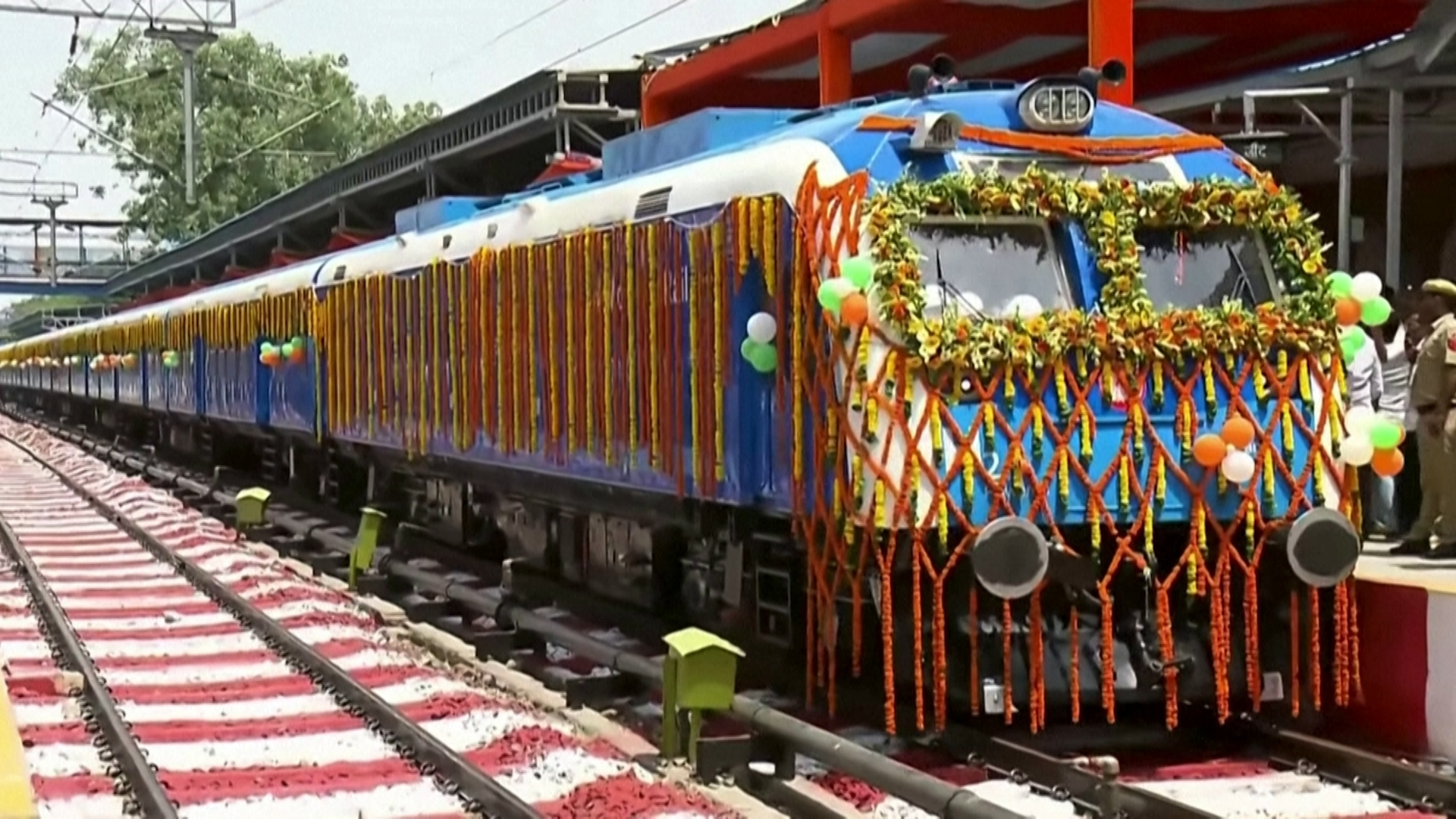
India launches its first hydrogen-powered train, joining a small group of nations testing the technology as part of efforts to decarbonise rail transport and cut dependence on fossil fuels. The project is part of a broader push to modernise one of the world’s largest rail networks while reducing carbon emissions.
India’s first hydrogen-powered train operates on an 89-kilometre route in Haryana, running between Jind and Pandu Pindara. The US$12 million indigenous pilot project features a 1,200-kilowatt train powered by fuel cells that emit only water and steam, positioning India alongside Germany, Japan, and China in the field of sustainable rail transport. The initiative also includes the country’s largest hydrogen storage and refuelling facility, built to support the train’s operations and further advance India’s clean energy ambitions.
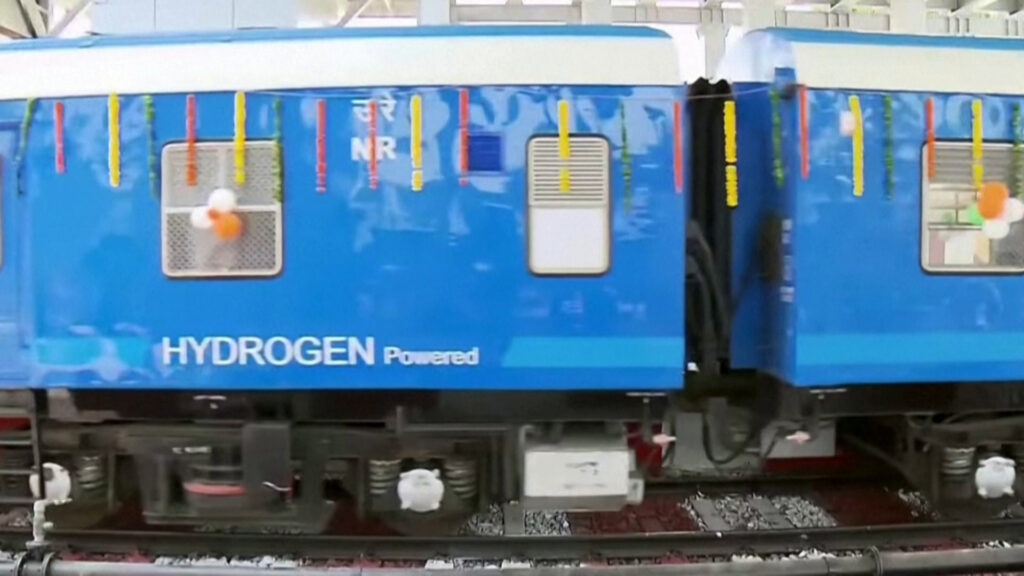
The train was developed under the Aatmanirbhar Bharat (Self-Reliant India) initiative, showcasing indigenous engineering expertise. Indian Railways’ Research Designs and Standards Organisation (RDSO) formulated the technical specifications, while Medha Servo Drives integrated the advanced hydrogen technology. The Integral Coach Factory (ICF) was responsible for designing the train’s theme and exterior, reflecting a collaborative effort to advance sustainable transportation solutions in India.
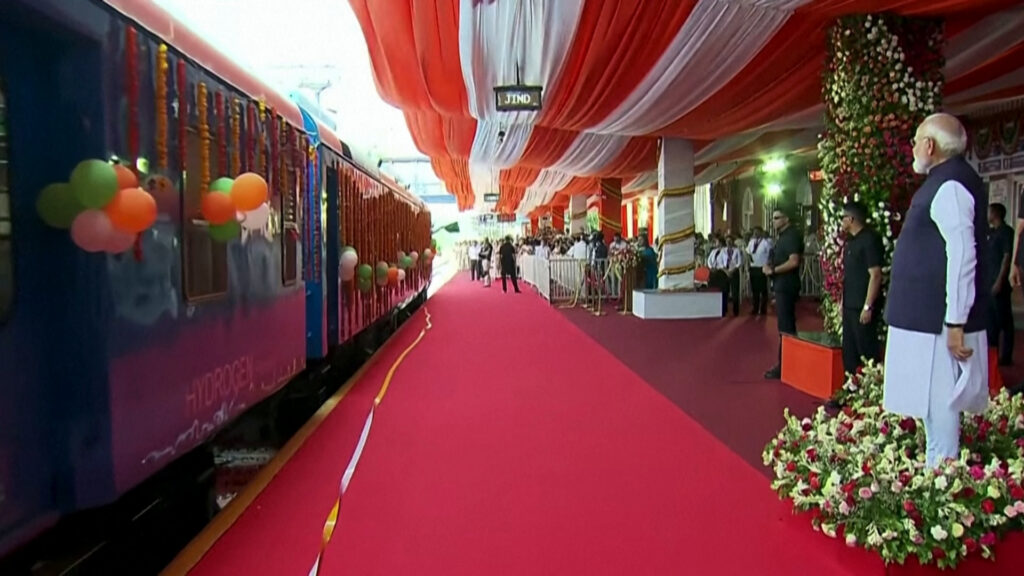
After the flag-off ceremony, Indian Prime Minister Narendra Modi shared his enthusiasm on X, stating, “This is a major achievement in the direction of building a clean, green, and self-reliant India. This train, built with cutting-edge technology, is not only a symbol of India’s technical capability but also an example for the entire world.”
Before the debut of hydrogen-powered trains, India’s vast rail network had already undergone a major transformation—from being primarily diesel-dependent to achieving 99% electrification on its broad-gauge routes. While steam engines once defined Indian Railways, the immediate predecessors to these new hydrogen trains were a combination of diesel-electric locomotives and modern overhead-wire electric trains. This evolution set the stage for India’s latest leap toward sustainable rail transport.