
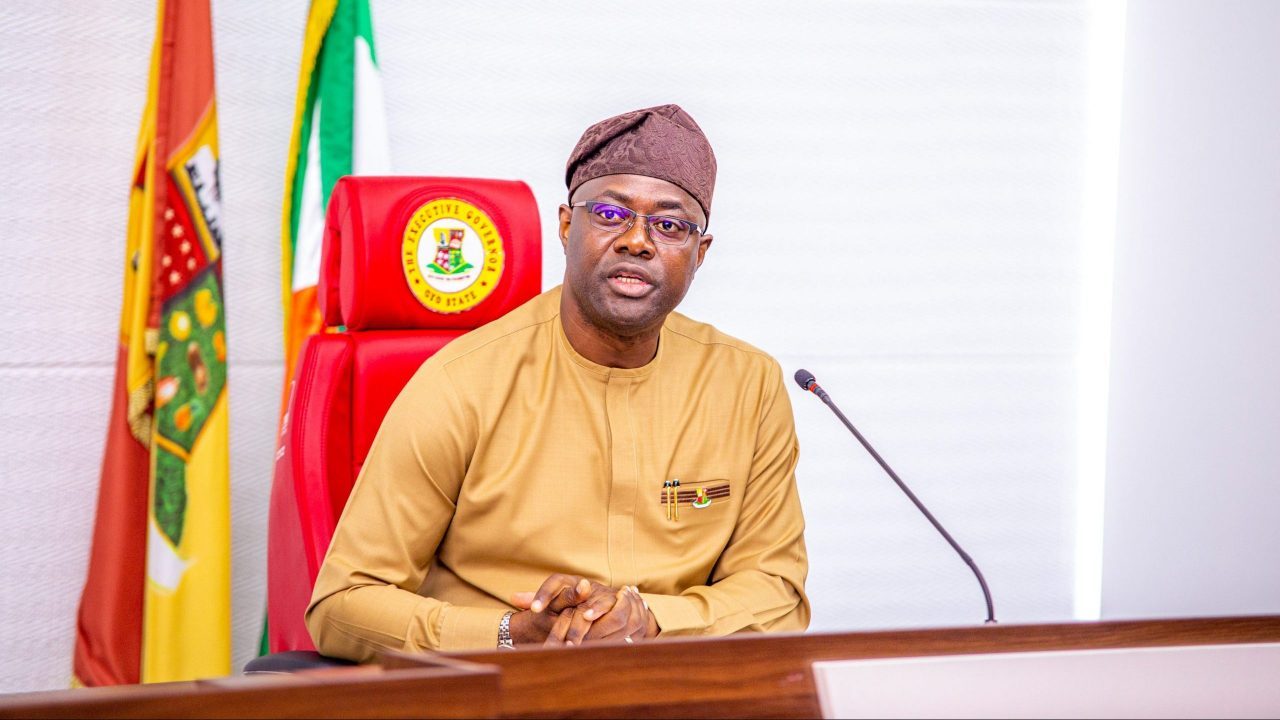
Oyo State Governor Seyi Makinde addresses the state from his office, calling on the United Nations and other international bodies to investigate the circumstances surrounding the school abduction.
The safe return of the abducted schoolchildren and their teachers may have brought relief to their families, but for Oyo State Governor Seyi Makinde, it is far from the end of the story. In a statement issued shortly after the victims regained their freedom following 56 days in captivity, the governor called for an independent international investigation into the circumstances surrounding the kidnap.
Makinde argued that while the release of victims is good news, it should not close the chapter on questions that many Nigerians are still asking. Instead, he urged the United Nations and other international accountability bodies to step in and establish a clear, impartial account of what happened as the incident must not be forgotten without the public getting and understanding all the facts.
The governor’s appeal immediately raises a broader question: can the United Nations actually act on such a request? While the UN is often seen as the world’s foremost body for promoting peace, protecting human rights and investigating serious international concerns, its ability to intervene is rarely as straightforward as many assume. Whether Makinde’s appeal leads to any meaningful international action will depend not only on the gravity of the case but also on the legal and diplomatic mechanisms available to the organization.
Makinde’s call also brings renewed attention to the United Nations and its role in responding to cases that attract international concern. Since its establishment in 1945, the organization has played varying roles in conflict resolution, humanitarian response, peacekeeping and human rights investigations across different parts of the world. In some cases, its interventions have been credited with helping restore stability or uncover the facts surrounding major incidents. In others, critics argue its response was slow, limited or ineffective.
Against that backdrop, the governor’s appeal presents an opportunity to examine the UN’s mandate, how it has responded to similar requests in the past, and whether the mechanisms available to the organization could apply in this case.
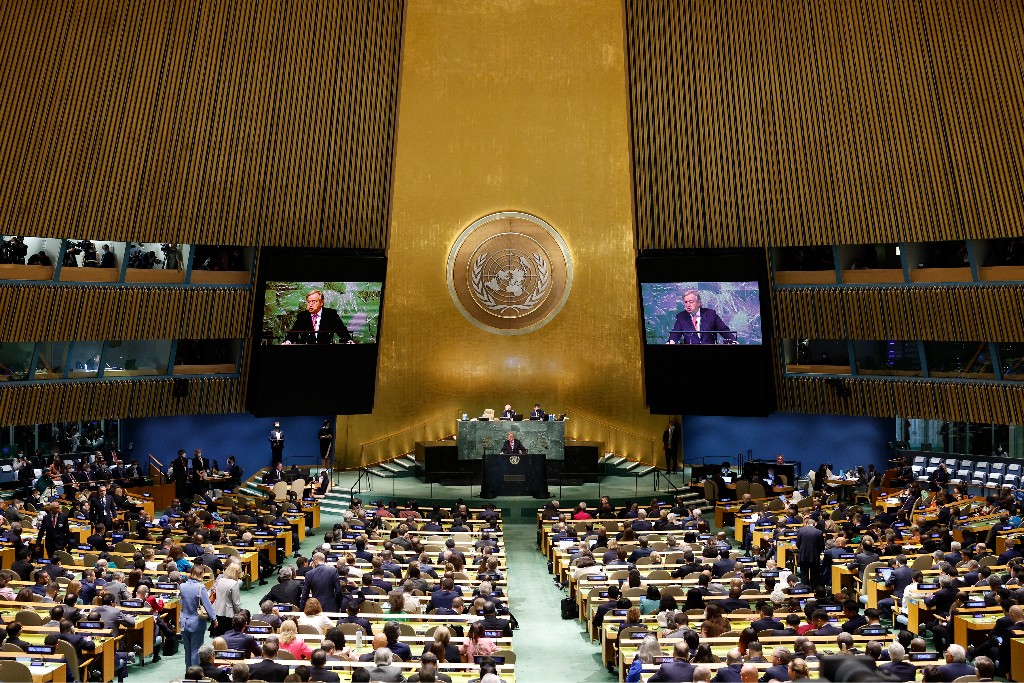
The United Nations in section
Understanding the United Nations
Established in 1945 in the aftermath of the Second World War, the United Nations (UN) was created to help prevent future global conflicts and provide a platform where countries could work together to address issues that transcend national borders. Today, with 193 member states, it is the world’s largest international organization, tasked with promoting international peace and security, protecting human rights, delivering humanitarian assistance, supporting sustainable development, and upholding international law.
Although often viewed as a single institution, the UN is made up of several bodies with distinct responsibilities. The Security Council oversees matters relating to international peace and security, the General Assembly serves as a forum for all member states, while agencies such as UNICEF, the World Food Programme (WFP), the World Health Organization (WHO), and the Office of the High Commissioner for Human Rights (OHCHR) carry out specialized work across humanitarian, health, and human rights issues. Together, these institutions enable the UN to respond to crises through diplomacy, humanitarian aid, investigations, peacekeeping operations, and technical assistance, depending on the nature of the situation.
What can the UN Realistically Do?
Makinde’s call for international intervention naturally raises questions about what powers the United Nations actually possesses. Contrary to popular perception, the organization cannot simply step into any country’s affairs at will. However, it does have several mechanisms that can be activated when concerns involving human rights, security, or humanitarian issues are brought to the attention of the international community.
One of the UN’s most significant roles is fact-finding and independent investigations. Through bodies such as the Office of the High Commissioner for Human Rights or specially established commissions of inquiry, the organization can investigate allegations of human rights violations, document evidence, interview witnesses, and publish reports that often shape international responses. While these investigations do not automatically lead to prosecutions, they can provide an authoritative account of disputed events and increase international scrutiny.
The UN can also facilitate diplomatic engagement and mediation, bringing together governments, civil society groups, and international partners to encourage dialogue and peaceful resolution. In situations where communities have been affected by violence or instability, the organization may coordinate humanitarian assistance through its specialized agencies, ensuring access to food, medical care, education, and protection for vulnerable populations.
Where broader security concerns exist, the UN may recommend sanctions, deploy observers, establish peacekeeping missions, or authorize additional measures through the Security Council. In other instances, it provides technical assistance to strengthen governance, judicial systems, electoral processes, and accountability mechanisms within member states.
What Can’t the UN Do?
Despite its broad mandate, the United Nations is not a global government with unlimited authority. Its powers are defined by the UN Charter and are largely dependent on the cooperation of its member states. This means the organization cannot independently launch investigations, enforce decisions, or intervene in a country’s domestic affairs simply because a request has been made.
A fundamental principle of international law is state sovereignty—the idea that every country has the right to govern its own internal affairs. Unless a government invites UN involvement, or the Security Council determines that a situation poses a threat to international peace and security, the organization’s ability to act is often limited.
Even when there is widespread international concern, political realities can complicate the UN’s response. Decisions involving sanctions, peacekeeping operations, or other enforcement measures typically require approval from the Security Council, where any of its five permanent members: the United States, the United Kingdom, France, Russia, and China can block action through the use of a veto. This has, on numerous occasions, prevented the organization from reaching consensus on major international crises.
Perhaps most importantly, the UN does not possess its own standing military or police force. It relies on member states to provide personnel, funding, and logistical support for peacekeeping and other operations. As a result, even when the organization agrees on a course of action, implementation often depends on political will, available resources, and the cooperation of national governments.
Having the above facts, the question is not simply whether the United Nations can respond to Governor Makinde’s appeal, but under what circumstances it chooses to do so. The organization’s history shows that its involvement in national issues has varied widely, depending on the facts of each case, the legal framework involved and the level of international support. As discussions around the governor’s request continue, those factors will likely determine whether it remains a political statement or develops into a matter of international consideration.