
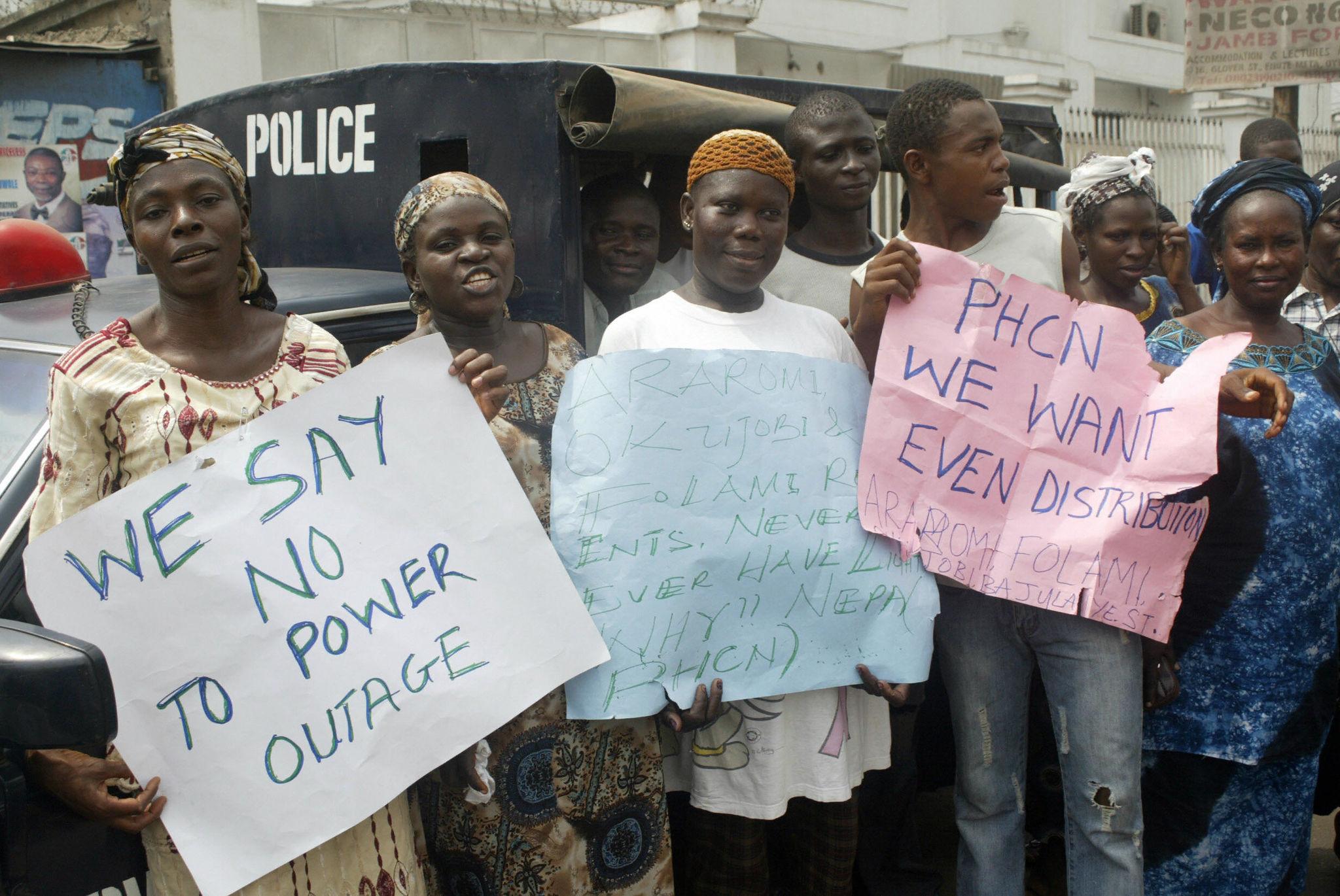
When President Bola Tinubu asked Nigerians not to vote for him in 2027 if he failed to provide stable electricity, the line became one of the notable promises of his 2023 campaign. More than three years later, electricity supply remains a major concern for many households and businesses, with some Lagos communities reporting months of prolonged outages.
In a statement on November 1, Dele Alake, spokesperson for the All Progressives Congress (APC) Presidential Campaign Council, defended the President’s statement, saying it has repeatedly been quoted without its concluding qualification.
Speaking to the Organised Private Sector in Lagos before the 2023 election, Tinubu said: “Whichever way, by all means necessary, you will have electricity, and you will not pay for estimated bills anymore. A promise made will be a promise kept.” He also said Nigerians should not re-elect him if he failed to deliver, unless he gave adequate reasons and they are convincing enough. Alake says that qualification has been left out of public discussion, and that a fair assessment must consider it alongside the administration’s efforts. He acknowledged that fixing the power sector remains a work in progress.
Alake pointed to several interventions. Tinubu signed the Electricity Act on June 9, 2023, which allows states to set up their own regulatory frameworks for electricity generation, transmission and distribution and opens the door to more private investment. He said states including Lagos, Enugu, Abia, Ekiti, Oyo, Kaduna and Niger have used it to set up regulatory agencies. He also said the administration has moved to address more than N6 trillion in legacy debts accumulated in the power sector between 2015 and 2025, and that over 1.5 million customers have been metered under the Presidential Metering Initiative. Plans to upgrade substations and build new transmission facilities were also mentioned.
On the ground, residents of Goshen, Abuleokuta and Kusheyin in Bariga, Lagos, say they have had about four months of poor supply, with daily supply sometimes amounting to barely an hour, according to a PUNCH report on October 29. Traders say they cannot preserve fish, frozen foods and drinks, and some have lost customers. Those who cannot afford generators have struggled to stay open, and printing shops and small hotels have also been affected. Some families reportedly sleep outdoors because of the heat. Some postpaid customers also say they continue to receive high or multiple bills despite the poor supply.
Alake said Tinubu will present a scorecard on the power sector as he seeks a second term, explaining both progress and remaining challenges. Nigerians will be able to test those claims against measurable outcomes such as generation, transmission capacity, distribution, metering and consistency of supply. For affected communities, the immediate question is simpler: when will regular power return?
With 2027 approaching, the debate is increasingly about what Nigerians can point to as evidence that the promise is being fulfilled.