
Compiled By: Malami Haruna Dogon daji
ABUJA, September 2026
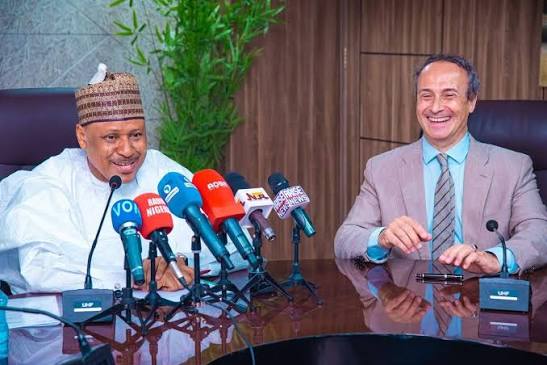
Nigeria’s Information Minister Mohammed Idris is exploring a strategic partnership with France Médias Monde (FMM), the parent company of FRANCE 24 and Radio France Internationale (RFI), in a move that could unlock thousands of jobs for unemployed youth in the media and creative sectors, according to government statements and industry analysts.
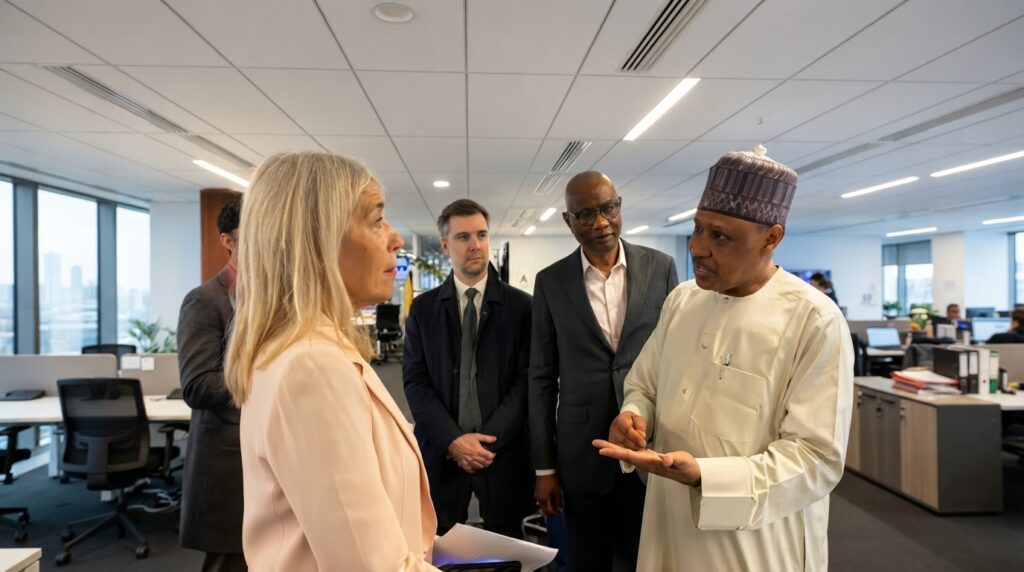
The meeting, held at FMM’s Paris headquarters with Chairwoman Marie-Christine Saragosse and France Médias Monde Académie Director Antoine Cormery, comes as Nigeria grapples with youth unemployment rates exceeding 23 percent among those actively seeking work, with the creative economy identified as one of the few sectors capable of absorbing large numbers of young jobseekers
Nigeria’s media industry is having a moment. But for the hundreds of thousands of young Nigerians chasing careers in journalism, broadcasting, and content creation, a big question hangs over all the good news: will any of it actually translate into jobs they can live on?
That question is now at the center of a growing partnership between Nigeria and France Médias Monde (FMM) On paper, it’s an exciting opportunity. In practice, experts say, it could be a genuine engine for skills and jobs.
What the Partnership Could Actually Look Like
Beyond the initial training pilots, there’s talk of scaling things up in a few concrete ways.
One idea is broadening the funding base, bringing in institutions like Agence Française de Développement (AFD), the African Development Bank, and private-sector sponsors, so the program isn’t leaning on a single source of support.
There’s also a push to think bigger than Nigeria’s borders. If Nigerian journalists and producers get trained to a global standard, why not position them to create content for RFI, FRANCE 24, and streaming platforms reaching audiences across Africa and beyond? That’s less “aid program” and more “career pipeline.”
And then there’s the more ambitious piece: media innovation labs. Picture incubators built specifically to solve African broadcasting problems in ways such as, delivering content in low-bandwidth areas, or using AI to help fact-check news in real time. Homegrown solutions, not imported ones.
The Warning Signs Experts Want Nigeria to Watch For
None of this works automatically, though. Analysts point to a few traps that have sunk similar partnerships before.
The dependency trap. Training that just plugs Nigerians into foreign systems without building skills that stay and grow locally or build capacity. BUT builds reliance. The goal has to be local expertise that outlasts the partnership itself.
Elite capture. Programs like this have a habit of quietly becoming Lagos-and-Abuja affairs, benefiting people who already had a head start. For this to mean anything, it needs to reach unemployed youth in every region, not just the country’s media capitals.
The sustainability question. French development funding won’t last forever. If nothing is built to survive once that initial support winds down, the whole thing risks becoming a temporary spike rather than lasting change.
To keep things honest, experts are calling on Nigeria’s Information Ministry and FMM to publish clear, transparent numbers; how many jobs are actually created, what skills people walk away with, and whether the benefits are reaching different parts of the country or just the usual centers.
Nigeria’s Media Industry Is Already Shifting
This partnership isn’t happening in a vacuum — it’s landing in the middle of a real transformation already underway in Nigerian media.
The Digital Switch-Over (DSO) program is aiming to bring digital broadcasting to 40 million homes, a shift expected to unlock ₦605 billion in advertising revenue and generate thousands of jobs in both technical roles and content production.
Then there’s FreeTV, the Nigerian Broadcasting Commission’s direct-to-home platform, which is giving broadcasters 18 months of free carriage. That’s a meaningful head start for new channels and independent creators who’d otherwise struggle to get on air at all.
5G rollout is quietly changing the economics of content creation too — faster networks mean cheaper production and more real-time content, which matters enormously for Nigeria’s fast-growing creator economy.
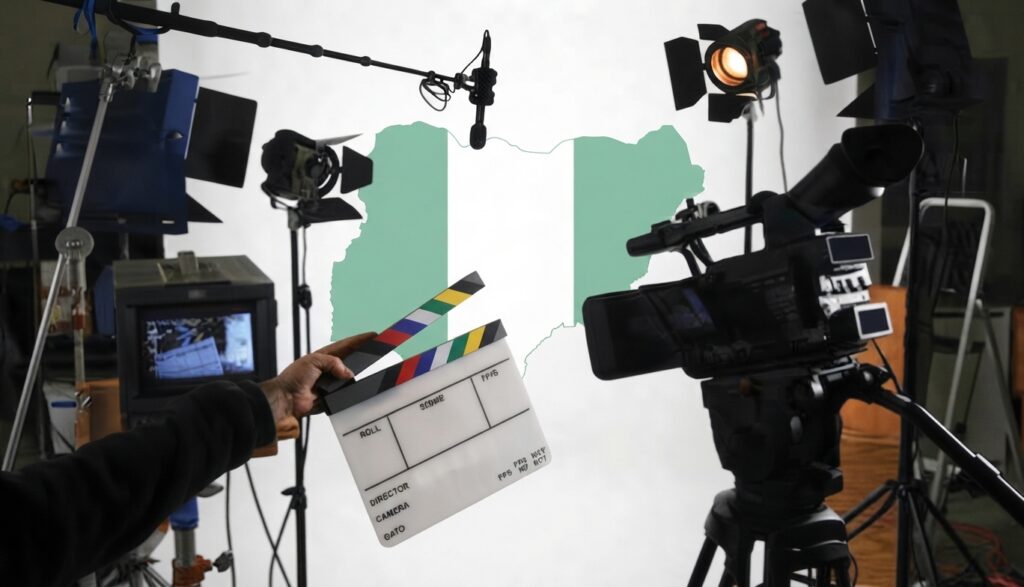
And the money is already flowing in. Foreign investment from the likes of MultiChoice and Spotify has helped build infrastructure now supporting an estimated 4.2 million creative jobs in the country.
The Real Test: Political Will, Not Good Intentions
Strip away the diplomacy, and the France Médias Monde partnership is really about one thing: whether it can become a genuine lifeline for young Nigerians with real ambitions in media and storytelling, but no clear path to a paycheck.
That outcome isn’t guaranteed. It depends entirely on execution — on whether the training is actually accessible and affordable, and whether it lines up with real jobs in the DSO rollout, regional studios, and digital platforms already taking shape.
Information Minister Idris has described Nigeria’s media market as one offering “immense opportunities for both local and international players.” That’s true. But opportunity and outcome are two different things — and for the 23% of young Nigerians currently out of work, the gap between them is everything.
Why This Matters More Than It Might Seem
Nigeria’s creative economy already supports 4.2 million jobs, with projections putting that number at 6.9 million by 2030. Few sectors in the country offer a clearer path out of unemployment and informal work.
Done right — with real skills transfer, real job creation, and funding built to last — a partnership like this could help turn one of Nigeria’s biggest challenges, its youth unemployment crisis, into one of its biggest advantages: a generation ready to tell Africa’s stories to the world.
Done wrong, another headline.